
Condo Insurance (HO-6) vs Homeowners Insurance
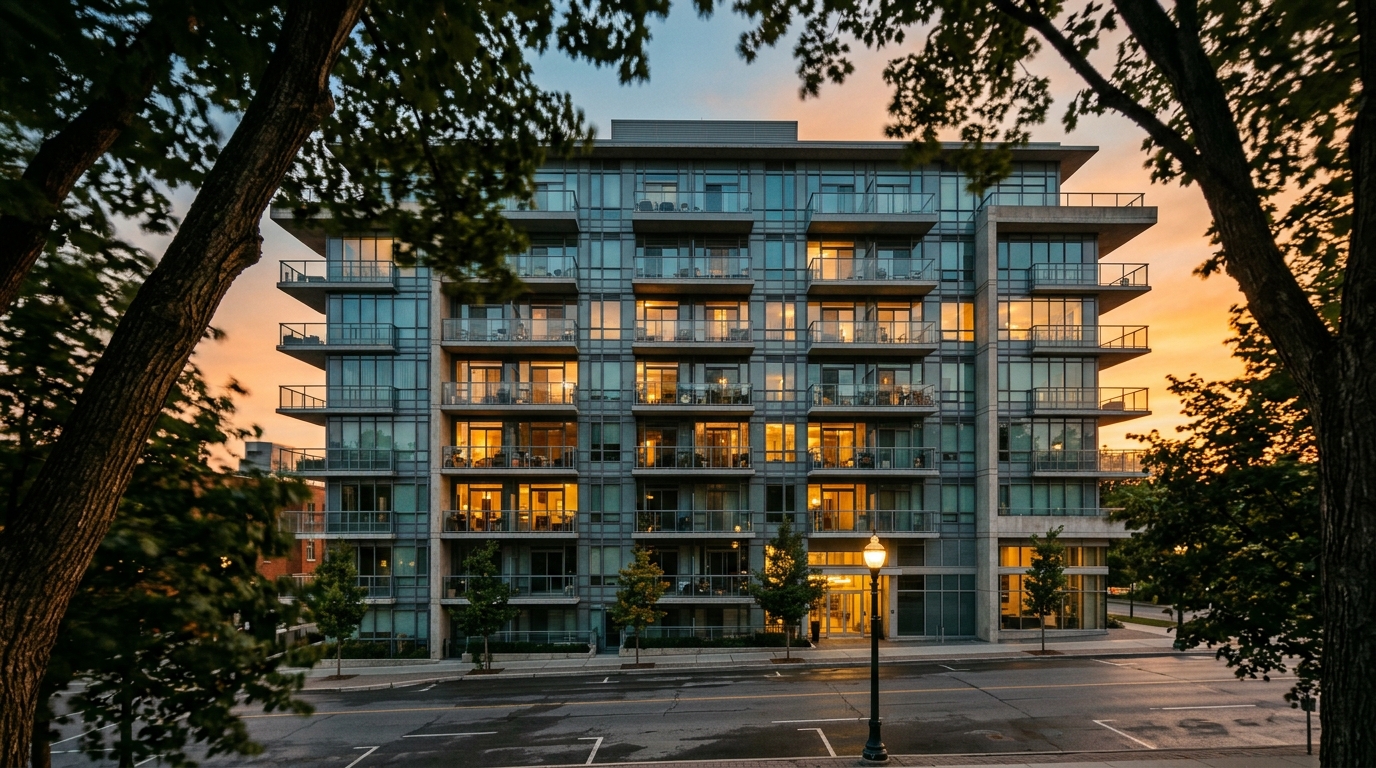
Condo insurance HO-6 policies fill the gap between what a condo association's master policy covers and what the individual owner is on the hook for personally. The line between the two is drawn by the association's governing documents, and it varies significantly from building to building. This guide breaks down how the two policies interact, the three master policy structures owners will encounter, and the specific coverage gaps that tend to surprise condo owners only after a claim is already filed.
In this article
- Understanding HO-6 vs Standard Homeowners Insurance
- The Master Condo Policy — What the HOA Actually Covers
- Bare Walls, Single Entity, and All-In Master Policies
- The Gaps HO-6 Policies Exist to Fill
- Loss Assessment Coverage — The Underrated Add-On
- What HO-6 Policies Typically Cost
- How to Size a Condo Insurance HO-6 Policy Correctly
Understanding HO-6 vs Standard Homeowners Insurance
An HO-6 policy is a specific form designed for condominium and cooperative owners, while a standard HO-3 is written for owners of single-family homes and townhouses that aren't part of a shared-structure association. The two policies look similar on the outside — both include dwelling coverage, personal property, personal liability, and loss of use — but they draw very different lines around what the dwelling actually means.
An HO-3 covers the entire physical house on the lot: the roof, the exterior siding, the foundation, and everything inside. Condo insurance HO-6 policies cover only the portion of the building the individual owner is responsible for, which typically starts at the interior surface of the perimeter walls and stops at the paint on the ceiling. Personal property and liability coverage work roughly the same on both forms, but the dwelling piece is where the split shows up — and where most condo owners underinsure without realizing it.
The Master Condo Policy — What the HOA Actually Covers
Every condominium association carries a master policy funded through owner dues. It insures the physical building and the common elements: exterior walls, the roof, hallways, elevators, the lobby, the parking garage, amenity spaces, and shared mechanical systems. When a fire, hailstorm, or burst pipe damages the building itself, the master policy is what pays for structural repairs.
Master policies come with their own deductibles, and they are almost always larger than a personal deductible. A $5,000 to $25,000 deductible is common for standard perils, and wind or hurricane deductibles of 2% to 5% of the building's insured value can run into six figures at coastal properties. The association typically does not pay that deductible out of general reserves; it passes some or all of it back to unit owners through a special assessment. That mechanism is exactly why loss assessment coverage exists on the HO-6, and it is one of the biggest gaps owners discover only after a claim has already happened.
Bare Walls, Single Entity, and All-In Master Policies
The condominium declaration specifies one of three master policy structures. Which one applies determines how much dwelling coverage the owner needs on the HO-6.
- Bare walls-in (walls-out): The master policy stops at the unfinished studs, subfloor, and unfinished ceiling. The owner is responsible for drywall, flooring, cabinets, countertops, built-in appliances, light fixtures, and interior plumbing fixtures. Owners in bare-walls buildings need the highest HO-6 dwelling limits — often $50,000 to $150,000 for a mid-range unit.
- Single entity (original specifications): The master policy covers original as-built fixtures and finishes but excludes any upgrades. If the original kitchen had laminate counters and the current owner installed quartz, the master pays for laminate replacement and the HO-6 covers the upgrade delta.
- All-in (all-inclusive): The master policy covers original finishes plus replacements and upgrades. HO-6 dwelling limits can be lower — often $20,000 to $40,000 — because the owner is mainly protecting against upgrade disputes and the master policy's deductible.
Time to review your homeowners policy?
Comparing quotes every 12-24 months often surfaces discounts your current insurer will not volunteer.
How to shop home insuranceThe Gaps HO-6 Policies Exist to Fill
Even in an all-in building, a condo owner has real exposure the master policy does not cover. The HO-6 exists to plug those specific gaps.
- The master policy deductible — passed to unit owners as a loss assessment when a covered claim happens, sometimes for tens of thousands of dollars.
- Personal belongings — furniture, electronics, clothing, jewelry, and everything else inside the unit is not covered by any master policy.
- Personal liability — a guest injured inside the unit or damage caused to a neighbor's unit falls on the owner, not the association.
- Additional living expenses — hotel bills and restaurant meals during covered repairs are on the HO-6, not the master.
- Water damage originating in the unit — a burst supply line, overflowing tub, or failed dishwasher hose usually generates a subrogation claim from the association and downstream neighbors.
- Sewer and drain backup — commonly excluded on both policies unless a specific endorsement is added.
- Improvements and betterments beyond the original build in single-entity buildings.
Loss Assessment Coverage — The Underrated Add-On
Loss assessment coverage is the endorsement that pays when the condo association bills all unit owners for a shortfall on the master policy. It applies to the master's deductible, to losses that exceed the master policy's limits, and to certain liability judgments against the association that get spread across the ownership.
Base HO-6 policies typically include only $1,000 to $5,000 of loss assessment coverage, which is not enough for most modern buildings. Coastal Florida owners routinely carry $50,000 or more because hurricane deductibles on their master policies can hit $500,000 and up on a single building. Older buildings with underinsured master policies or aging plumbing systems face similar exposure. The endorsement is cheap — usually $10 to $40 per year to raise the limit to $50,000 — and it is the single most likely piece of coverage to matter in a serious loss. In high-risk buildings, $100,000 or more is a reasonable target.
What HO-6 Policies Typically Cost
HO-6 premiums are usually lower than HO-3 premiums because the insurer is not covering the building's structure — the biggest replacement cost in a homeowners policy. National averages run roughly $300 to $700 per year, but geography moves that range dramatically. Coastal states, older high-rises, and buildings with prior water losses can push premiums higher by multiples.
| Region | Typical annual HO-6 premium |
|---|---|
| National average | $400 - $700 |
| California | $400 - $800 |
| Texas (inland) | $350 - $600 |
| Texas coast | $700 - $1,500 |
| New York metro | $500 - $900 |
| Florida (inland) | $600 - $1,200 |
| Florida coastal | $1,500 - $3,000+ |
Unit-level factors matter almost as much as location: the dwelling limit, the deductible, the personal property limit, the loss assessment limit, the wind or hail deductible in coastal states, and endorsements for water backup or scheduled jewelry. Shopping three or four carriers on identical coverage usually surfaces price differences of 20% to 40%.
How to Size a Condo Insurance HO-6 Policy Correctly
Sizing a condo insurance HO-6 policy correctly requires reading two documents most owners have never opened — the association's master policy declarations page and the recorded condominium declaration or bylaws. Everything else follows from those.
- Pull the master policy declarations page from the association manager and note the structure (bare walls, single entity, or all-in), the master deductible, and the wind or hurricane deductible.
- Read the condo declaration section on insurance responsibilities to confirm what the owner must insure.
- Set dwelling coverage to the estimated cost to rebuild everything from the interior surface of the perimeter walls inward, including cabinets, flooring, fixtures, and appliances.
- Inventory personal property room by room and pick a limit — usually $30,000 to $100,000 for an average unit.
- Carry at least $300,000 in personal liability, and $500,000 if the household has significant assets or hosts frequently.
- Raise loss assessment coverage to $50,000 in coastal states, older buildings, or any association with hurricane or earthquake exposure.
- Add a water backup endorsement — sewer and drain backups are the most common excluded water loss in condo buildings.
- Pick a deductible the household can absorb without financial strain, usually $1,000 to $2,500.
Frequently Asked Questions
Is HO-6 insurance required for a condo?
Most condo associations require unit owners to carry an HO-6 policy through their governing documents, and mortgage lenders typically require it as a condition of the loan. Even in the rare buildings that don't mandate it, going without one leaves the owner exposed to the master policy deductible, personal liability, and the total loss of personal belongings.
What's the difference between HO-6 and HO-3 insurance?
An HO-3 is a standard homeowners policy that covers the entire dwelling structure, personal property, liability, and loss of use for a single-family home. HO-6 covers only the interior portion of a condo unit that the owner is responsible for — usually walls-in — plus personal property, liability, and loss assessment. The two policies solve different problems and are not interchangeable.
What does walls-in coverage mean on a condo policy?
Walls-in coverage refers to insurance for everything from the interior surface of the perimeter walls inward — drywall, flooring, cabinets, countertops, built-in appliances, plumbing fixtures, and interior wiring. It's the portion of the unit the owner insures on the HO-6, with the association's master policy handling the structural shell and common areas outside those walls.
Does an HO-6 policy cover water damage from the unit above?
Yes, damage to the owner's unit from a leak or overflow originating in a neighboring unit is generally covered under the HO-6's dwelling and personal property coverage, subject to the deductible. The owner's insurer may then subrogate — pursue the upstairs neighbor's HO-6 policy — for reimbursement. Sudden and accidental water damage is covered by default; gradual leaks and seepage are usually excluded.
What is loss assessment coverage and how much do I need?
Loss assessment coverage pays when the condo association charges all unit owners a special assessment to cover a shortfall on the master policy — typically the master's deductible or a loss that exceeded its limits. Base policies often include only $1,000, which is rarely enough. Raising the limit to $50,000 costs very little, and coastal or older buildings often warrant $100,000 or more.