
Flood Insurance: Do You Need Separate Coverage?
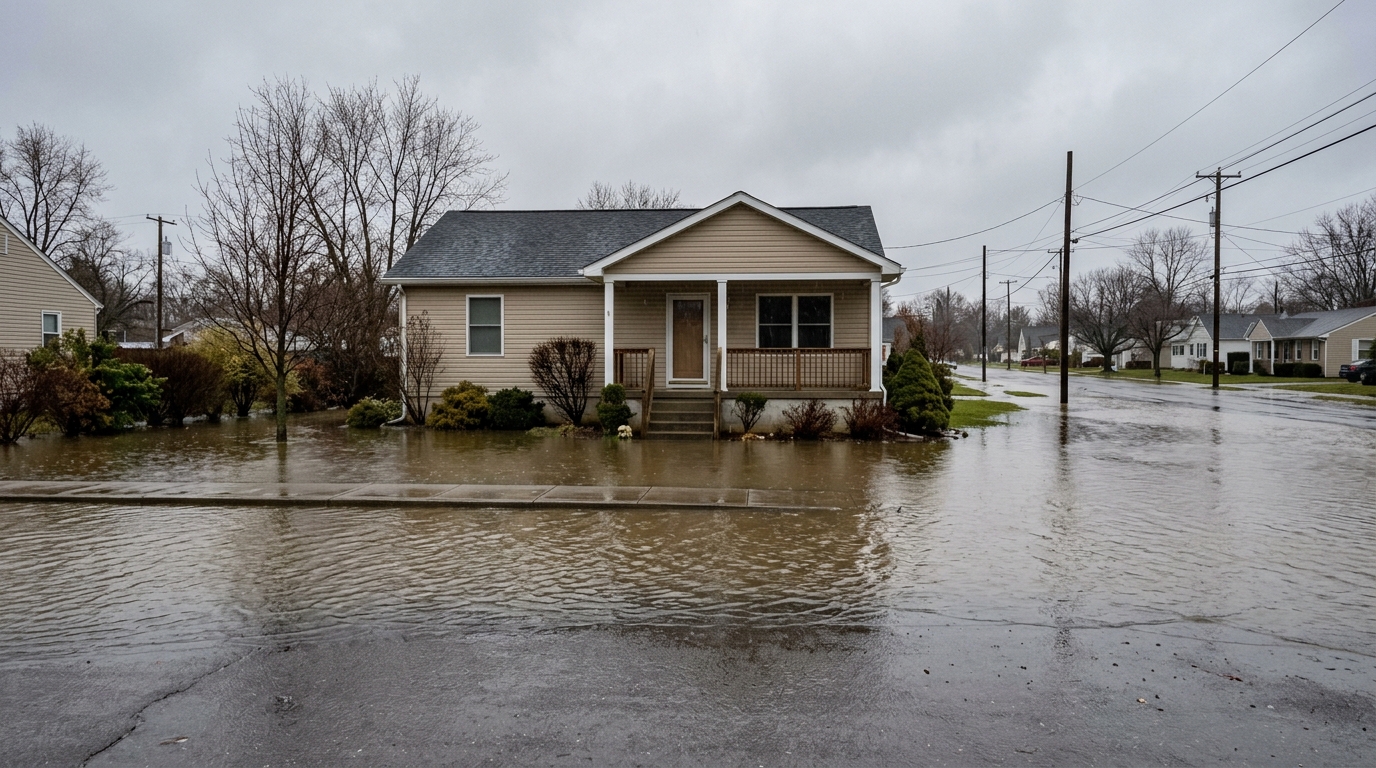
"Do I need flood insurance?" is a question millions of American homeowners ask only after watching a neighbor's basement fill up on the local news. Standard homeowners policies deliberately exclude flood damage, and the resulting coverage gap is one of the most expensive blind spots in personal finance. This guide breaks down how flood insurance actually works, who is legally required to buy it, and how the NFIP and private carriers stack up against each other.
In this article
- Why Standard Homeowners Insurance Excludes Floods
- Flood Zone Reality: Where Risk Actually Lives
- Do I Need Flood Insurance? When It's Legally Required
- NFIP: What the Federal Program Actually Covers
- Private Flood Insurance: How Alternatives Compare
- What Flood Insurance Actually Costs
- Do I Need Flood Insurance Even If It's Not Required?
Why Standard Homeowners Insurance Excludes Floods
A standard HO-3 homeowners policy covers water damage from inside the house — burst pipes, an overflowing washing machine, a hot water heater that gives out — but excludes water that enters at ground level from outside. That includes river overflow, storm surge, heavy rainfall runoff, snowmelt, and any mudflow carried by moving water.
The exclusion isn't an oversight. Flood losses are catastrophically correlated: when one home in a neighborhood floods, hundreds do. Private insurers pulled out of the flood market after the Great Mississippi Flood of 1927 wiped out reserves built on the assumption that risks would spread geographically. Congress created the National Flood Insurance Program (NFIP) in 1968 to fill the gap.
The result: if a hurricane pushes three feet of water into a living room, homeowners insurance pays nothing for the ruined drywall, subfloor, HVAC, or possessions. Wind damage from the same storm is typically covered, which creates painful disputes over what caused what. Adjusters call these concurrent causation claims, and separate flood insurance is the only clean way to close that gap.
Flood Zone Reality: Where Risk Actually Lives
FEMA divides the country into flood zones based on modeled 1% annual chance flooding — the so-called 100-year flood. Where a property falls on the map largely determines cost and whether coverage is mandatory:
- Zone A / AE: High-risk inland areas. Coverage typically required with a federally-backed mortgage. AE zones have a defined Base Flood Elevation.
- Zone V / VE: Coastal high-risk zones with wave action. Highest premiums nationally.
- Zone X (shaded): Moderate risk, between the 100-year and 500-year floodplain. Coverage optional but often inexpensive.
- Zone X (unshaded): Minimal mapped risk. Still eligible for coverage.
- Zone D: Undetermined risk, usually undeveloped areas.
The critical detail homeowners miss: roughly one in four NFIP flood claims come from moderate- or low-risk zones. Development that changes runoff, aging storm drains, and heavier rainfall events all mean the maps often lag reality. Zone X is not no risk — it's not modeled as a mandatory purchase area.
Do I Need Flood Insurance? When It's Legally Required
Federal law forces the question in specific situations. Whether someone actually needs to answer do I need flood insurance with a yes often comes down to how the property was financed:
- Federally-backed mortgage in an SFHA: Any Fannie Mae, Freddie Mac, FHA, VA, or federally-insured lender loan on property in a Special Flood Hazard Area (Zones A or V) requires coverage for the life of the loan.
- Post-disaster federal aid: Homeowners who received FEMA or SBA assistance and sit in an SFHA must maintain flood insurance to remain eligible for future aid.
- Community ordinances: Some local governments require coverage as a condition of building permits or occupancy in known flood-prone areas.
- Condo association mandates: Many HOAs and condo boards require owners to carry coverage even outside an SFHA.
Cash buyers in high-risk zones face no legal requirement, but skipping coverage is one of the more expensive gambles in personal finance.
Time to review your homeowners policy?
Comparing quotes every 12-24 months often surfaces discounts your current insurer will not volunteer.
How to shop home insuranceNFIP: What the Federal Program Actually Covers
The NFIP is the default option in most of the country, sold through more than 50 Write Your Own partner insurers that service policies backed by the federal government. Coverage is capped: $250,000 for the building and $100,000 for contents on a single-family home. For properties valued above that, private excess flood policies fill the gap.
NFIP policies have real quirks. Basement coverage is limited to structural elements and mechanicals — finished basements, personal belongings stored below grade, and living space carpeting are largely excluded. Additional living expenses like hotel bills while the home is uninhabitable are not included. There's a 30-day waiting period from purchase to effective date in most cases, which means buying a policy after a hurricane warning is announced is usually too late.
Premiums shifted meaningfully under Risk Rating 2.0, FEMA's methodology rolled out between 2021 and 2023. It prices each property individually based on flood frequency, distance from water, and replacement cost — replacing the older zone-averaged approach. Some low-lying properties saw increases; others saw drops.
Private Flood Insurance: How Alternatives Compare
Private flood carriers — including Neptune, Wright, Zurich, and specialty markets at Lloyd's — have expanded aggressively over the past decade. They compete on three fronts: higher coverage limits (often up to $2 million or more), broader features (loss of use, pool repair, sometimes shorter waiting periods of 10 to 14 days), and case-by-case pricing that can undercut NFIP for well-built or elevated properties.
The trade-offs matter. Private policies aren't federally guaranteed, and coverage can be nonrenewed if a carrier exits the market — a real risk after major hurricane seasons. Lenders now accept private flood policies for federally-backed mortgages provided they meet minimum criteria under the Biggert-Waters Act, but some banks still push borrowers toward NFIP out of habit.
Homeowners in moderate zones with newer construction and any elevation advantage tend to see the biggest private savings. Older homes at grade in high-risk areas often stay cheaper with NFIP.
What Flood Insurance Actually Costs
Flood insurance pricing varies more than almost any other coverage. National NFIP averages hover in the $700 to $900 range annually, but that figure masks enormous variation by zone, elevation, and construction. Rough ranges under current pricing:
| Scenario | Typical Annual Range |
|---|---|
| Zone X, single-family home, modest value | $400 to $700 |
| Zone AE, elevated, average value | $1,200 to $2,500 |
| Zone AE, at-grade, higher value | $2,500 to $5,000 |
| Zone VE coastal, wave-exposed | $4,000 to $10,000+ |
| Private policy, moderate risk, elevated | $500 to $1,500 |
A few premium-lowering levers exist: elevation certificates in AE zones, flood vents in enclosed areas below the first floor, higher deductibles ($5,000 or $10,000 versus the standard $1,000), and community participation in FEMA's Community Rating System, which discounts NFIP premiums by up to 45% in top-tier communities. Preferred Risk Policies in Zone X can come in under $500 annually — small money against the FEMA estimate that one inch of interior floodwater causes roughly $25,000 in damage.
Do I Need Flood Insurance Even If It's Not Required?
For homeowners outside an SFHA with no mortgage requirement, the answer to do I need flood insurance isn't automatic. A handful of real-world triggers make voluntary coverage the smart move:
- Property backs up to any water body: Streams, retention ponds, and drainage ditches all overflow.
- Bottom of a slope or valley: Water gathers where topography sends it, regardless of what the FEMA map says.
- Finished basement or below-grade living space: A single groundwater intrusion event can cost $30,000-plus to gut and rebuild.
- Recent local development: New pavement, subdivisions, or filled wetlands upstream can dramatically change runoff.
- Prior flooding within a few blocks: If any home nearby has flooded in the past decade, the whole area's map may be outdated.
- Coastal or Gulf state: Storm surge from hurricanes routinely pushes water miles inland beyond mapped zones — Harvey, Ida, and Ian all flooded properties in Zone X.
Preferred Risk Policies in Zone X often price under $500 — a rounding error against a five-figure loss.
Frequently Asked Questions
Do I need flood insurance if I'm not in a flood zone?
Everyone lives in a flood zone — some are just labeled higher risk than others. Homeowners in Zones X or D aren't required to carry coverage, but roughly one in four flood claims comes from these so-called low-risk areas. Preferred Risk Policies often run $400 to $700 annually, which is cheap insurance against damage that averages $25,000 per inch of water inside the home.
How much does flood insurance cost on average?
National NFIP averages sit in the $700 to $900 range, but individual policies span from about $400 in low-risk zones to $10,000-plus for coastal VE properties. Under Risk Rating 2.0, pricing now reflects each property's specific flood characteristics — elevation, distance from water, and replacement cost — so quotes can vary widely even on the same block.
Does homeowners insurance ever cover flood damage?
No. Standard HO-3 policies exclude flood damage from external sources like rivers, storm surge, heavy rainfall runoff, and mudflow. Homeowners insurance does cover internal water losses such as burst pipes and appliance leaks. That distinction leads to frequent claim disputes after hurricanes, which is why separate flood coverage is the only reliable way to close the gap.
What's the difference between NFIP and private flood insurance?
NFIP is federally-backed with coverage capped at $250,000 building and $100,000 contents, a 30-day waiting period, and limited basement coverage. Private policies typically offer higher limits (up to $2 million or more), can include loss-of-use, and may have shorter waiting periods of 10 to 14 days. Private is often cheaper for elevated or newer homes; NFIP tends to win for older at-grade properties in high-risk zones.
How long does it take flood insurance to kick in?
NFIP policies have a standard 30-day waiting period from purchase, though there are narrow exceptions like loan closings and map revisions. Some private carriers offer shorter waits of 10 to 14 days. This waiting period is why buying flood insurance after a hurricane forecast is essentially useless — the storm arrives before coverage activates.