
Classic Car Insurance vs Regular Auto Insurance

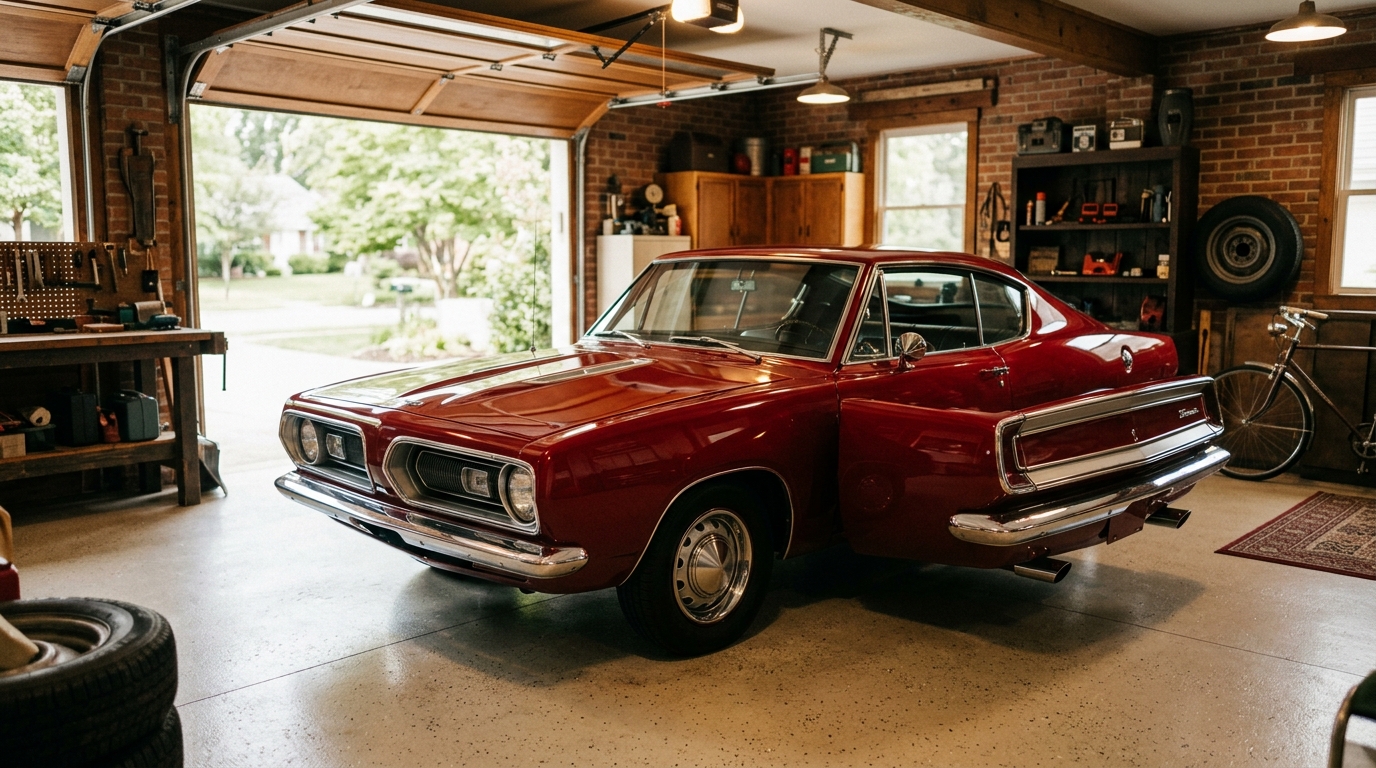
Classic car insurance protects vintage, antique, and collectible vehicles differently than the auto policy covering a daily commute. Instead of paying out actual cash value after depreciation, these specialty policies use agreed-value contracts that lock in what the car is worth the day the policy is bound. This guide covers how that coverage works, which cars qualify, how premiums stack up against standard auto, and which insurers dominate the collector market.
In this article
What Agreed-Value Coverage Actually Pays
When a regular auto policy totals a car, the insurer cuts a check for actual cash value (ACV) — the vehicle's market price the day of the loss, factoring in depreciation and condition. That model works for a five-year-old crossover; it fails badly for a 1967 Camaro whose value has climbed for two decades.
Classic car insurance uses agreed value instead. The owner and insurer settle on a dollar figure when the policy is bound. If the car is stolen or totaled, that number gets paid — no depreciation math, no comping against auction sales, no arguments about condition. A $52,000 restored Chevelle stays worth $52,000 to the insurer until both parties adjust it at renewal.
Getting to that number takes documentation. Most carriers want recent photos of every panel and the interior, plus any restoration receipts. Cars valued above roughly $75,000 to $100,000 typically need a professional appraisal. Many insurers also let owners raise the agreed value at renewal if the market moves, so an appreciating collector doesn't lose ground. Deductibles run $500 to $1,000 in most cases, and some carriers offer zero-deductible policies for lower-value collectibles.
Eligibility Rules That Rule Out Daily Drivers
Classic car insurance isn't a synonym for old-car insurance. Carriers write these policies under a specific use profile, and daily drivers usually don't fit. Common eligibility rules include:
- Vehicle age: Most insurers require the car to be 20 to 25 years old for a classic policy, and 45 years or older for antique status. Hagerty and Grundy will write some newer modern classics like C5 Corvettes and Fox-body Mustangs.
- Annual mileage: Caps typically fall between 2,500 and 7,500 miles per year. A few carriers offer higher or unlimited-mileage tiers at additional premium.
- Garage requirement: The vehicle must be kept in a locked, enclosed garage. Carports and driveways don't qualify.
- Second car mandatory: The household must own or lease a regular vehicle for daily use. This is why a classic can't legally serve as a primary commuter under most policies.
- Driver profile: Most carriers want a licensed driver age 25 or older with a clean record — no major violations in the last three to five years.
- Condition: The car must be in good driveable or restored condition. Barn finds and unfinished project cars need specialty restoration coverage instead.
Why Premiums Look So Different
Owners routinely find that a $50,000 collector car costs less to insure than the family SUV. Classic car insurance policies often run 30% to 60% below what a standard carrier would quote on the same value, for a handful of structural reasons:
- Low exposure miles. A car driven 3,000 miles a year to shows and Sunday drives has a fraction of the crash exposure of a 15,000-mile daily driver.
- Storage. Locked-garage requirements eliminate most theft, weather damage, and parking-lot dings.
- Owner risk profile. Underwriters know the average collector-policy customer is older, has a longer driving history, and treats the car carefully.
- Use restrictions. No commuting, no ridesharing, no valet parking at hotels, no daily errand runs — all of which drives claim frequency down.
Actual pricing varies by state and vehicle, but a $40,000 restored muscle car garaged in Ohio might cost $300 to $500 a year on a classic policy while a standard carrier could quote $1,400 or more for equivalent limits. High-value cars scale up, but the ratio stays favorable.
Ready to compare car insurance rates?
Fresh side-by-side quotes from three or more insurers take about ten minutes.
See our quote guideTop Insurers for Collector Cars
A handful of carriers dominate the collector market. Each has a niche:
- Hagerty — The largest specialty classic insurer in the country. Owns the Hagerty Drivers Club, a widely cited valuation database, and its own concours events. Best for enthusiasts who want an ecosystem beyond just a policy.
- Grundy — Founded 1947, based in Horsham, PA. Known for agreed value with no mileage limits, underwritten through the Philadelphia Contributionship. Popular with higher-mileage collectors.
- American Modern — Broad specialty carrier owned by Munich Re. Writes classics, kit cars, replicas, and hot rods that stricter carriers reject.
- Chubb — For six- and seven-figure exotics and blue-chip collectibles. Concierge claims service and worldwide coverage.
- Heacock Classic — Florida-based, competitive on prewar cars and low-mileage tiers.
- J.C. Taylor — East Coast regional carrier with a long history in Full Classics and prewar iron.
- State Farm and USAA — Both write classic policies through their standard channels. Simpler bundling with a homeowner or existing auto policy, but fewer restoration-specific benefits.
Getting quotes from two or three specialty carriers plus the household's existing insurer usually surfaces the widest price spread.
When Standard Auto Insurance Still Makes Sense
Not every older car earns a classic policy. The line comes down to value trajectory and how often the car gets driven.
A 2001 Mazda Miata used as a weekend track toy but also driven for grocery runs won't qualify for classic coverage — it fails the second-car and mileage tests, and its value has already bottomed out. A standard auto policy with comprehensive and collision at ACV is the right fit. Same logic applies to older luxury sedans, mid-2000s sports cars, and most vehicles that depreciate normally.
The switching signal is when a car's market value starts climbing rather than falling. Fox-body Mustangs, air-cooled Porsche 911s, first-generation Acura NSXs, and 90s Japanese sports cars have all crossed that threshold in the last decade. Once a car is worth more today than it was three years ago, an ACV policy is capping the payout below what a total loss would cost to replace. That's the point to move to agreed value — usually while adding a second vehicle to handle daily driving.
What Filing a Claim Actually Looks Like
Claims on a classic car policy don't run through the same repair network as a fender-bender on a Camry. Most collector carriers let the owner choose the restoration shop, which matters because generic body shops can't source period-correct trim, chrome, or paint codes for a 1970 Chevelle. Repair timelines often stretch to three to six months when parts have to be located or fabricated.
For a total loss, the insurer pays the full agreed value minus the deductible. There's no negotiation over KBB numbers or condition grades. Many policies also include spare-parts coverage — typically $500 to $2,000 for parts stored with the vehicle — and coverage while the car is in transit to shows or sitting in a restoration shop, both of which standard auto policies exclude by default.
Diminished-value protection is another differentiator. If a properly repaired classic is worth less at resale because of accident history, several specialty carriers will pay the difference. Standard auto policies almost never do.
Frequently Asked Questions
Can I use classic car insurance on a car I drive every day?
No. Nearly every classic policy prohibits commuting and requires the household to have a separate vehicle for daily use. Carriers verify this at underwriting and can deny a claim if the car was being used as a primary vehicle. Some Hagerty and American Modern tiers allow limited weekly errand runs, but true daily driving needs a standard auto policy.
How old does a car have to be to qualify for classic coverage?
Most insurers require the vehicle to be 20 to 25 years old for a classic designation and 45 years or older for antique status. Some carriers write modern classic policies on 15-year-old vehicles like C5 Corvettes, Fox-body Mustangs, and first-generation NSXs when the market values them as collectibles. Rare exotics can qualify from new through specialty carriers like Chubb.
Do I need an appraisal to set the agreed value?
Not always. Photos, restoration receipts, and comparable auction sales are usually enough for cars valued under $75,000 to $100,000. Above that threshold most carriers require a certified appraisal, and some ask for an updated one every three to five years to keep the agreed value aligned with the market.
Is classic car insurance actually cheaper than regular auto?
Yes, on the same vehicle value, classic policies typically cost 30% to 60% less than standard auto because of low annual mileage, garaged storage, and restricted use. A $40,000 collector car might insure for $300 to $500 a year on a specialty policy versus $1,200 or more on a standard carrier for equivalent limits.