
Comprehensive vs Collision Coverage Explained

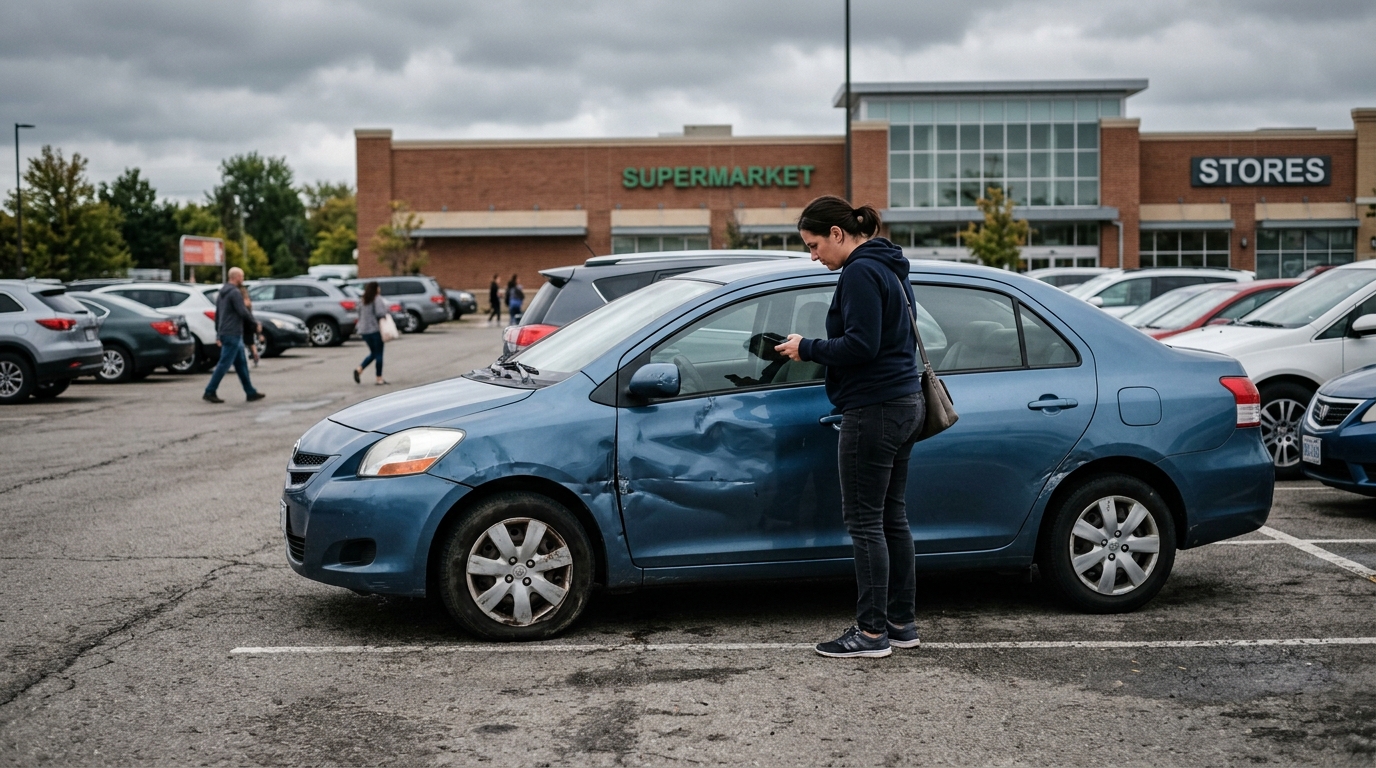
Understanding comprehensive vs collision coverage is one of the most useful pieces of car insurance knowledge a driver can have — and one of the most commonly confused. These two coverages sit at the heart of what most people call "full coverage," but they pay for very different types of damage, cost different amounts, and become optional at different points in a car's life. This guide breaks down what each one covers, how insurers typically price them, and how to decide when carrying both makes financial sense versus when one (or both) can be dropped.
In this article
What Comprehensive Coverage Actually Pays For
Comprehensive coverage — sometimes labeled other than collision on policy documents — pays to repair or replace a vehicle when it's damaged by something other than hitting another car or object. The typical list of covered events includes hail, flooding, falling tree branches, theft, vandalism, fire, and animal strikes. Hitting a deer, notably, falls under comprehensive rather than collision, which catches a lot of drivers off guard.
Annual comprehensive premiums usually run between $130 and $250 for a driver with a clean record and an average vehicle, though rates climb sharply in states with heavy hail or hurricane exposure like Texas, Colorado, and Florida. Deductibles are commonly offered at $100, $250, $500, or $1,000 — with $500 being the standard default. If a $4,500 hailstorm damages the hood and roof and the deductible is $500, the driver pays $500 and the insurer covers the rest.
Comprehensive also covers glass damage, and most insurers waive the deductible entirely for windshield repairs (chips and small cracks) as opposed to full replacements — a small perk worth confirming on any policy.
What Collision Coverage Actually Pays For
Collision coverage handles damage to a vehicle when it hits something — another car, a guardrail, a curb, a pothole deep enough to bend a rim, a tree stump. It also covers single-vehicle wrecks like rollovers and damage sustained when the policyholder is the at-fault driver in a two-car crash. Understanding the comprehensive vs collision distinction matters most in the gray areas: if a deer runs into a car, that's comprehensive; if the driver swerves to avoid the deer and hits a tree, that's collision.
Collision is almost always the more expensive of the two coverages. Expect roughly $300 to $600 a year for the average driver, sometimes more in dense urban areas or for drivers with tickets and at-fault accidents on file. Younger drivers and owners of high-repair-cost vehicles — luxury sedans, EVs with expensive battery packs, cars loaded with sensors and cameras — pay noticeably more.
One important note: if another driver is at fault in a crash, their liability insurance pays for the other party's repairs. The collision coverage on the damaged car only comes into play if the at-fault driver is uninsured, underinsured, or disputing fault.
When Carrying Both Coverages Is Non-Negotiable
Some situations effectively require carrying both comprehensive and collision, regardless of what the raw math might suggest:
- Financed vehicles. Lenders universally require both coverages until the loan is paid off. Dropping them typically triggers force-placed insurance from the bank — expensive, minimal-benefit policies that get added to the loan payment.
- Leased vehicles. The leasing company requires both, plus usually gap coverage to bridge the difference between the car's actual value and the lease payoff amount.
- Newer cars, generally under five model years old. Replacement cost is too high to self-insure, and repair costs for modern vehicles run higher than most people expect once radar, cameras, and aluminum body panels enter the equation.
- Any vehicle worth more than $6,000 to $8,000 that couldn't comfortably be replaced with cash on hand.
- Cars parked in high-risk ZIP codes. Areas with elevated theft rates, hail exposure, or flood risk shift the cost-benefit math toward keeping comprehensive even on older vehicles.
Ready to compare car insurance rates?
Fresh side-by-side quotes from three or more insurers take about ten minutes.
See our quote guideWhen Dropping One Actually Saves Money
For older paid-off vehicles, the standard rule of thumb — often called the 10 percent rule — is that if annual comprehensive and collision premiums plus the deductible add up to more than 10 percent of the car's actual cash value, the coverages are usually costing more than they're worth.
- A 2012 sedan worth $3,500 with $700 a year in comp and collision and a $500 deductible carries about $1,200 of annual downside exposure against a maximum $3,000 payout after deductible. Often a losing bet over time.
- Drop collision before comprehensive. Collision runs two to three times more expensive, and comprehensive still pays out on cheaper high-frequency events like theft, hail, and glass.
- Second cars driven under 3,000 miles a year are strong candidates — lower mileage means lower accident probability and less depreciation of the coverages' value.
- Vehicles a driver would replace with a used purchase under $5,000 rarely justify collision.
- Vehicles under an active loan don't qualify for this analysis at all — the lender's requirement overrides the math.
Dropping both coverages together typically saves $400 to $900 a year on an older vehicle in most states, more in high-cost markets like Michigan, Louisiana, or Florida.
How Deductibles Change the Math
Deductibles are the fastest lever for moving premiums up or down without changing coverage limits. Raising the comprehensive and collision deductible from $500 to $1,000 typically cuts those two coverage lines by 10 to 20 percent — usually $80 to $200 combined per year. Going from $1,000 to $2,500 produces smaller proportional savings.
The break-even math is straightforward: a $500 deductible increase pays off over time only if claims come in less often than once every three to five years. Most drivers file collision claims far less frequently than that, so higher deductibles are often the right call — provided the household can actually absorb the deductible without financial strain when a claim hits.
Some insurers offer disappearing or diminishing deductibles that shrink by $50 to $100 for every claim-free year, sometimes down to zero. These are worth $25 to $50 in effective annual value for low-frequency claimants and effectively nothing for drivers who file often. It's worth asking whether that feature is included by default or as a paid add-on.
Common Scenarios: Which Coverage Pays
The comprehensive vs collision question gets easier once it's applied to specific scenarios. Below are the events drivers ask about most often and which coverage line responds to each:
| What Happened | Coverage That Pays |
|---|---|
| Deer runs into the car on a rural highway | Comprehensive |
| Driver slides on ice into a guardrail | Collision |
| Tree branch falls on a parked car | Comprehensive |
| Rear-ending another vehicle at a light | Collision |
| Vandal keys a door in a parking lot | Comprehensive |
| Backing into a fence or mailbox | Collision |
| Hail cracks a windshield during a storm | Comprehensive |
| Hitting a pothole and bending a rim | Collision |
| Car stolen from the driveway overnight | Comprehensive |
| Rollover on a rural two-lane road | Collision |
The underlying pattern holds across almost every claim: if damage happened while the car was in motion and struck something, it's collision; if some outside force caused the damage, it's comprehensive.
Frequently Asked Questions
Do I need both comprehensive and collision if my car is paid off?
Not necessarily. Once the car is owned outright, the lender requirement disappears and the decision becomes a pure math question. If the vehicle is worth less than around $4,000 and the household can afford to replace it out of pocket, dropping one or both coverages often saves $400 to $900 a year without meaningful real-world downside.
Which is cheaper, comprehensive or collision coverage?
Comprehensive is almost always the cheaper of the two. Nationally, comprehensive averages roughly $130 to $250 a year while collision typically runs $300 to $600. Collision costs more because collision claims happen more frequently and cost more per event — bumper-to-bumper repairs on modern cars easily hit $3,000 to $8,000.
Does comprehensive coverage pay for a cracked windshield?
Yes. Glass damage falls under comprehensive, and most insurers waive the deductible entirely for windshield repairs of chips and small cracks. Full windshield replacements usually require paying the deductible, though several states — including Florida, Kentucky, and South Carolina — require insurers to cover full replacements with zero deductible.
Does collision coverage cover hitting a deer?
No — hitting a deer or any other animal is covered under comprehensive, not collision. Insurers classify animal strikes alongside weather and theft as events largely outside the driver's control. If the driver swerves to miss the deer and hits a tree or another vehicle instead, though, that damage becomes a collision claim.
Is full coverage the same thing as comprehensive plus collision?
Full coverage isn't a defined policy term, but in common usage it refers to liability plus comprehensive plus collision at minimum. Some agents also include uninsured motorist and medical payments coverage under that label. Adding comprehensive and collision to a bare liability policy typically doubles or triples the premium, which is why the decision to keep both matters so much on older vehicles.