
Florida Car Insurance Rates in 2026: Why They're Among the Highest in the Country

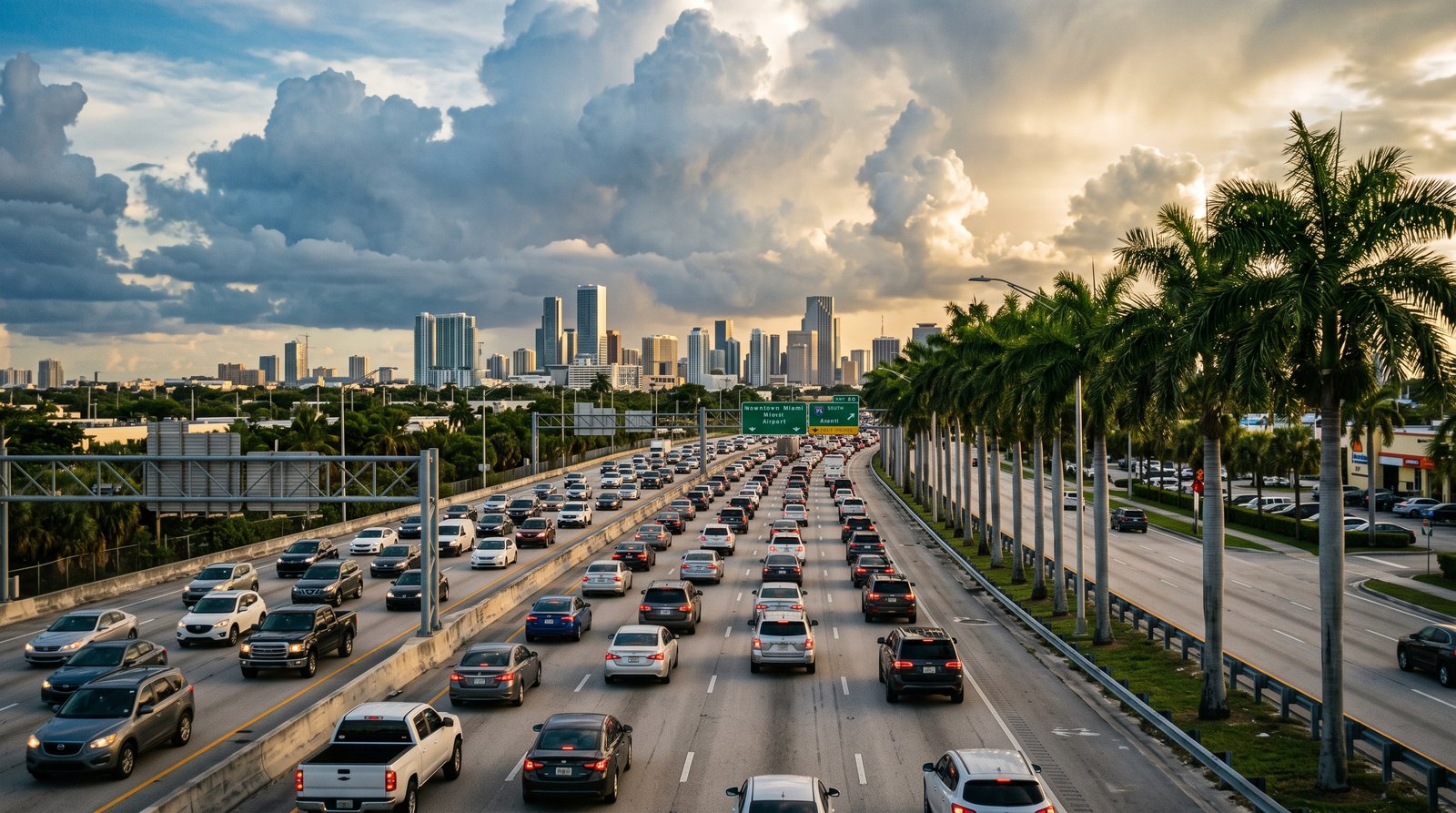
Florida car insurance rates are consistently among the highest in the United States, and the gap between what a Florida driver pays and what the average American pays has widened rather than narrowed in recent years. A full-coverage policy in Miami can cost more than twice what the same driver would pay in a low-cost state like Maine or Idaho.
What makes Florida unusual is that the state also has one of the thinnest minimum coverage requirements in the country. Drivers are paying premium prices for a legal minimum that leaves them badly exposed. This guide breaks down what Florida drivers actually pay in 2026, the specific forces pushing rates up, and the levers that genuinely move a Florida premium.
In this article
What Florida Drivers Actually Pay
Florida premiums vary enormously by ZIP code, but the statewide picture is consistent: drivers here pay well above the national average for both minimum and full coverage. Full coverage in the most expensive South Florida ZIP codes commonly runs into the mid four figures annually for a driver with a clean record, while the same profile in the Panhandle or north-central Florida can pay substantially less.
A few patterns hold across the state:
- Minimum coverage is cheap relative to full coverage — but only because the minimum is so thin. The gap between the two is wider in Florida than in most states.
- Location dominates. Moving from Miami-Dade to a rural county can cut a premium by half or more with no change to the driver or the vehicle.
- Credit-based insurance scores matter. Florida permits their use in rating, and the spread between excellent and poor credit tiers is large.
- Age curves are steep. Teen drivers in Florida face some of the highest rates in the nation, and the discount for adding a teen to a parent policy rather than writing a standalone one is substantial.
Because the spread between carriers in Florida is unusually wide, the single most valuable thing a Florida driver can do is compare quotes across multiple insurers. A price that looks outrageous at one carrier is frequently mid-market at another.
Florida's Minimum Coverage Is Unusually Thin
Florida requires drivers to carry just two things:
- $10,000 in Personal Injury Protection (PIP) — covers your own injuries regardless of who caused the crash
- $10,000 in Property Damage Liability (PDL) — covers damage you cause to someone else's property
Notice what is missing. Florida is one of the very few states that does not require bodily injury liability coverage for ordinary drivers. If you seriously injure someone in an at-fault crash and carry only the state minimum, you have no coverage for their injuries. They can sue you personally, and your wages and assets are exposed.
The $10,000 property damage limit is equally inadequate in 2026. The average new vehicle transaction price is far above that figure, and even a moderate collision with a late-model SUV will blow through $10,000 easily. Anything above the limit comes out of your pocket.
Drivers who have had a DUI face a different regime entirely. A DUI conviction in Florida triggers an FR-44 filing, which requires substantially higher liability limits than the standard minimum and must be maintained for three years. Florida and Virginia are the only two states that use the FR-44.
Why Florida Rates Run So High
No single factor explains Florida's premiums. It is the combination that does the damage.
Uninsured and underinsured drivers. Florida has one of the highest uninsured motorist rates in the country, with estimates commonly landing around one in five drivers. When a large share of the driving population carries no coverage, the cost of their crashes gets absorbed by the people who do pay, through uninsured motorist premiums and higher overall loss ratios.
Litigation volume. Florida has historically generated a disproportionate share of the nation's auto insurance lawsuits relative to its population. The state passed significant tort reform in 2023, which changed the comparative negligence standard and shortened the window for filing negligence claims. Insurers have pointed to those changes as a reason for stabilizing rates, but the effects work through the system slowly and the state remains a high-litigation environment.
Weather and catastrophe exposure. Hurricanes, tropical storms, and routine flooding drive comprehensive claims at a rate few states match. A single major storm can total tens of thousands of vehicles. That risk is priced into every comprehensive premium in the state, whether or not you live on the coast.
Population density and traffic. South Florida's metro corridors combine heavy congestion, a large tourist and rental population unfamiliar with local roads, and a high concentration of vehicles. More cars in close proximity means more claims per mile driven.
Vehicle theft and fraud. Florida has long ranked high for both staged-accident schemes and clinic-based PIP fraud. Enforcement has improved, but the residual cost is embedded in the rate base.
Ready to compare car insurance rates?
Fresh side-by-side quotes from three or more insurers take about ten minutes.
See our quote guideRates Vary Enormously by Metro
Where you park matters more in Florida than almost anywhere else. Insurers rate at the ZIP code level, and the differences across the state are dramatic.
- Miami-Dade, Hialeah, and greater South Florida — consistently the most expensive part of the state and among the most expensive metros in the country. Density, litigation frequency, theft rates, and uninsured motorist prevalence all peak here.
- Tampa Bay and St. Petersburg — high, though generally below South Florida. Storm surge exposure is a meaningful factor on comprehensive.
- Orlando — elevated by tourist traffic and interstate volume, but typically less costly than Miami.
- Jacksonville — moderate by Florida standards, with more room between the cheapest and most expensive carriers.
- Tallahassee, Gainesville, and the Panhandle — the most affordable regions in the state, sometimes approaching the national average.
If you are moving within Florida, get a quote for the new ZIP code before you sign a lease. A twenty-mile move can change your premium by hundreds of dollars a year.
How Florida's No-Fault System Works When You Crash
Florida is a no-fault state for injuries, which means your own PIP coverage pays your medical bills first, regardless of who caused the crash. Understanding the mechanics matters, because two specific rules catch drivers out.
The 14-day rule. You must seek initial medical treatment within 14 days of the accident. Miss that window and your PIP benefits can be denied entirely, even for a legitimate injury that surfaces later. If you are in a crash in Florida, get evaluated promptly even if you feel fine.
The emergency medical condition threshold. Your full $10,000 in PIP is only available if a qualifying medical provider determines you have an emergency medical condition. Without that determination, benefits are capped at $2,500. This is a large difference and it hinges on documentation from your treating provider.
PIP covers 80% of reasonable medical expenses and 60% of lost wages, up to the applicable limit. It does not cover pain and suffering. To pursue the at-fault driver for those damages, your injuries have to meet the state's serious injury threshold — permanent injury, significant scarring or disfigurement, or death.
For property damage, fault still applies normally. The at-fault driver's PDL coverage pays for your vehicle, or your own collision coverage does if you carry it.
What Actually Lowers a Florida Premium
Some advice works everywhere. Some of it works particularly well in Florida.
- Shop every renewal, not every few years. Carrier appetite in Florida shifts constantly as insurers enter, exit, and re-rate the market. The company that was cheapest two years ago frequently is not today.
- Raise your comprehensive and collision deductibles. Because Florida comprehensive premiums are inflated by catastrophe exposure, moving from a $500 to a $1,000 deductible produces a bigger dollar saving here than in most states.
- Work on your credit-based insurance score. Florida permits credit in rating and the tier spread is wide. This is a slow lever but a powerful one.
- Take a state-approved defensive driving course. Florida insurers are required to offer a discount to drivers who complete an approved course, and it is available to drivers of all ages.
- Consider telematics carefully. Usage-based programs can produce meaningful savings for low-mileage and off-peak drivers. If you commute daily through South Florida traffic, run the numbers before enrolling.
- Bundle, but verify. Bundling auto with home or renters usually helps, though in Florida's fractured property insurance market the bundled home premium sometimes erases the auto saving. Price both separately and together.
Why the Minimum Is Almost Never the Right Answer
Florida's legal minimum is cheap to buy and expensive to rely on. Two coverages are worth adding for nearly every Florida driver.
Bodily injury liability. Not required for most drivers, but it is the coverage that stands between an at-fault crash and a personal lawsuit. Limits of $100,000 per person and $300,000 per accident cost far less than most people assume, because the base premium in Florida is already dominated by PIP and comprehensive.
Uninsured and underinsured motorist coverage. In a state where roughly one in five drivers may be uninsured, and where many of the insured carry no bodily injury coverage at all, UM/UIM is the coverage that pays when the person who hit you cannot. Given Florida's uninsured rate, this is arguably the highest-value optional coverage available in the state.
Adding both to a minimum policy raises the premium, but it converts a policy that protects almost nothing into one that actually functions after a serious crash. For most Florida drivers, that is a better use of money than shaving the last few dollars off a bare-minimum quote.
Frequently Asked Questions
Why is car insurance so expensive in Florida?
Florida combines several cost drivers that few other states have all at once: one of the highest uninsured driver rates in the country, a historically high volume of auto injury litigation, major hurricane and flood exposure that inflates comprehensive claims, dense metro traffic with heavy tourist volume, and a long history of staged-accident and PIP fraud. Each factor adds to the loss costs insurers have to recover, and together they push Florida premiums well above the national average.
Is Florida a no-fault state?
Yes, for injuries. Your own Personal Injury Protection coverage pays your medical bills first regardless of who caused the crash. PIP covers 80% of reasonable medical expenses and 60% of lost wages up to your limit. Property damage still works on a fault basis, so the at-fault driver's property damage liability pays for vehicle repairs. You can only pursue the other driver for pain and suffering if your injuries meet Florida's serious injury threshold.
What is the minimum car insurance required in Florida?
Florida requires $10,000 in Personal Injury Protection and $10,000 in Property Damage Liability. That is it. Florida is one of the few states that does not require bodily injury liability coverage for ordinary drivers, which means a minimum-coverage policy provides nothing for injuries you cause to other people. Drivers with a DUI conviction face the stricter FR-44 requirement, which mandates significantly higher liability limits for three years.
Do I need to see a doctor after a Florida car accident?
Yes, and quickly. Florida's 14-day rule requires you to seek initial medical treatment within 14 days of the crash for your PIP benefits to apply. Miss that window and the insurer can deny the claim entirely. Additionally, your full $10,000 PIP benefit is only available if a qualifying provider determines you have an emergency medical condition; without that finding, benefits are capped at $2,500.
How can I lower my Florida car insurance rate?
Shop multiple carriers at every renewal, since carrier pricing in Florida shifts constantly and the spread between companies is unusually wide. Raise your comprehensive and collision deductibles, which saves more in Florida than elsewhere because catastrophe exposure inflates those premiums. Complete a state-approved defensive driving course, which insurers are required to discount. Work on your credit-based insurance score over time, and check whether a telematics program fits your driving pattern.
Should I buy more than Florida's minimum coverage?
For almost every driver, yes. The state minimum includes no bodily injury liability, so an at-fault crash that injures someone leaves you personally exposed to a lawsuit. Adding bodily injury limits of $100,000 per person and $300,000 per accident typically costs less than drivers expect. Uninsured and underinsured motorist coverage is equally important given that roughly one in five Florida drivers may be uninsured.