
Car Insurance for New Drivers: What to Expect

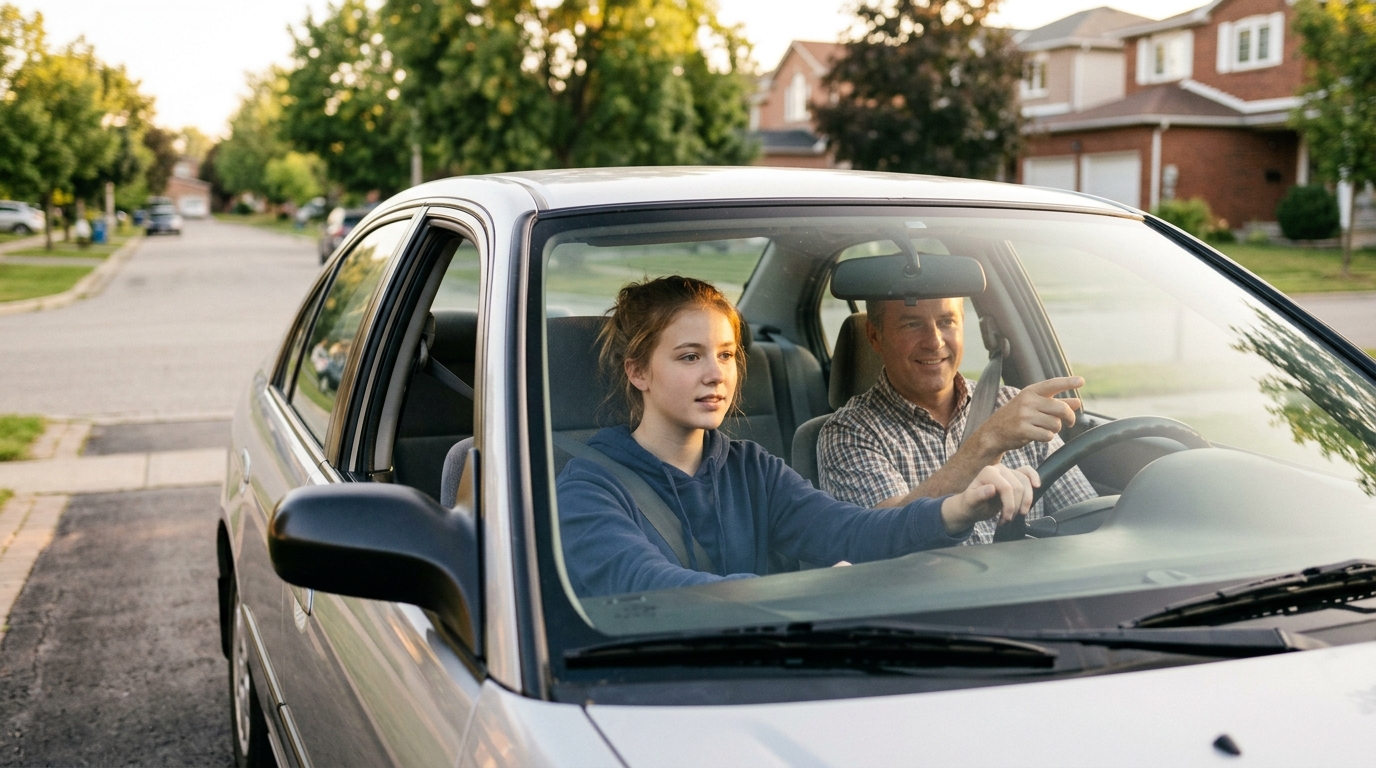
Car insurance for new drivers is almost always the most expensive stretch of a driver's rate history, often costing two to four times what an experienced driver pays for the same coverage. Whether the new driver is a 16-year-old with a fresh permit or a 34-year-old who just passed the road test, insurers price inexperience as its own risk category. This guide breaks down what first-time drivers actually pay, how the parent-policy strategy can cut the annual bill roughly in half, and which discounts move the needle in the first three years.
In this article
What Insurers Mean by 'New Driver'
To an underwriter, a new driver is anyone with fewer than three years of continuous licensed experience, regardless of age. That 30-year-old who commuted by subway until last month is rated much closer to a 17-year-old than to a 30-year-old who has been driving since high school. Age still matters, and teens carry the highest surcharges, but the years-licensed field on the application is what most carriers weight first when pricing car insurance for new drivers.
Several factors drive the premium higher during those early years:
- Crash frequency — drivers in their first 12 months are statistically the most likely to file a claim of any group on the road.
- Claim severity — new-driver accidents tend to happen at higher speeds and produce larger property-damage claims.
- No loss history — carriers cannot yet reward a clean record because there isn't one to look at.
- Credit and continuity gaps — many new drivers also have thin credit files and no prior-insurance history, both of which push rates up in most states.
Typical Premiums for a First-Time Driver
Actual dollars vary wildly by state, vehicle, and coverage limits, but the shape of the pricing is fairly consistent across the country. A 16-year-old buying a standalone policy on a used sedan will typically see annual premiums in the $3,500 to $6,500 range for standard liability plus collision and comprehensive. A 25-year-old new driver in the same city usually lands closer to $1,800 to $3,200 on the same coverage. A 40-year-old newly licensed driver often pays $1,500 to $2,500 — still 30 to 50 percent above what a same-age experienced driver would pay.
| New driver profile | Own policy (annual) | Added to parent policy (added cost) |
|---|---|---|
| 16-17 years old | $4,000 - $6,500 | $1,500 - $3,000 |
| 18-20 years old | $3,000 - $5,000 | $1,200 - $2,500 |
| 21-25 years old (new license) | $2,000 - $3,500 | $900 - $1,800 |
| 26+ years old (new license) | $1,500 - $2,800 | $700 - $1,500 |
High-cost states such as Michigan, Louisiana, Florida, and New York can push these numbers 40 to 70 percent higher. Rural states like Maine, Vermont, Ohio, and Idaho often come in 20 to 30 percent below the national midpoint.
Permit vs. License: When Coverage Actually Kicks In
Most personal auto policies automatically extend liability coverage to a household member who holds a learner's permit, without any premium change or paperwork. The permitted driver is treated as a supervised operator of the vehicle they already share, and the existing named-insured absorbs the risk. A handful of carriers require a formal permit endorsement, but even those endorsements are typically free.
The rating conversation changes the day the full or provisional license is issued. Insurers require the new licensee to be listed as a rated driver on any policy covering a vehicle in the household, and premiums adjust at the next renewal — sometimes sooner if the carrier does mid-term re-rating. Failing to add a newly licensed teen or spouse is a common mistake and can trigger claim denials down the road for material misrepresentation. The safest move is to call the carrier the same week the license is issued.
Ready to compare car insurance rates?
Fresh side-by-side quotes from three or more insurers take about ten minutes.
See our quote guideThe Parent-Policy Trick That Halves the Bill
The single biggest lever available to a new driver is staying on a parent's policy rather than opening a standalone one. The math is dramatic. A 17-year-old in Ohio quoted $4,800 a year on their own policy will often add only $2,000 to $2,400 to a parent's existing policy for the same coverage — roughly a 50 percent reduction.
Three mechanics drive the savings:
- Multi-car discount — most carriers cut 10 to 25 percent off every vehicle when two or more are on the same policy.
- Assigned-driver rating — carriers rate each driver against a specific vehicle, so the teen gets assigned to the lowest-value car in the household while the parents remain rated on their own. That splits the surcharge across a cheaper vehicle.
- Established policy tenure — the parent's clean record, homeownership, credit, and prior-insurance history all flow through to the new driver's rate factor.
The trick works whether the new driver is a teen at home, a college student under 24 at the same permanent address, or an adult child who moved back in. Once the new driver moves out permanently and titles their own vehicle, they generally have to leave the parent policy — carriers require the named insured to have an insurable interest in the vehicle and share the garaging address.
One trade-off worth naming: an at-fault claim on the joint policy affects the parents' rate at renewal too. Households with clean-driving parents often accept that risk because the annual savings are so large.
Discounts That Actually Reduce a New Driver's Rate
Discount menus are long, but only a handful matter for someone with under three years of experience. The following move the needle most:
- Good student discount — typically 5 to 25 percent off a young driver's portion of the premium, available to full-time students under 25 with a B average or 3.0 GPA. Report cards or transcripts are required annually.
- Driver's education discount — 5 to 10 percent for completing a state-approved course. Some carriers only accept in-classroom hours; others accept online programs.
- Telematics or usage-based insurance — programs like Progressive Snapshot, State Farm Drive Safe & Save, and Allstate Drivewise can cut new-driver premiums 10 to 40 percent at renewal based on braking, phone use, and mileage. New drivers with clean habits often see the largest discount tier of any customer group.
- Distant student discount — 5 to 15 percent if the student attends school more than 100 miles from home and does not have regular access to the car.
- Defensive driving course — an additional 5 to 10 percent in most states after completing an approved 4- to 8-hour course, stackable with driver's ed.
Stacking three of these commonly cuts 25 to 35 percent off a young driver's slice of the premium.
When It Makes Sense to Leave the Parent Policy
Even with the savings, there are moments where a standalone policy is the right call. The clearest triggers are a permanent move out of the household, buying a car titled in the new driver's name only, or relocating to a different state where the parent's carrier doesn't write. Insurers can technically refuse to renew a policy that lists a driver at a different garaging address than the vehicle.
An at-fault accident is the other trigger to think about. A single at-fault claim from a new driver can raise a family policy 30 to 60 percent at the next renewal, which sometimes wipes out the savings from staying together. In that case, moving the young driver to their own policy — and letting the parents' rate reset — can be cheaper by year two. Running a fresh comparison at every renewal is the habit that keeps the bill under control during the first three years, after which most carriers begin treating the driver as fully experienced.
Frequently Asked Questions
How much does car insurance cost for a new driver?
A newly licensed teenager on a standalone policy typically pays $3,500 to $6,500 a year for full coverage, while a newly licensed adult in their late 20s or 30s usually pays $1,500 to $3,000. Rates fall roughly 50 percent when the new driver is added to an existing parent policy instead. State, vehicle value, and coverage limits are the biggest swing factors.
Can a new driver stay on their parents' insurance?
Yes, as long as the new driver lives at the same permanent address as the parents and the vehicle is garaged there. Full-time college students under 24 count as household members even while at school. Once the driver moves out and titles a vehicle in their own name, insurers usually require them to open a separate policy.
Do you need car insurance with just a learner's permit?
A driver with only a learner's permit is almost always covered automatically under an existing household policy without any premium change, since they can only drive supervised. No separate policy is required in most states. The rating change happens on the day the full or provisional license is issued, and carriers should be notified within a week to avoid coverage gaps.
What's the cheapest way to insure a new driver?
The cheapest structure is almost always adding the new driver to a parent or spouse's existing policy, then stacking a good student discount, a driver's education discount, and a telematics program. Choosing an older, lower-value vehicle to assign the new driver to on the policy also lowers the surcharge. Comparing three carriers at every renewal during the first three years typically keeps the annual bill at its lowest.