
Landlord Insurance vs Homeowners Insurance
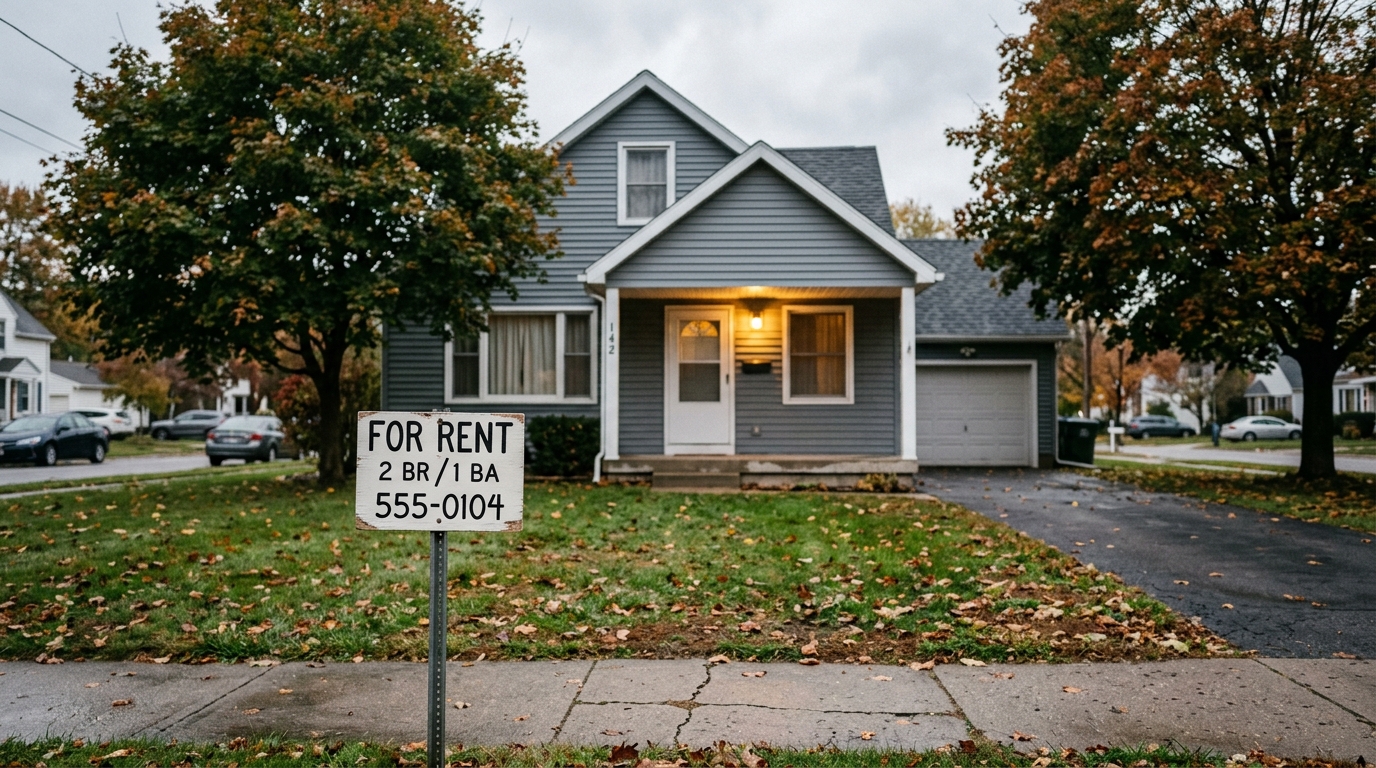
The choice between landlord insurance vs homeowners insurance rarely comes up until someone rents out a property they used to live in, and by then the wrong policy is often already in force. A standard homeowners policy assumes the named insured lives on the premises, which means the moment tenants move in and the owner moves out, most of the coverage quietly stops working. This guide covers when the switch is required, how DP-1 and DP-3 dwelling forms actually differ, and how landlord policies handle the rent that stops coming in after a covered loss.
In this article
- When a Homeowners Policy Stops Being the Right Fit
- What Landlord Insurance Actually Covers
- DP-1 vs DP-3: The Two Landlord Policy Forms That Matter
- Fair Rental Value: The Coverage Homeowners Don't Get
- What Landlord Insurance Costs Compared to a Homeowners Policy
- Mistakes That Void Coverage or Underpay Claims
When a Homeowners Policy Stops Being the Right Fit
Homeowners insurance is built around owner-occupancy. The HO-3 form, which covers the vast majority of single-family homes in the US, requires the named insured to use the dwelling as a primary residence. Once the owner moves out and a tenant moves in, the property becomes a rental risk, and the carrier is entitled to non-renew the policy, deny a claim, or void coverage entirely for material misrepresentation.
The trigger point is not the day the lease is signed. It is typically the day the property stops being owner-occupied. Common scenarios that force the switch to a landlord policy include:
- Moving out and renting the home to long-term tenants on a 6 or 12 month lease
- Inheriting a property and choosing to rent it out rather than sell
- Buying a second home and putting the original on the rental market
- Turning a house into a full-time short-term rental through Airbnb or Vrbo (though STRs often need a specialty policy, not a standard DP form)
- Renting to family members, even at below-market rent or no rent at all
Occasional or short-term rentals sometimes have workarounds. Many homeowners insurers will accept a home rented out for less than 30 days a year with a rider or endorsement. Beyond that threshold, the policy usually has to become a dwelling fire policy, sometimes called a DP form or a landlord policy.
What Landlord Insurance Actually Covers
The core distinction in landlord insurance vs homeowners policies is who is being protected and against what. A homeowners policy insures a family and their belongings inside a home they occupy. A landlord policy insures a building, the owner's liability as a property owner, and the rental income that building produces. It does not cover the tenant's furniture, clothing, or electronics — that is what renters insurance is for.
A typical landlord policy is built from three coverage blocks:
- Dwelling and other structures. The house itself, plus detached garages, sheds, and fences, insured at a replacement cost figure that reflects rebuilding rather than market value.
- Landlord liability. Legal defense and settlement costs if a tenant or guest is injured on the property and sues. Standard limits run from $100,000 to $300,000, with $500,000 or $1 million available on most policies for a small premium bump.
- Fair rental value or loss of rents. The monthly rent the owner would have collected while the property is being repaired after a covered loss.
Contents coverage is usually optional and set low — often $2,500 to $10,000 — because it is only meant to insure landlord-owned items like appliances, a lawnmower stored in the garage, or furniture in a furnished rental.
DP-1 vs DP-3: The Two Landlord Policy Forms That Matter
Dwelling fire policies come in three ISO forms, but the market runs almost entirely on DP-1 and DP-3. Choosing between them is the single biggest decision in a landlord insurance vs homeowners comparison, because it determines both what gets paid on a claim and how much is paid.
| Feature | DP-1 (Basic Form) | DP-3 (Special Form) |
|---|---|---|
| Perils covered | Named perils only: fire, lightning, and internal explosion by default | Open perils on the dwelling — anything not specifically excluded |
| Loss settlement | Actual cash value (depreciated) | Replacement cost |
| Optional add-ons | Extended coverage (windstorm, hail, vandalism) usually available for extra premium | Broad coverage built in; some carriers still exclude theft on unoccupied properties |
| Typical use case | Older homes, vacant properties, distressed rentals, high-risk areas | Standard occupied long-term rentals in decent condition |
| Premium | Cheaper — often 30 to 50 percent less than DP-3 | More expensive but far broader protection |
DP-1 is often the only option for older homes, properties in coastal wind zones, or homes valued below a carrier's minimum. It looks cheap on paper, but the actual cash value settlement can cut a claim payout in half on a roof or HVAC system that is 15 years old. DP-3 is the closer analog to a modern HO-3 homeowners policy and is what most landlords should buy if it is available in their market.
Time to review your homeowners policy?
Comparing quotes every 12-24 months often surfaces discounts your current insurer will not volunteer.
How to shop home insuranceFair Rental Value: The Coverage Homeowners Don't Get
The single coverage that separates a landlord policy from a homeowners policy is fair rental value, sometimes labeled loss of rents or Coverage D on a DP form. If a covered loss like a kitchen fire or burst pipe makes the unit uninhabitable, this coverage pays the monthly rent the tenant would have owed during the time repairs take.
The math is straightforward but often misunderstood. If a duplex rents for $2,200 a month and takes four months to repair after a fire, fair rental value would pay $8,800 in lost rent, less any deductible. Most policies cap this at 12 months, and the trigger is a covered peril — a tenant who simply stops paying rent or breaks a lease is not a covered loss.
Two details are worth checking on any quote:
- Whether the limit is a percentage of dwelling coverage or a flat dollar amount. Percentage-based limits (usually 10 to 20 percent of Coverage A) scale with the property. Flat limits can be inadequate on higher-rent properties.
- Whether the coverage runs on actual loss sustained or scheduled amount. Actual loss sustained pays real lost rent up to the limit. Scheduled amount pays a fixed monthly figure regardless of actual rent — cheaper but riskier if rent has climbed.
- How the deductible interacts with the rental income payment. Some carriers apply the dwelling deductible to the loss-of-rent claim, some do not.
What Landlord Insurance Costs Compared to a Homeowners Policy
Landlord policies generally run 15 to 25 percent higher than the equivalent homeowners policy on the same house. On a home that would cost $1,600 a year to insure as owner-occupied, expect roughly $1,850 to $2,000 as a rental. The premium jump reflects a real underwriting reality — tenants file more claims than owner-occupants, tenant liability exposure is broader, and vacant stretches between tenants raise the risk of undetected damage.
Several factors move the number more than tenant occupancy alone:
- Location. Florida, Louisiana, Texas coastal counties, and California wildfire zones can push landlord premiums to $3,000 to $5,000 or force a DP-1 with wind and fire excluded from a standard carrier onto a surplus lines market.
- Roof age. Many carriers will not write DP-3 replacement cost on a roof older than 15 to 20 years and will default to actual cash value or DP-1.
- Rental type. Long-term leased single-family homes are the cheapest to insure. Short-term rentals, student housing, and Section 8 rentals typically pay 25 to 60 percent more.
- Claims history. A single water damage claim in the prior five years can add 10 to 20 percent to the renewal premium.
Bundling with a personal auto or umbrella policy at the same carrier often recovers most of the price gap between homeowners and landlord coverage — commonly 10 to 15 percent off the landlord premium.
Mistakes That Void Coverage or Underpay Claims
Most denied landlord claims come from a handful of avoidable errors made in the first few months of renting a property. These are the ones that show up repeatedly in state insurance department complaints and carrier claim reviews:
- Keeping the homeowners policy in force after tenants move in. The carrier finds out at claim time, denies the claim as material misrepresentation, and cancels the policy back to the day occupancy changed.
- Buying DP-1 to save money on a good property. Actual cash value settlements on a 12-year-old roof after a hailstorm can leave a $15,000 gap between the check and the actual repair bill.
- Underinsuring the dwelling to match the purchase price. Rebuild cost is often 20 to 40 percent higher than what a house sold for, especially in older neighborhoods with cheap land.
- Skipping the requirement that tenants carry renters insurance. Without it, tenant damage to their own belongings tends to become a landlord dispute, and tenant liability claims can pull into the landlord policy.
- Forgetting to add a vacancy endorsement between tenants. Most DP forms restrict or exclude coverage after 30 to 60 days of vacancy, and a burst pipe in an empty house is exactly when that clause bites.
Frequently Asked Questions
Can I just add a landlord endorsement to my homeowners policy?
A handful of carriers offer a rental endorsement for occasional or short-term rentals of an owner-occupied home, typically capped at 30 to 62 days a year. Once the property becomes a full-time rental with tenants on a lease, no endorsement will bridge the gap — the policy has to convert to a landlord or dwelling fire form. Trying to stretch a homeowners endorsement past its limits usually ends in a denied claim.
Does landlord insurance cover the tenant's belongings?
No. Landlord insurance covers the building, the landlord's liability, and lost rental income, but it does not cover any of the tenant's personal property — furniture, clothing, electronics, or anything else the tenant owns. Tenants need their own renters insurance policy for that, which typically costs $12 to $25 a month. Requiring proof of renters insurance in the lease is a standard practice among landlords.
Is DP-3 the same as a homeowners HO-3 policy?
They are similar in structure but not identical. Both cover the dwelling on an open perils basis, meaning any peril not specifically excluded is covered, and both settle dwelling losses at replacement cost. The differences are that DP-3 has no personal property coverage on the tenant, limited contents coverage for the landlord, and includes fair rental value instead of loss-of-use. Personal liability limits and definitions also differ slightly.
How long do I have to switch policies after renting out my home?
There is no universal grace period, but most carriers expect notice within 30 days of the occupancy change. Many homeowners policies technically become void the day the owner moves out and tenants move in, whether or not the carrier has been told. The practical move is to have the landlord policy in force on the same day the lease begins so there is no gap or overlap that could complicate a claim.
Do I need landlord insurance if I rent to a family member?
Yes, in almost all cases. Insurance carriers care about occupancy, not the relationship between the owner and the occupant. A house rented to a sibling, adult child, or parent — even at no rent — is still not owner-occupied, and a homeowners policy on it is still exposed to non-renewal or claim denial. A DP-3 landlord policy is the correct product for the situation.