
Replacement Cost vs Actual Cash Value
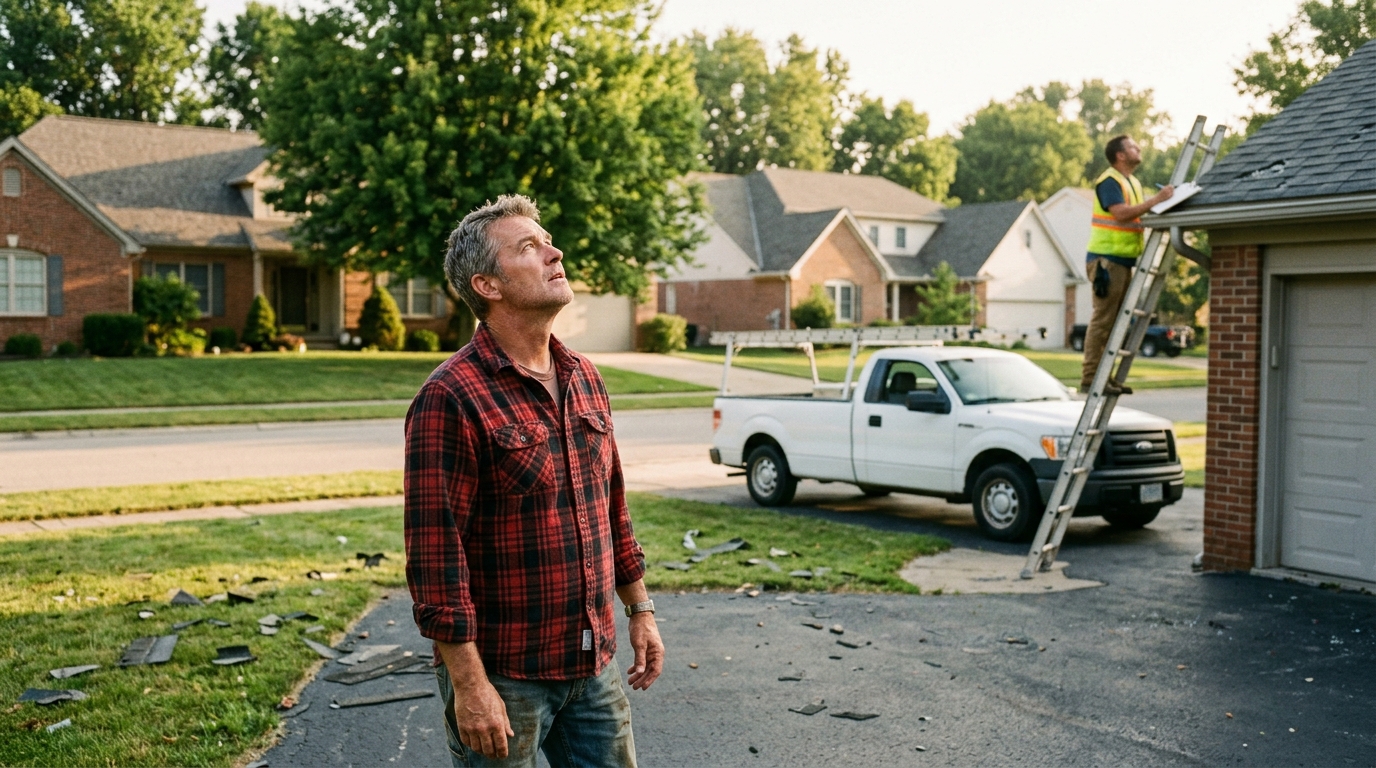
The choice between replacement cost vs actual cash value can swing a homeowners insurance payout by $10,000 or more on a single claim. Most policyholders don't find out which one they have until an adjuster hands them a check — and by then, the depreciation math is already done. This guide breaks down how each valuation method works, when each makes sense, and how to check what a current policy actually promises in about two minutes.
In this article
What RCV and ACV Actually Pay
Replacement cost value (RCV) pays what it costs today to replace damaged property with a similar new item. Actual cash value (ACV) pays that same figure minus depreciation for age, condition, and wear. The difference sounds academic until a hailstorm takes out a 12-year-old roof.
Insurers calculate ACV a few ways. Some use straight-line depreciation tables — a 20-year rated asphalt roof at year 10 is worth 50% of new. Others use market value, essentially what a used version of the item would fetch. A five-year-old TV that originally cost $1,200 might have an ACV of $300 to $400. Replacement cost on the same TV runs $900 to $1,100 depending on what's on store shelves.
The distinction between replacement cost vs actual cash value shows up on two separate lines of a policy: Coverage A (the dwelling) and Coverage C (personal property). It's possible — and common — to have RCV on the structure but ACV on the contents, which is where most homeowners get caught off guard after a fire or burglary.
The Roof Example That Explains Everything
A concrete example works better than definitions. A Kansas homeowner files a claim for a hail-damaged 15-year-old asphalt shingle roof, and the adjuster writes a $14,000 replacement estimate — typical for a 2,000 square foot home in current pricing.
| Line item | Replacement Cost | Actual Cash Value |
|---|---|---|
| Replacement estimate | $14,000 | $14,000 |
| Depreciation (year 15 of 20) | $0 | -$10,500 |
| Deductible | -$2,500 | -$2,500 |
| Homeowner's net check | ~$11,500 | ~$1,000 |
| Out-of-pocket to finish job | ~$2,500 | ~$13,000 |
With replacement cost coverage, most insurers pay the ACV portion up front and hold back depreciation until repairs are done and receipts submitted. With ACV coverage, that depreciation never comes back.
That gap — over $10,000 on a single claim — is what the replacement cost vs actual cash value decision really costs. On a total interior or structural loss for a $300,000 home, the difference can push into six figures.
When Actual Cash Value Is the Right Call
Not every homeowner needs RCV. ACV coverage can be a smart choice in specific scenarios:
- Rental properties or second homes where an owner would probably sell the land rather than rebuild after a total loss
- Older homes with obsolete features — plaster walls, knob-and-tube wiring, cast-iron plumbing — that would be code-updated during any real repair anyway
- Coastal or wildfire markets where full RCV coverage isn't available or costs 40-60% more than the ACV alternative
- Detached structures like a 40-year-old shed or barn whose replacement cost exceeds anything the owner would actually rebuild
- Homes carried purely to satisfy a lienholder on land where the structure is essentially a teardown
The pattern in all of these: the property has more land value than structure value, or the owner has already decided that a total loss ends with a check and a for-sale sign rather than a rebuild. In every other case — a home someone actually lives in — RCV is the standard for a reason.
Time to review your homeowners policy?
Comparing quotes every 12-24 months often surfaces discounts your current insurer will not volunteer.
How to shop home insuranceWhen Replacement Cost Is Worth Paying For
The reverse list is shorter and more universal. Replacement cost coverage is almost always the right call when any of these apply:
- Primary residence with a mortgage. Lenders typically require RCV on Coverage A but leave Coverage C on ACV — the contents endorsement is the fix.
- A roof, HVAC unit, or water heater over 10 years old. These are the most-claimed items in homeowners insurance, and depreciation hits them hardest.
- A newly renovated or recently upgraded home. Recent upgrades cost the most to redo yet depreciate fastest under the ACV formula.
- Homes in hail, wind, or hurricane zones. Roof claims are frequent, and ACV settlements routinely leave homeowners $8,000 to $15,000 short.
- Any policy where the premium difference is under $200 a year. That's the typical gap, and it's cheap insurance against a five-figure gap on a claim check.
- Households without $10,000 to $20,000 in liquid savings. ACV only works when the homeowner can absorb the depreciation shortfall in cash.
How to Check Which One a Policy Actually Has
Open the declarations page — the front summary of the policy, usually called the dec page. It's the first two to three pages and lists coverage limits, deductibles, and endorsements. Three things to look for:
- Coverage A (Dwelling): Should read "Replacement Cost" or "RC." If it says "ACV," "Actual Cash Value," or has no notation at all, the structure is likely on ACV.
- Coverage C (Personal Property): This is where the surprise usually hides. Many standard HO-3 policies default to ACV on contents unless a "Personal Property Replacement Cost" endorsement — often called HO-290 or the insurer's equivalent — is attached.
- Roof settlement clause: A growing number of insurers in Texas, Oklahoma, Colorado, Missouri, and Florida now write roofs on ACV even when the rest of the dwelling is on RCV. Look for phrases like "actual cash value roof endorsement" or "roof surfacing payment schedule."
Insurers must disclose this in the policy, but it can be buried on page 7 of a 40-page document. If the dec page doesn't settle the question, calling the agent and asking "is the dwelling RCV or ACV, and what about the roof and contents?" takes about 90 seconds.
Why the Premium Gap Is Smaller Than Most Homeowners Think
The stated reason for taking ACV is savings. In practice, upgrading from ACV to full RCV on a mid-market policy — say $250,000 in dwelling coverage on a typical suburban home — usually adds $75 to $250 a year to the premium. On a policy already costing $1,800 to $2,400 annually, that's a 5-10% bump for coverage that can pay three to four times more on a major claim.
Homeowners trimming premiums often get more mileage from raising the deductible from $1,000 to $2,500 (typical savings: $150-$300 a year) than from downgrading dwelling coverage to ACV. The bigger drivers of savings on the ACV side are usually a roof-specific ACV endorsement or a windstorm exclusion in coastal states — not the base dwelling valuation.
The math almost always favors RCV on a home someone lives in. Even $2,000 to $5,000 in cumulative extra premium over 20 years is paid back many times over by a single major roof or interior-water claim during that stretch.
The Contents Trap Almost Nobody Catches
Even homeowners with full RCV on the dwelling often have ACV on personal property — furniture, electronics, appliances, clothing, tools. On a total or near-total loss, the depreciation gap on contents alone can run $20,000 to $50,000 for an average household. Fire and burglary claims are where this bites hardest, because those losses clean out entire rooms or the whole house at once.
The fix is a Personal Property Replacement Cost endorsement added to Coverage C. It typically costs $30 to $80 a year on a standard homeowners policy. Without it, a claim for a stolen four-year-old laptop that originally retailed at $1,400 might pay $500 to $700. With it, the payout is whatever a similar new laptop costs the week of the claim.
The same principle applies to high-value items — jewelry, cameras, musical instruments, collectibles — but those usually need a separate scheduled personal property endorsement, which requires an appraisal and covers each item on a stated-value basis. A basic contents RCV endorsement doesn't reach that far. For a homeowner with any single item worth over $2,500 to $5,000, the scheduled endorsement closes the last gap.
Frequently Asked Questions
Which is better, replacement cost or actual cash value?
Replacement cost is almost always better for a primary residence because it pays what it actually costs to rebuild or replace items today, not a depreciated amount. ACV can make sense on rentals, older secondary structures, or in markets where RCV coverage isn't affordable. For a home someone lives in, the payout gap on a major claim — often $10,000 or more — usually justifies the small premium increase.
How much more does replacement cost coverage cost per year?
Upgrading from ACV to RCV on a typical $250,000 dwelling policy adds roughly $75 to $250 per year, or about 5-10% of the base premium. Adding a Personal Property Replacement Cost endorsement for contents is a separate line item that usually costs another $30 to $80 annually. Together, most homeowners pay under $300 a year to move a full policy from ACV to true replacement cost.
Does my mortgage lender require replacement cost coverage?
Most mortgage lenders require the dwelling to be insured for at least the loan balance, and many specifically require replacement cost coverage on Coverage A (the structure itself). They rarely require RCV on personal property, so contents often default to ACV unless the homeowner adds the endorsement. Check the loan's insurance requirements clause — it will say whether RCV is mandatory or just recommended.
Can I switch from ACV to replacement cost mid-policy?
Yes — most insurers allow adding an RCV endorsement or upgrading the dwelling valuation at any point during the policy term with a pro-rated premium adjustment. The change usually takes effect within a few days and doesn't require a new inspection unless the home is over a certain age or in a high-risk zone. Any claim filed before the change goes through is still settled under the old valuation.
Does replacement cost coverage pay before or after the repairs are done?
Most RCV policies pay the actual cash value of the loss up front — roughly 60-70% of the replacement estimate — and hold back the recoverable depreciation until repairs are complete and receipts are submitted. Homeowners typically have 180 days to two years to finish the work and claim the remaining amount, depending on state law and the insurer. Skipping the repairs means the depreciation portion is forfeited.