
Rental Car Reimbursement Coverage: Is It Worth It?

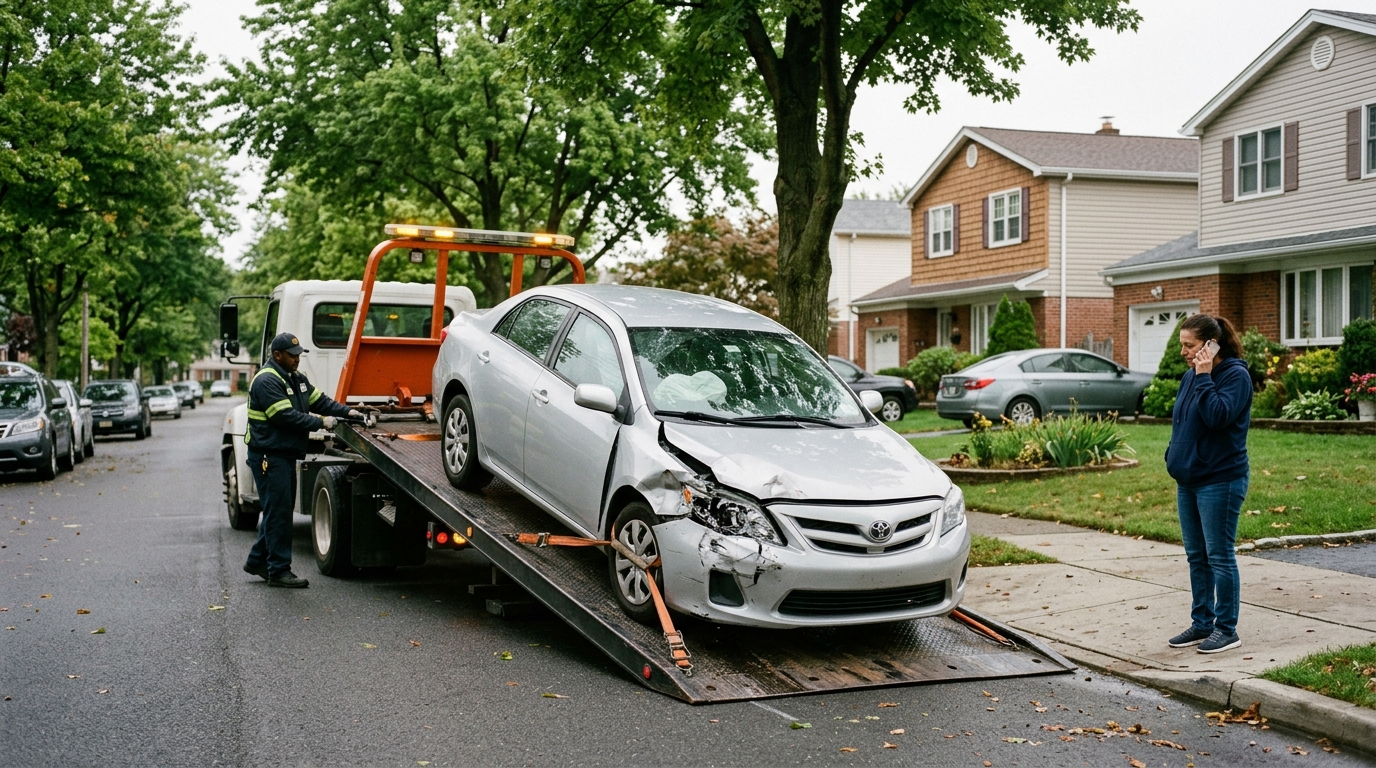
Rental car reimbursement coverage is an optional add-on to an auto insurance policy that pays for a temporary rental while a covered car is being repaired. It usually costs $2 to $8 per month, but daily payout limits and exclusions determine whether the coverage actually delivers when a driver files a claim. This guide covers what rental reimbursement includes, the fine print that leaves drivers writing checks at the rental counter, and cheaper alternatives that cover the same gap.
In this article
What Rental Car Reimbursement Actually Pays For
Rental car reimbursement coverage is a first-party coverage on an auto policy that pays for a temporary vehicle while an insured car is in the shop after a covered claim. It only activates when there's an open collision or comprehensive claim — a rear-ender, a tree branch through the hood, a stolen catalytic converter. Mechanical breakdowns, routine maintenance, and dead batteries don't qualify, and neither do trips to the dealer for recall work.
Coverage typically starts the day a vehicle enters the repair shop and ends when repairs are complete. It does not cover the deposit at the rental counter, the damage waiver the rental company tries to sell, or upgrades to larger vehicles. If a driver rents a $75-per-day SUV against a $40 daily limit, the extra $35 comes out of pocket every day.
The coverage is also not the same product as the rental car insurance sold at the airport counter, which pays for damage to a vehicle a driver is renting for travel. Confusing the two costs households real money each year.
The Daily and Total Limits That Trip Drivers Up
The fine print on rental reimbursement is where most disappointment happens. Five specific caps determine how much a driver actually gets back:
- Daily payout limits. Most policies default to $30-$50 per day. A midsize SUV rents for $60-$90 in most US cities in 2026, and a full-size truck routinely runs $100+ per day.
- Total claim caps. Nearly every policy limits total reimbursement to $900, $1,200, or $1,500 per claim. A 30-day body shop delay at $50 per day hits the $1,500 cap and stops.
- Repair duration only. Coverage ends the day repairs are complete, not the day the driver picks up the finished car. It does not bridge weekends or scheduling gaps.
- Total-loss cutoffs. If a vehicle is declared a total loss, most carriers pay for the rental only until the settlement offer is delivered — typically 3 to 7 days after the appraisal. Time spent shopping for a replacement is on the driver.
- Excluded rental fees. Taxes, airport surcharges, additional-driver fees, tolls, and the loss damage waiver the counter clerk offers are all out-of-pocket.
What It Costs Compared to What It Pays
Rental reimbursement is one of the cheapest add-ons on an auto policy. Premiums typically run $2 to $8 per month per vehicle, or $24 to $96 per year. Higher daily limits and higher total caps push the price up in predictable tiers.
The math works differently by driver. A moderate collision repair — bumper, quarter panel, sensor recalibration — averages 10 to 21 days at a body shop, with parts backorders sometimes stretching that to 45+ days for newer vehicles with electronic control modules. On a $40-per-day, $1,200-cap policy costing $60 per year, one 20-day repair pays back $800 against more than a decade of premiums. On a policy that never gets used, it's a small line item that adds up over time.
| Coverage Tier | Typical Annual Cost | Daily Limit | Total Cap |
|---|---|---|---|
| Basic | $24-$40 | $30/day | $900 |
| Standard | $40-$70 | $40-$50/day | $1,200-$1,500 |
| Enhanced | $70-$96 | $60+/day | $1,500+ |
Ready to compare car insurance rates?
Fresh side-by-side quotes from three or more insurers take about ten minutes.
See our quote guideWhen Rental Car Reimbursement Coverage Is Worth Buying
The add-on earns its keep in specific situations. Adding rental reimbursement makes sense when:
- The household has only one vehicle and no backup in the driveway.
- A driver's commute has no reasonable transit alternative, or the drive to work exceeds 30 minutes.
- The vehicle is used for delivery, rideshare, or other income-producing work where downtime costs real money each day.
- The car is older or has trim-specific parts that historically run long on backorder.
- The garaging address sits in a region with chronic body shop backlogs — coastal Florida after hurricane season, parts of Texas after hail events, and much of Southern California in general.
- The carrier offers a rideshare-flexible version of the coverage that pays out to Uber or Lyft rather than only a rental agency.
For a two-car household with a spare vehicle sitting available, the same $60 per year is often better left in savings.
Cheaper Alternatives to Rental Reimbursement
Rental reimbursement isn't the only path to keeping a driver mobile during a repair. Several alternatives compete on price:
- The at-fault driver's liability. If another driver caused the accident, their property damage liability covers loss of use, which is the industry term for a rental. The other carrier pays directly — buying reimbursement on your own policy duplicates a coverage that already exists in this scenario.
- Credit card auto rental benefits. Some Visa Signature, Mastercard World Elite, and premium travel cards include collision damage waivers on rentals — useful mainly when traveling, but a small number of cards extend courtesy vehicle benefits after a covered accident. Terms vary sharply between issuers and cards.
- A dedicated car-repair sinking fund. Setting aside $60 per year for five years builds $300 — enough to fund a week or more in a compact rental at typical 2026 rates.
- Manufacturer loaner programs. Brands including Lexus, BMW, and Audi provide loaner vehicles during covered warranty service. It doesn't cover collision claims but is worth knowing before adding a paid endorsement to the policy.
- Public transit and rideshare credits. In dense metro areas like New York, Chicago, or Boston, a monthly transit pass plus $150 in rideshare credits often comes in under two weeks of a rental car.
Filing a Rental Reimbursement Claim Without Losing Money
Getting the full value out of the coverage requires a few specific moves. Before heading to a rental counter, confirm with the claims adjuster in writing what the daily limit is, whether the insurer has a direct-bill relationship with Enterprise or Hertz (most large carriers do), and whether taxes are included in the reimbursement or paid separately.
Match the rental class to the daily allowance. A $40-per-day limit fits a compact or midsize sedan; renting an SUV or truck at $75 to $100 per day guarantees an out-of-pocket difference. Rental locations often steer customers toward upgrades — declining is usually the right call.
Return the rental the same day repairs finish. Insurers stop paying at midnight on the completion date, so holding the car through a weekend to make pickup convenient generates two or three days of self-pay. When the body shop is causing the delay, contact the adjuster in advance; extensions past the total-days cap are sometimes granted, especially when the carrier plans to subrogate against the at-fault driver.
Frequently Asked Questions
Does rental car reimbursement cover accidents that aren't my fault?
Yes, but this is where the coverage often becomes redundant. If another driver caused the crash, that driver's liability policy — specifically the property damage portion covering loss of use — should pay for the rental directly. Filing on your own reimbursement coverage still works, and the carrier will subrogate against the other insurer, but going straight to the at-fault carrier avoids a claim record on your own policy.
How long does rental reimbursement usually last?
Most policies cap out at either a dollar amount (commonly $900 or $1,500) or a number of days (typically 30). Whichever limit hits first ends the coverage. If a vehicle is declared a total loss, most insurers pay for the rental only until the settlement offer is issued — often just 3 to 7 days after the appraisal — even if that leaves the driver without transportation while shopping for a replacement.
Can I use rental reimbursement for Uber or Lyft instead of a rental car?
A growing number of carriers — Progressive, State Farm, and Allstate among them — let policyholders apply the daily allowance toward rideshare, taxis, or public transit rather than a physical rental car. This flexibility isn't universal, so it's worth confirming with the specific insurer before assuming Uber receipts will be reimbursed. Keep the receipts either way, since the adjuster will need them to process payment.
Is rental reimbursement the same as the insurance offered when I rent a car?
No. Rental reimbursement pays for a temporary rental after a covered claim on your own vehicle. What most people call rental car insurance — the damage waivers and liability protection offered at the airport counter — is a separate product that covers damage to a rental a driver is using for travel. A standard auto policy's liability and physical damage coverage often extends to rentals, which makes the counter coverage redundant for many US drivers.