
Rideshare & Delivery Driver Insurance: What to Know

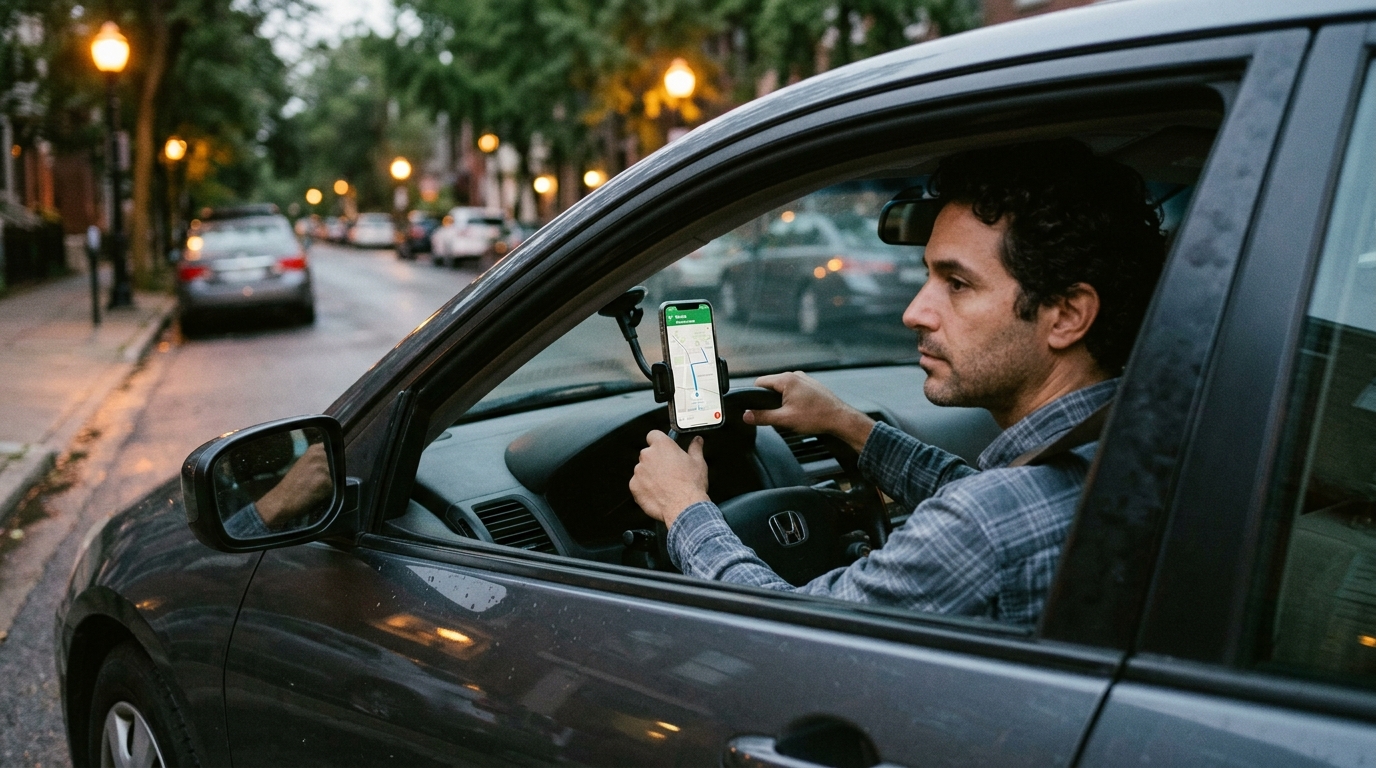
Rideshare insurance exists because a normal personal auto policy stops working the moment a driver logs into the Uber, Lyft, or DoorDash app. The platforms provide their own coverage, but it kicks in unevenly — leaving a real gap for anyone waiting on a fare or heading out to pick up an order. This guide walks through where personal coverage ends, where platform coverage starts, and what a rideshare endorsement actually fixes.
In this article
Why Your Personal Auto Policy Won't Cover Uber or Lyft
Every personal auto policy contains a business use or for-hire exclusion. When a driver turns on a rideshare app and starts accepting fares, the vehicle has crossed from personal use into commercial use, and the exclusion voids coverage. This isn't a technicality carriers occasionally invoke — after a wave of unpaid claims in the mid-2010s, insurers sharpened the language, and adjusters routinely deny claims once they discover the driver was logged into the app.
The exclusion is broader than most drivers realize. It applies even without a passenger in the car. Simply having the app open can put a driver in a gray zone. If a car gets rear-ended in a supermarket lot with the app running, a strict reading of the policy can leave the claim uncovered. Insurers pull location data, app records, and payment history during claims investigations, so quietly hoping the carrier won't notice isn't a workable strategy.
The Three Rideshare Driving Periods That Matter
Insurance in this space breaks into three periods, and understanding them is the whole game:
- Period 1 — App on, waiting for a request. The driver is logged in but hasn't accepted a fare. Uber and Lyft provide contingent liability during this window, but usually at state-minimum levels — commonly $50,000 per person and $100,000 per accident for bodily injury, plus $25,000 in property damage. There is no platform coverage for the driver's own vehicle.
- Period 2 — Ride accepted, en route to passenger. Coverage jumps. Both Uber and Lyft provide $1 million in third-party liability from the moment the ride is accepted until pickup, along with uninsured and underinsured motorist protection.
- Period 3 — Passenger in the car. The $1 million liability policy stays in force. Both platforms add contingent comprehensive and collision on the driver's vehicle — but only if the personal policy already carries collision, and only after a steep deductible of roughly $2,500.
Period 1 is where drivers get burned.
The Rideshare Endorsement Closes the Gap
A rideshare endorsement is an inexpensive add-on to a personal auto policy that extends coverage into Period 1. With it, the personal policy behaves as if the app weren't running. Liability, uninsured motorist, comprehensive, and collision all remain in force while the driver waits for a ride request. Once a fare is accepted, the platform's coverage takes over. For part-time drivers, this endorsement is the standard entry point to rideshare insurance.
Every major insurer now sells some version of the product, though branding varies. Geico markets a rideshare product. Progressive offers a rideshare add-on. State Farm calls its version a TNC (transportation network company) endorsement. Allstate and USAA sell similar options. Pricing typically runs $10 to $25 per month, or roughly $175 to $350 per year when billed annually.
Not every carrier participates. A handful still refuse to insure active rideshare drivers, forcing the policyholder to move the policy elsewhere or buy commercial. Availability also varies by state — endorsements are widely available in California, Texas, Florida, New York, and most of the Midwest, but a few states have limited options and higher rates.
Ready to compare car insurance rates?
Fresh side-by-side quotes from three or more insurers take about ten minutes.
See our quote guideDelivery Driving Runs on Different Rules
Delivering for DoorDash, Uber Eats, Instacart, Grubhub, or Amazon Flex looks similar to ridesharing from the outside — same app, same car, same personal driver — but insurance treats it differently:
- Personal auto exclusions are stricter for delivery. Most policies explicitly exclude delivery of goods for compensation, language that catches food, package, and grocery runs. The exclusion often applies even during app-on-waiting time.
- Platform coverage is thinner than rideshare. DoorDash and Uber Eats generally provide $1 million in liability while the driver is actively completing a delivery, but nothing while waiting for an order to accept.
- A standard rideshare endorsement may not extend to delivery. Some carriers include both; many don't. Drivers who do both need to confirm coverage in writing.
- Delivery-specific endorsements are growing. State Farm and Progressive lead here, with add-ons in the $12 to $30 monthly range that cover food and package delivery.
- Amazon Flex and Instacart increasingly require commercial policies. Both platforms have tightened enforcement, and drivers who submit personal-policy declarations have been deactivated after audits.
Drivers who do both rideshare and delivery should treat them as separate insurance questions.
When a Commercial Auto Policy Makes Sense
For full-time drivers, the endorsement math eventually breaks down. A commercial auto policy covers the vehicle in every period, without exclusions and without depending on the platform to fill gaps. It's the coverage professional taxi and livery drivers have always carried.
The tradeoff is cost. Commercial auto on a personal vehicle used for hire typically runs $2,500 to $7,000 per year depending on state, driving history, and the vehicle. That's often three to five times the cost of a personal policy plus endorsement. But it eliminates the was the app on? question at the scene of every crash, and it's often the only path forward for drivers whose personal carrier refuses to write the risk.
The break-even usually lands around 30 to 40 hours behind the wheel per week. Drivers earning most of their income from Uber, Lyft, or delivery work should price a commercial policy against the endorsement route. Some hybrid products — often marketed as rideshare-plus or TNC-focused commercial policies — sit in the middle: full commercial coverage during app time, personal rates during personal driving.
What Rideshare Insurance Costs
Rideshare insurance pricing depends on location, driving record, vehicle, and how the coverage is structured. Rough national monthly ranges:
| Coverage Type | Typical Monthly Cost | What It Covers |
|---|---|---|
| Personal auto (base) | $130–$220 | Personal driving only |
| Rideshare endorsement | $10–$25 | Extends personal policy into Period 1 |
| Delivery endorsement | $12–$30 | Extends personal policy into delivery activity |
| Stand-alone rideshare policy | $180–$350 | Personal driving + Period 1 combined |
| Commercial auto (for hire) | $250–$580 | All periods, no exclusions |
A few factors move these numbers significantly. State minimums vary — drivers in Michigan and Louisiana pay much more than drivers in Ohio or Idaho. Vehicle year and value drive collision costs. And a recent at-fault claim can double the base rate.
The cheapest legal setup for most part-time drivers remains a personal policy paired with a rideshare endorsement. The most expensive mistake — driving with neither, assuming the platform covers everything — has led to five- and six-figure judgments against drivers whose personal claims were denied after the crash.
Frequently Asked Questions
Does my regular car insurance cover me while driving for Uber or Lyft?
Almost never. Standard personal auto policies contain a business-use exclusion that voids coverage the moment the app is on, and carriers routinely deny claims after pulling ride records. A rideshare endorsement or a stand-alone rideshare policy is required to close the gap.
How much does a rideshare endorsement typically cost?
For most drivers, $10 to $25 per month, or roughly $175 to $350 per year when billed annually. State, driving record, and vehicle value push the number up or down. It's usually the cheapest legal way to stay covered during Period 1.
Do I need special insurance to drive for DoorDash or Uber Eats?
Yes. Personal auto policies exclude delivery-for-compensation even more strictly than rideshare, and the platform's own coverage only applies during an active delivery. A delivery endorsement or commercial policy is the standard fix — Progressive and State Farm currently offer delivery-specific add-ons in the $12 to $30 monthly range.
What happens if I crash while waiting for a ride request?
Uber and Lyft cover only third-party liability during this Period 1 window, at state-minimum levels in most markets — often $50,000/$100,000 for bodily injury and $25,000 for property damage. There is no platform coverage for the driver's own vehicle, so a rideshare endorsement or commercial policy is what protects the car itself.
When should a rideshare driver switch to a commercial auto policy?
The break-even usually lands around 30 to 40 hours per week behind the wheel. Full-time drivers, drivers whose personal carriers refuse to renew, and drivers rejected for a rideshare endorsement often end up on commercial. It costs three to five times more than a personal policy but eliminates the coverage gap entirely.