
Small Claim vs Pay Out of Pocket: Which Is Cheaper?

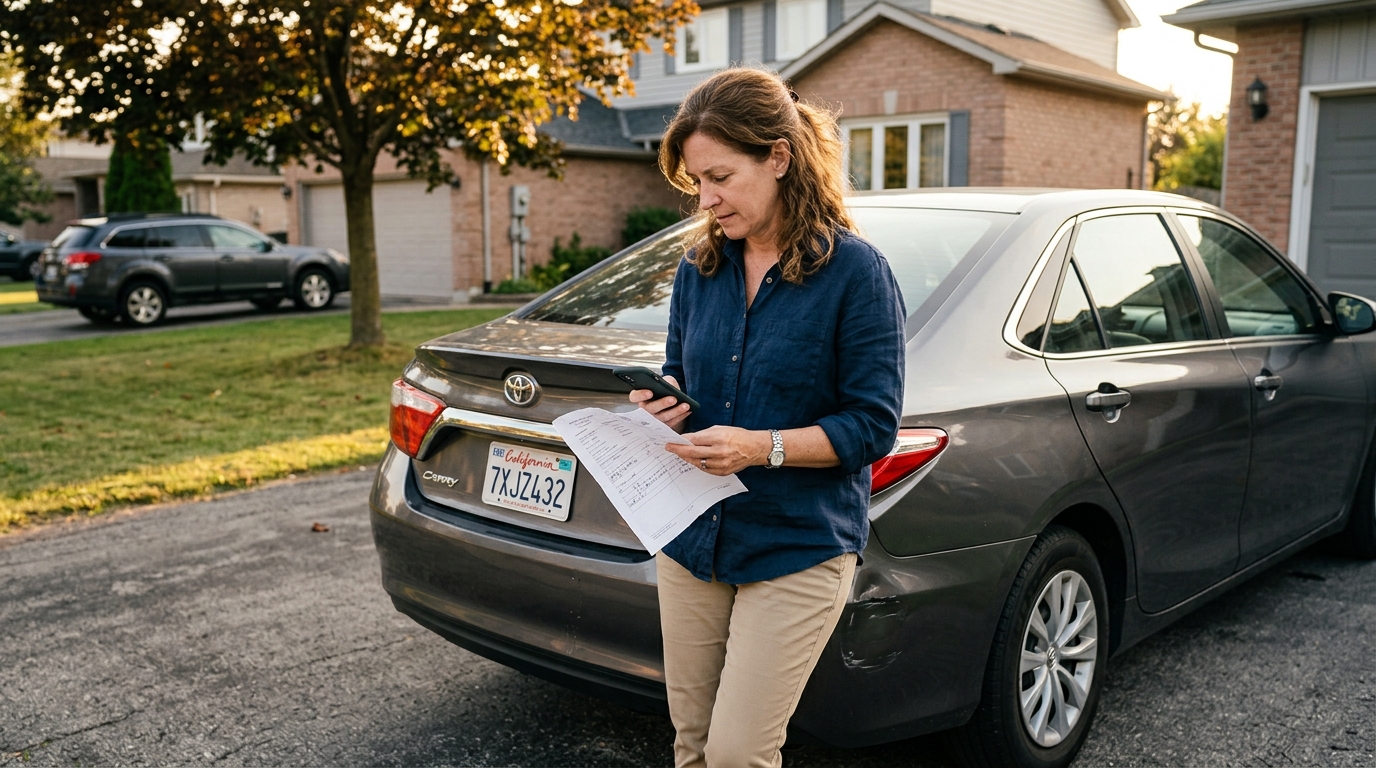
Deciding whether to file small claim or pay out of pocket comes down to one calculation: will the rate increase over the next three to five years cost more than the insurer would pay out today? For minor fender-benders and cracked bumpers, the answer is often yes — meaning that "free" $800 repair check can turn into $1,500 in surcharges before it's over. This guide breaks down the math, the surcharge timelines, and the specific dollar thresholds where filing actually pays off.
In this article
Why a Small Claim Costs More Than You Think
Every auto insurance claim, regardless of size, gets logged in the CLUE (Comprehensive Loss Underwriting Exchange) database — the industry's shared claims registry. When a policy comes up for renewal, the carrier pulls that report and adjusts the rate accordingly. The dollar amount paid out barely matters; what matters is the claim event itself, which insurers treat as a leading predictor of future claims.
Nationally, a single at-fault collision claim raises premiums by roughly 30% to 50% at renewal based on standard industry rate filings. A comprehensive claim — theft, hail, animal strike — typically triggers a smaller 5% to 20% bump. Even a not-at-fault claim can raise rates 5% to 10% in states that allow it, though roughly a dozen states, including California, Oklahoma, and Massachusetts, prohibit carriers from surcharging drivers for accidents that weren't their fault.
The trap in the decision to file small claim or pay out of pocket: an $800 dent repair check from the insurer looks like free money in the moment. But if a $1,600 annual premium jumps to $2,000 for three years, that's $1,200 in surcharges collected against $800 in payout — a net loss of $400 before accounting for the residual effect on future quotes.
How Much Rates Actually Go Up After a Claim
Actual surcharge amounts vary by state, carrier, and driving record, but the industry ranges are surprisingly consistent. A driver with a clean history and no prior claims will see a smaller percentage jump than someone with a marginal record, but the same claim event triggers proportionally similar increases across most standard-market carriers.
The table below reflects typical patterns from major insurers based on standard rate filings. Non-standard carriers — companies that insure higher-risk drivers — often apply steeper surcharges of 60% or more because those drivers are already priced closer to statistical limits.
| Claim Type | Typical Rate Increase | Common Duration |
|---|---|---|
| At-fault collision (under $2,000) | 25% to 45% | 3 years |
| At-fault collision (over $2,000) | 40% to 60% | 3 to 5 years |
| Comprehensive (hail, theft, animal) | 5% to 20% | 3 years |
| Windshield-only glass claim | 0% (in most states) | — |
| Not-at-fault collision | 0% to 10% | 3 years (if allowed) |
Two patterns are worth flagging. Windshield glass claims usually don't affect rates because most states either mandate or allow zero-deductible glass coverage that's specifically excluded from surcharge formulas. And not-at-fault claims still get recorded in CLUE — even in states that permit surcharging them, the increase is smaller, usually 5% to 10% versus 25%-plus for at-fault incidents.
The Three-Year Surcharge Rule (and Why It Sometimes Lasts Five)
Most insurers apply the claim surcharge for exactly three years from the accident date, though a growing number — including several regional carriers and some non-standard writers — extend it to five. The surcharge doesn't taper off gradually; it fully applies at each renewal until the anniversary, then disappears in one step at the next renewal cycle.
A separate but related timeline matters when shopping around: the CLUE report keeps individual claims visible for five to seven years. So even after a current insurer drops the surcharge, a new insurer running a quote may still see the claim and price it in for another two to four years. That means switching carriers to escape a surcharge often backfires — the new quote reflects the same claim, sometimes at an even higher multiplier because unfamiliar drivers get less benefit of the doubt.
The practical takeaway: assume any filed claim will affect insurance costs for at least three years and potentially seven, and use that longer horizon when running break-even math on borderline cases.
Ready to compare car insurance rates?
Fresh side-by-side quotes from three or more insurers take about ten minutes.
See our quote guideThe Break-Even Formula
Before deciding to file small claim or pay out of pocket, run these five numbers on a piece of paper or a phone calculator. It takes under five minutes and removes almost all guesswork.
- Get a written repair estimate from at least two body shops. This is the true out-of-pocket cost if the claim isn't filed.
- Subtract the deductible from the repair estimate. If the estimate is $900 and the deductible is $500, the insurer would send a $400 check.
- Estimate the annual surcharge. Multiply the current annual premium by 30% for a rough at-fault estimate, or 15% for a comprehensive claim. On a $1,800 policy, that's $540 or $270.
- Multiply that annual surcharge by three years (or five, if the carrier applies a longer surcharge window).
- Compare the total surcharge to the insurer's payout. If projected surcharges exceed what the insurer would pay, paying out of pocket is cheaper.
Worked example: A $1,200 repair on a policy with a $500 deductible pays out $700 from the insurer. If a $1,800 annual premium jumps 30% for three years, that's $540 × 3 = $1,620 in surcharges. Net cost of filing versus paying cash: $920 more. Skip the claim.
When Filing a Claim Actually Makes Sense
The math tips the other way in more scenarios than most drivers realize. Filing is clearly the right call when any of the following apply:
- Repair costs exceed twice the deductible plus the three-year projected surcharge. A $6,000 repair on a $500-deductible policy will almost always beat any realistic surcharge scenario.
- Any injuries are involved, even minor ones. Medical costs and potential lawsuits can outrun policy limits fast, and filing protects liability coverage.
- The other driver is uninsured or fled the scene. Uninsured motorist or collision coverage exists precisely for this — paying out of pocket forfeits money already spent on premium.
- Accident forgiveness applies to a first at-fault claim. Confirm the terms in writing before assuming it kicks in; some carriers require years of clean driving to earn it.
- Weather damage under comprehensive. Hail, flood, and fallen-tree claims are generally low-surcharge events in most states.
- Not-at-fault claims in states that ban surcharging them. California, Oklahoma, New York, and Massachusetts drivers can file with much less risk of a rate hike.
State Rules That Change the Math
State insurance regulations meaningfully affect whether filing is smart. The same $1,000 claim in Los Angeles and Tampa produces very different outcomes at renewal because of how each state polices carrier rating practices.
- California bars insurers from raising rates or refusing renewal based on not-at-fault accidents under Proposition 103 rate rules.
- Oklahoma and New York prohibit surcharges on drivers for not-at-fault claims, though the claims still appear on CLUE.
- Massachusetts uses a merit-rating plan where only specific claim types trigger surcharges; comprehensive claims typically don't count.
- Michigan and New Jersey operate under no-fault frameworks that route minor collision claims through personal injury protection, changing how the record reads.
- Florida and Texas allow full surcharging with few restrictions, so the break-even threshold for filing sits higher.
Not sure how a state treats a specific claim type? Every state's department of insurance publishes rate rules. A quick search for the state name plus "auto insurance surcharge rules" returns the regulatory guidance carriers actually follow.
Practical Steps Before You Decide
Get repair estimates first, always. Insurers will encourage drivers to open a claim during the initial call — resist that until the numbers are on paper. Opening a claim files it in CLUE even if it's later withdrawn, and some carriers treat withdrawn claims the same as paid claims for rating purposes. Ask the claims rep explicitly: "If I open this and then withdraw it, will it affect my rate or show as a claim event?" Get the answer in writing before proceeding.
Call the agent for a hypothetical renewal quote before filing. Ask directly: "If I filed a $1,000 collision claim today, what would next year's premium look like?" Most agents will run the scenario. This one call removes all guesswork from the break-even calculation.
Consider raising the deductible after paying a small repair out of pocket. Drivers who routinely absorb small repairs are wasting premium on the low deductible; moving from $500 to $1,000 or $1,500 typically cuts collision and comprehensive premium by 10% to 20%. That's permanent annual savings that compounds every year the policy stays in force.
Finally, remember the CLUE report is auditable. Anyone can pull their own report free once per year through LexisNexis to verify that no phantom claims appear and dispute anything incorrect. A single erroneous claim entry can cost thousands over the years it sits on the record.
Frequently Asked Questions
Will my insurance go up if I file a small claim?
Almost always, yes. Standard-market carriers surcharge at renewal based on the claim event itself, not the payout amount, so even a $500 check can trigger the same 25% to 40% at-fault rate hike as a $2,500 check. The main exceptions are windshield glass claims, certain comprehensive claims like hail or animal strikes in specific states, and not-at-fault claims in states that ban surcharging them.
What is considered a small claim in auto insurance?
There's no official threshold, but insurers and consumer advocates generally treat any claim under $1,500 to $2,000 as small. At that size, a three-year rate surcharge often exceeds what the insurer would pay out. The right question isn't the claim size in isolation — it's whether the payout minus the deductible beats three years of projected surcharge.
Can I cancel a claim after filing to avoid a rate increase?
A claim can usually be withdrawn, but the record still exists in CLUE and some carriers surcharge for withdrawn claims the same as paid ones. Ask the claims representative directly whether a withdrawal will show as a claim event before opening the file, and get that answer in writing. A no-cost inquiry — asking hypothetical questions without opening anything — is safer than opening and closing.
How long does a claim stay on your insurance record?
The current insurer typically applies a surcharge for three years, though some carriers and some states extend it to five. The CLUE database keeps the claim visible for five to seven years, which means new insurers pulling a quote may still see it and price accordingly for years after the original surcharge drops off.
Does filing a windshield claim raise my insurance?
In most cases, no. Windshield replacements filed under comprehensive coverage rarely trigger surcharges because glass claims are typically excluded from insurer rating formulas. Several states — Florida, Kentucky, and South Carolina among them — actually mandate zero-deductible glass coverage, making the claim effectively free to file.