
Usage-Based Insurance vs Traditional: Which Is Cheaper?

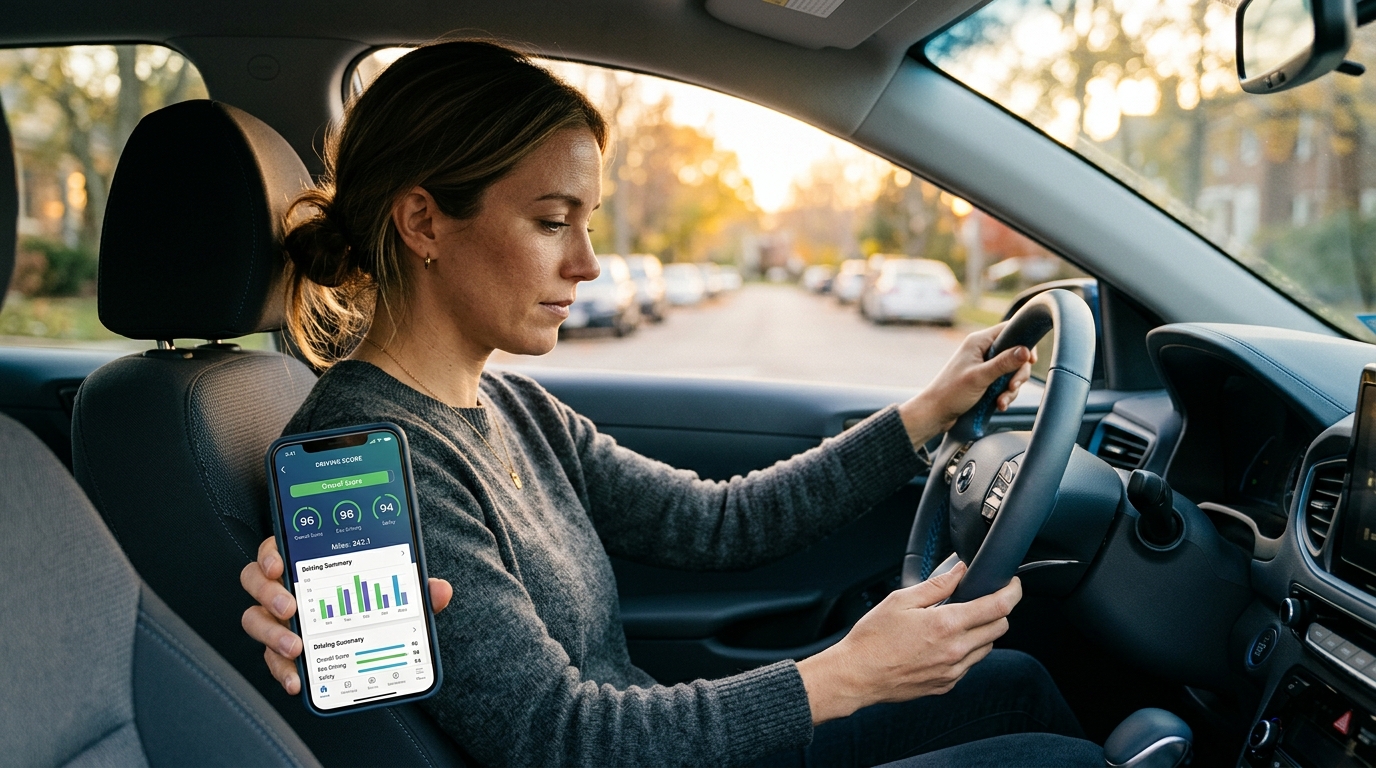
Debating usage based insurance vs traditional coverage comes down to one question: how does actual driving compare to what the insurer assumes it looks like? Programs like Progressive Snapshot, Allstate Drivewise, State Farm Drive Safe & Save, and Nationwide SmartRide promise discounts of up to 30% or 40%, but the fine print includes potential surcharges, monitoring windows, and privacy trade-offs. This guide breaks down when telematics pays off, when it backfires, and which drivers should skip the plug-in dongle entirely.
In this article
How Usage-Based Insurance Actually Works
Usage-based insurance (UBI) uses a smartphone app, a plug-in device in the OBD-II port, or a factory-installed connected car system to track driving behavior. Most programs run a monitoring period of 30 to 180 days, then either bake in a discount at renewal or continuously adjust rates. Insurers typically watch four data points: hard braking events (anything over roughly 7 mph per second of deceleration), rapid acceleration and cornering, time of day (late-night driving scores worse), and total miles driven per month.
Some programs also flag phone handling — if the driver picks up a call or scrolls while the car is moving, the app knows. Progressive's Snapshot advertises an average first-term discount around $100 to $150, though it can also add a surcharge of up to 20% for high-risk scores in most states. State Farm's Drive Safe & Save and Metromile go further with true pay-per-mile pricing that scales premium directly with odometer readings.
The Traditional Rating Model
Traditional auto insurance sets rates using a fixed formula: ZIP code, age, gender (in most states), credit score (in most states), vehicle make and model, claims history, motor vehicle report, and an estimated annual mileage figure that carriers usually accept at face value. If a suburban driver reports 12,000 miles but actually drives 4,000, the traditional model quietly overcharges for 8,000 miles of exposure that never happens. That gap is exactly what telematics is designed to close.
Traditional policies also don't punish or reward specific trips. Two drivers with identical credit, ZIPs, and vehicles pay the same premium even if one runs DoorDash at 2 a.m. and the other only drives to Publix on Sundays. Telematics collapses that difference into something closer to actual risk — which is great news for the Sunday driver and terrible news for the late-night gig worker.
Who Saves the Most with Telematics
The clearest winners in the usage based insurance vs traditional matchup are drivers whose real behavior beats the assumptions built into their base rate. That group includes:
- Retirees and remote workers who drive under 8,000 miles a year
- Drivers with clean records who commute during daylight hours
- Owners of second cars, weekend vehicles, or classics that sit in the garage most days
- Newly licensed drivers who need to prove safe habits (the discount can partially offset the under-25 surcharge)
- Households in low-traffic states like Iowa, Vermont, or Idaho where hard-braking events are rare
Pay-per-mile programs like Metromile and Nationwide SmartMiles work especially well for garage-kept vehicles. A car parked six days a week can drop from a $70 to $100 monthly premium down to $30 to $45. Behavior-based programs like SmartRide reward drivers who avoid hard braking and stay off the road late with maximum discounts approaching 40%.
Ready to compare car insurance rates?
Fresh side-by-side quotes from three or more insurers take about ten minutes.
See our quote guideWhen Usage-Based Programs Backfire
The usage based insurance vs traditional decision cuts both ways: the same programs that promise 30% off can raise premiums, and a growing number of states now allow surcharges for poor scores. Five driver profiles should think twice:
- Night-shift and rideshare workers — driving between midnight and 4 a.m. is scored as high-risk regardless of skill
- Stop-and-go city commuters in places like Boston, Chicago, or San Francisco — heavy traffic forces braking events the app can't distinguish from aggressive driving
- Owners of older vehicles — a soft-braking 2005 Camry registers harder deceleration than a 2024 EV with regenerative braking
- Anyone whose teenager or new-driver spouse borrows the car — every trip counts against the primary policyholder's score
- Frequent long-haul road trippers — high mileage cancels the pay-per-mile advantage and can nudge behavior scores lower on rural interstates
Progressive Snapshot, Allstate Drivewise, and Root Insurance have all been reported to raise rates after monitoring in states that permit it, with Snapshot surcharges reaching around 20% at second-term renewal.
Comparing the Major Programs
Different carriers reward different behavior, and the maximum advertised discount rarely reflects what an average driver actually earns. Nationwide SmartRide and State Farm Drive Safe & Save are widely considered the safest bets because neither program raises premiums — the worst case is simply not earning a discount.
| Program | Insurer | Max Discount | Can Raise Rate? | Monitoring Length |
|---|---|---|---|---|
| Snapshot | Progressive | 30% | Yes (up to ~20%) | 6 months |
| Drivewise | Allstate | 25-40% | Some states | Ongoing |
| Drive Safe & Save | State Farm | 30% | No | Ongoing |
| SmartRide | Nationwide | 40% | No | 3-6 months |
| RightTrack | Liberty Mutual | 30% | Some states | 90 days |
| SmartMiles | Nationwide | Pay-per-mile | N/A | Ongoing |
Average actual discounts tend to land around 10% to 15%, not the marketed maximum. Any advertised 30% or 40% figure should be treated as a ceiling, not a target.
Privacy Trade-Offs Worth Knowing
Telematics data lives with the insurer for the duration of the policy plus retention windows that can stretch three to seven years after cancellation. Insurers can subpoena driving data during accident claims, and in several high-profile cases the data has been used to deny coverage after fatal wrecks. The data is not typically sold to marketers, but it can be shared with the insurer's affiliates, reinsurers, and law enforcement responding to a valid warrant.
Location tracking varies by program. Progressive Snapshot deliberately doesn't record GPS coordinates, only trip characteristics. Allstate Drivewise does track location. Pay-per-mile programs like Metromile and SmartMiles need location data to verify miles and enforce the per-mile pricing model. Anyone commuting to a place they'd rather not disclose — a second job, a therapist's office, a divorce attorney — should read the privacy policy before installing the app or plugging in the dongle.
How to Test Without Committing
Every major carrier lets drivers try telematics without a permanent commitment. A practical approach avoids most of the surcharge risk:
- Enroll during a renewal cycle so the policy can be dropped or switched at term end
- Use the smartphone app version — it's easier to uninstall than a plug-in dongle and doesn't require a mechanic to remove
- Watch the running score in the app for the first two weeks and 20 trips
- If the score is consistently rated Good or better, complete the monitoring window and lock in the discount
- If it's trending Fair or Poor, cancel before the surcharge locks in at second-term renewal
Progressive, State Farm, and Nationwide all allow drivers to withdraw during the monitoring window without losing base coverage. The one exception is Root Insurance, which uses a three-week telematics test as the underwriting decision itself — a low score there means no policy is offered at any price, and there's no traditional fallback rate.
Frequently Asked Questions
What is the average discount from usage-based insurance?
Most drivers earn a 10% to 15% discount from telematics programs, well below the 30% to 40% maximums insurers advertise. Nationwide SmartRide and State Farm Drive Safe & Save tend to produce the highest real-world discounts because they don't penalize bad scores. Progressive Snapshot averages a $100 to $150 discount in the first term but can also add a surcharge for high-risk driving.
Can telematics actually raise my insurance rate?
Yes, in most states. Progressive Snapshot, Allstate Drivewise, Liberty Mutual RightTrack, and Root can all charge a surcharge for poor driving scores at renewal — Snapshot's is capped around 20% in most states. Nationwide SmartRide and State Farm Drive Safe & Save are the two major programs that never raise rates, making them the safest to try.
Does usage-based insurance track my location?
It depends on the program. Progressive Snapshot deliberately avoids GPS tracking and only records trip characteristics like braking, acceleration, and time of day. Allstate Drivewise, Metromile, and Nationwide SmartMiles all track location, either because pay-per-mile pricing requires odometer verification or because the carrier uses geography as a scoring input. Every program discloses this in the privacy terms shown before enrollment.
Is usage-based insurance worth it for a bad driver?
Usually not. Drivers with frequent hard braking, late-night commutes, or heavy stop-and-go city driving will often score poorly regardless of skill, and in states that allow surcharges the program can raise premiums by 15% to 20%. A driver already at fault for one or more accidents is generally better off with a traditional policy and a low-cost carrier like GEICO or Erie than trying to earn a discount through telematics.
How long does the monitoring period last?
Monitoring periods vary from 90 days (Liberty Mutual RightTrack) to 180 days (Progressive Snapshot). Nationwide SmartRide typically runs three to six months, and State Farm Drive Safe & Save monitors continuously as long as the policy is active. Pay-per-mile programs like Metromile and SmartMiles track for the full life of the policy since the pricing depends on real-time mileage data.