
Why Home Insurance Rates Are Rising in 2026
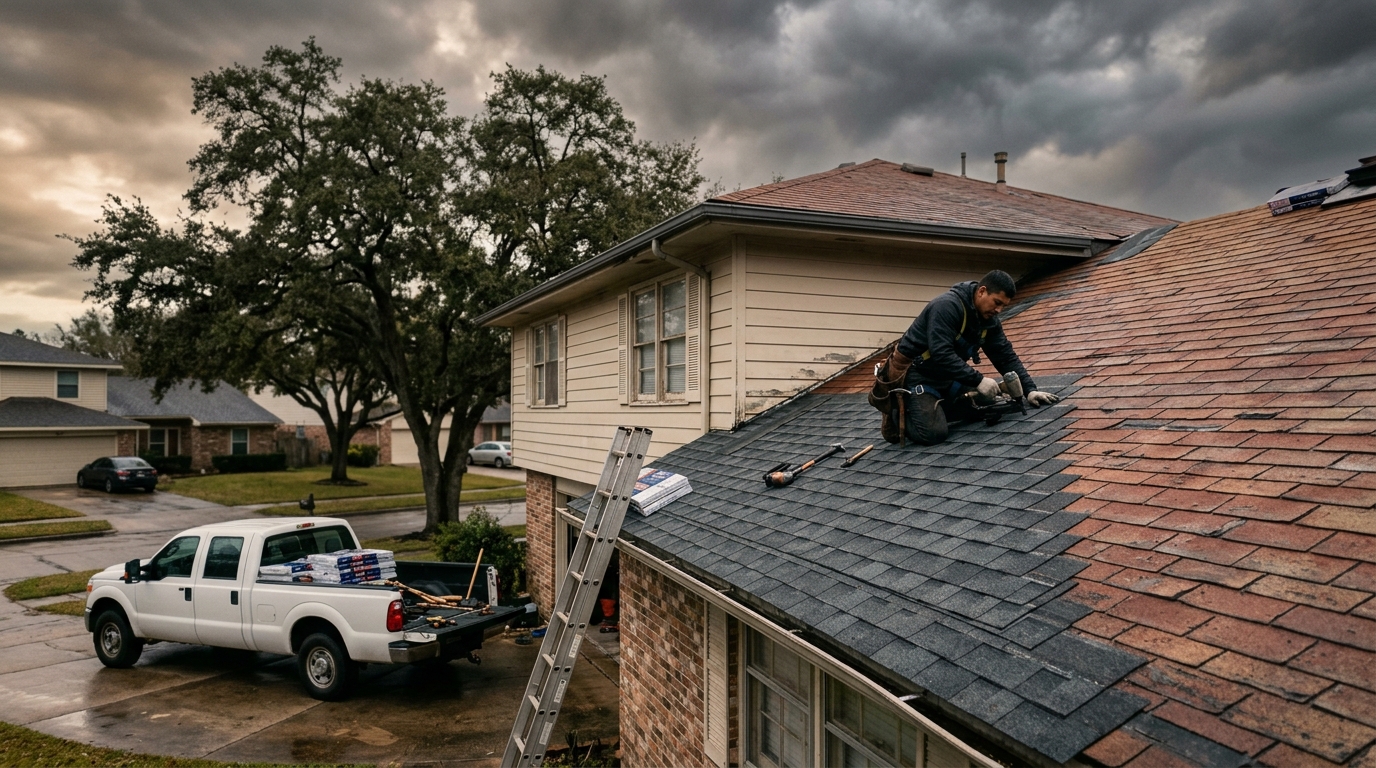
If a renewal notice just landed in the mailbox with a number 15% higher than last year, the question of why home insurance rates going up so fast has a straightforward answer: three cost pressures — global reinsurance, climate-driven catastrophe losses, and construction inflation — are hitting the property insurance market at the same time. Homeowners in Florida, California, Texas, Colorado, and Louisiana are feeling it hardest, but even low-risk Midwest ZIP codes are seeing single-digit increases. This guide breaks down the mechanics behind the 2026 rate cycle and lays out what actually works to push back on a renewal hike.
In this article
The Reinsurance Squeeze Nobody Talks About
The single biggest driver of 2026 rate hikes isn't visible to homeowners: it's the price your insurer pays for its own insurance. Every major carrier buys reinsurance — coverage that kicks in when catastrophe claims exceed a set threshold — from a small pool of global players like Swiss Re, Munich Re, Berkshire Hathaway, and the Lloyd's syndicates. When those reinsurers get pounded by hurricanes, wildfires, and severe convective storms, they raise the price they charge domestic insurers, who then pass it through to policyholders.
Reinsurance pricing on US property risk has climbed roughly 30% to 50% cumulatively across the past three renewal cycles, and 2026 January renewals came in firm again. Reinsurers also raised their attachment points — the loss level where their coverage starts — which shifts more of every hurricane or hailstorm onto the primary carrier's own balance sheet. Both changes force insurers to either raise premiums, buy less coverage, or exit markets. Most are doing all three.
The pass-through isn't uniform. National carriers with diversified books absorb some of the reinsurance hit; small regional mutuals and Florida-domestic carriers pass through nearly all of it. That's why the same house can quote 8% higher with one carrier and 35% higher with another — one has a cheaper reinsurance program, the other is drowning in it.
Climate Risk Is Repricing Entire ZIP Codes
The industry no longer treats climate as a future modeling problem — it's a live loss trend showing up in quarterly earnings. Insured catastrophe losses in the US have run above $100 billion in each of the past several years, driven not just by named hurricanes but by a category insurers call severe convective storms: hail, straight-line winds, and tornadoes. Those losses used to be a rounding error; they now regularly match hurricane losses in a given year.
The map of who pays for this is being redrawn in real time:
- Florida and coastal Louisiana: Hurricane frequency and rapid intensification are pushing wind premiums to $4,000-$10,000+ on a modest single-family home. Roof age matters more here than anywhere.
- California: Wildfire non-renewals continue in the wildland-urban interface, pushing tens of thousands of homeowners into the FAIR Plan, which typically costs 2x-3x standard market coverage with narrower terms.
- Texas, Oklahoma, Kansas, Colorado: Hail is the story. Percentage wind/hail deductibles of 1%-2% of dwelling coverage are now standard, and Class 4 impact-resistant roofing is nearly required to keep premiums reasonable.
- Tennessee, Alabama, Mississippi: Rising tornado and severe storm losses are pushing renewals up 15%-25% in markets that were historically cheap.
The takeaway: two identical houses in the same state can now carry premiums that differ by a factor of four based purely on catastrophe exposure at the ZIP-code or even street level.
Rebuild Costs Are Not the Same as Real Estate Prices
Homeowners often confuse home value with insured rebuild cost, and carriers work hard to close that gap every renewal. Even as home resale prices have cooled in some markets, the raw cost to reconstruct a house from the foundation up has kept climbing. Lumber, drywall, roofing, and skilled labor are all more expensive than pre-pandemic, and post-catastrophe demand surges — a phenomenon called demand surge — spike those costs another 20%-40% for months after a major event.
The practical effect: the dwelling coverage line on the declarations page (Coverage A) keeps ratcheting up 5%-10% per year through inflation guard, even for homeowners who did nothing. Because premium is calculated as a rate applied to dwelling coverage, this alone would produce meaningful increases before any base rate hike is layered on top.
A few numbers worth knowing about 2026 rebuild economics:
- National average rebuild cost is roughly $180-$260 per square foot for standard construction, with high-cost coastal and California markets running $350+ per square foot.
- Roof replacements average $10,000-$25,000 for asphalt shingles on a typical single-family home, with metal or tile roofs 2x-4x that.
- Post-hurricane demand surge can add 20%-40% to any repair estimate for 6-12 months after a major storm.
Time to review your homeowners policy?
Comparing quotes every 12-24 months often surfaces discounts your current insurer will not volunteer.
How to shop home insuranceHow to Fight a Renewal Increase in 2026
Rate hikes are systemic, but the personal outcome isn't fixed. Homeowners who work the renewal cycle actively save 15%-30% versus those who autopay and forget. Here's the sequence that works:
- Pull the CLUE and A-PLUS reports. Order the free consumer report from LexisNexis and check for claims that aren't yours or that shouldn't count (inquiries with no payout). Errors are common and directly inflate premiums.
- Get three to five real quotes. Include one national carrier, one regional mutual (Erie, Auto-Owners, Cincinnati, Amica, USAA if eligible), and one independent agent who writes 6+ carriers. Online-only comparison tools miss the regionals that often win on price.
- Bundle auto if it makes sense. Multi-policy discounts typically run 10%-25%, but only bundle if the auto rate is also competitive — a bad auto policy erases the discount.
- Raise the base deductible and re-price. Moving from $1,000 to $2,500 usually saves 10%-15%; moving to $5,000 can save 20%+ if the household has the cash reserve.
- Ask for every applicable discount by name. Roof age credit, wind mitigation credit, monitored alarm, water shutoff device, impact-resistant roofing, claim-free tenure, paid-in-full, and paperless. Agents rarely volunteer these.
- Get a wind mitigation inspection in hurricane states. A $75-$150 inspection can unlock hundreds to thousands per year in Florida, coastal Georgia, the Carolinas, and Louisiana.
- Reassess dwelling coverage. Not to lower it below rebuild cost, but to confirm the carrier isn't padding it 20% above realistic reconstruction to boost premium.
What to Expect Through the Rest of 2026 and Into 2027
The rate cycle is not done. Most state insurance departments still have pending rate filings from major carriers, which means renewals landing in the second half of 2026 may carry another layer of increase on top of what already hit earlier in the year. That said, there are early signs the acceleration is easing: reinsurance capacity has partially rebuilt after two profitable years for reinsurers, and litigation reforms in Florida are slowly working through the system.
The likely 2027 picture: flat-to-mid-single-digit renewals in low-catastrophe states, continued high-single-digit to low-double-digit increases in hail and severe storm markets, and gradual stabilization in Florida for well-underwritten homes with newer roofs. California wildfire markets remain the hardest to call — the state's regulatory changes allowing catastrophe modeling and reinsurance cost pass-through should draw carriers back, but slowly.
The homeowners who come out of this cycle in the best shape are the ones treating insurance as an active line item rather than a set-and-forget bill. Shopping every renewal, keeping the roof under 15 years old, hardening the home against the specific peril for the region (wind straps in hurricane country, defensible space in wildfire country, Class 4 shingles in hail country), and carrying a deductible sized to actual cash reserves. None of that stops the macro cycle, but it consistently produces a premium that's 20%-40% lower than the neighbor who never called.
Frequently Asked Questions
How much are home insurance rates going up in 2026?
Nationally, homeowners premiums are running roughly 8% to 12% higher on renewal in 2026, though the average masks huge state-level swings. Coastal Florida, wildfire-exposed California ZIP codes, and hail-alley policies in Texas, Oklahoma, and Colorado are seeing 20% to 40% jumps, while low-risk Midwest states may see single-digit bumps or a flat renewal. The final number on your declarations page depends more on your ZIP code and roof age than on any national average.
Can I fight a home insurance rate increase?
Yes, and it works more often than most homeowners assume. Start by requesting a copy of your loss-run and CLUE report to check for errors, then shop three to five carriers including a regional mutual and an independent agent's book. If you stay with your current carrier, ask specifically about a roof age credit, a bundled auto discount, a higher wind or all-peril deductible, and any impact-resistant materials or water-shutoff device discount. Twenty minutes of shopping regularly saves 15% to 25%.
Why is my home insurance so high if I never filed a claim?
Home insurance is priced on the risk pool for your ZIP code, roof, and rebuild cost, not just your personal claim history. If neighbors filed catastrophe claims, if lumber and labor costs climbed, or if your insurer paid heavy reinsurance premiums after a bad hurricane season, your renewal reflects that even with a spotless record. A claim-free discount helps, but it can't fully offset region-wide loss trends or a doubled reinsurance bill.
Will home insurance rates go down in 2027?
A broad national decrease is unlikely in 2027, but the rate of increase should slow if the 2026 hurricane season is mild and reinsurance capacity keeps recovering. Some states with recent reforms, such as Florida's litigation changes, may see rate stabilization or small decreases for well-underwritten homes. Expect flat-to-single-digit renewals in low-risk states and continued pressure in coastal, wildfire, and severe convective storm zones.
Does a new roof lower home insurance premiums?
A new roof is one of the single biggest discounts a homeowner can unlock, often cutting the wind or all-peril portion of the premium by 10% to 35% depending on the state. In Florida, a roof under ten years old with a wind mitigation inspection can slash premiums dramatically, and Texas and Oklahoma carriers offer meaningful credits for Class 4 impact-resistant shingles. Ask the carrier for a re-rate the day the roof passes final inspection rather than waiting for renewal.
Should I raise my deductible to lower my premium?
Moving from a $1,000 to a $2,500 deductible typically shaves 10% to 15% off the premium, and jumping to $5,000 can trim 20% or more, but only if the household has that cash reserved. In hurricane and hail states, the separate wind or hail deductible is usually a percentage of dwelling coverage (1% to 5%), and raising that percentage saves the most money but exposes the largest out-of-pocket hit when a storm actually rolls through.