
Car Insurance After a DUI

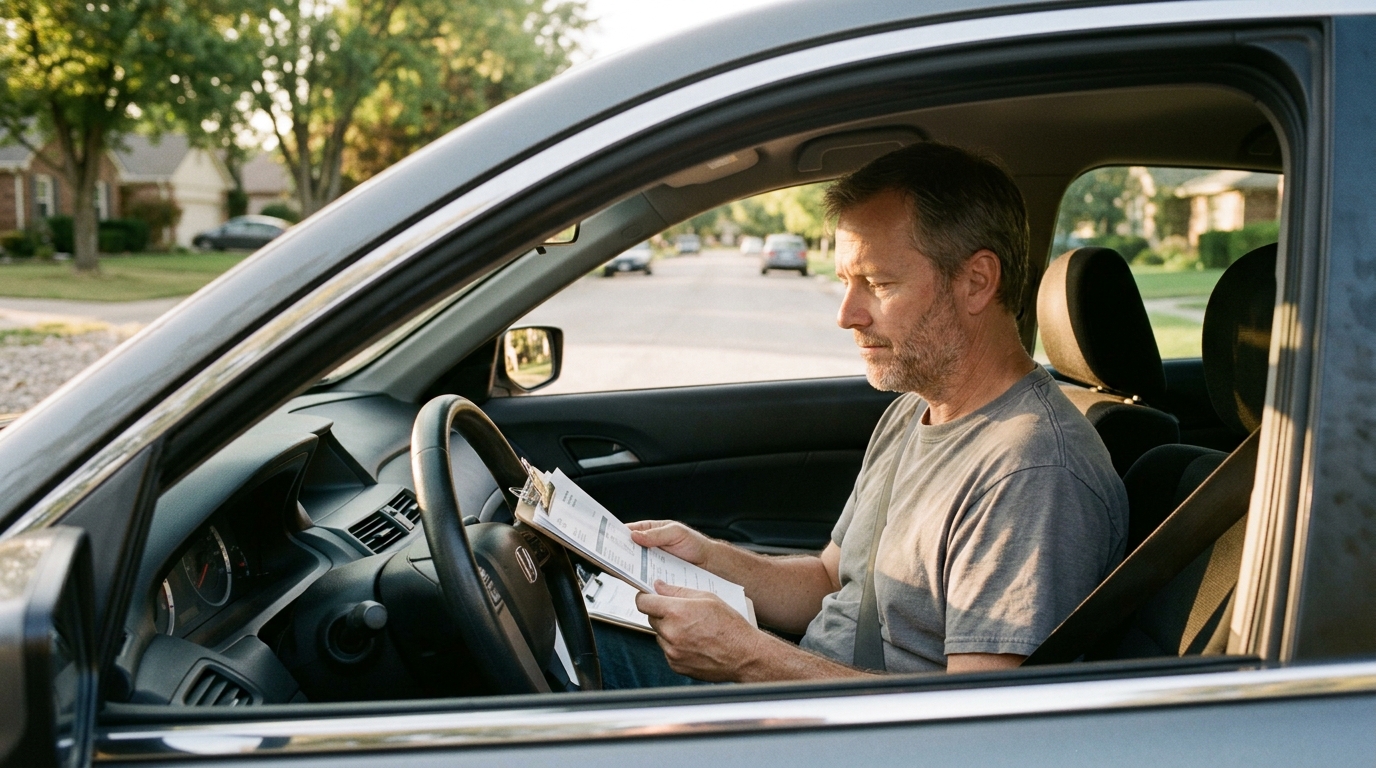
Car insurance after a DUI is more expensive, more paperwork-heavy, and shopped from a shorter list of carriers than a standard policy — but it is not permanent. Rates typically double at the first renewal after a conviction, an SR-22 filing gets tacked on for three to five years, and most drivers see prices start dropping back toward normal by year three or four. This guide covers how the surcharge works, which insurers still write coverage for post-DUI drivers, and what the realistic timeline looks like for rates to come back down.
In this article
How a DUI Changes Your Car Insurance
A DUI conviction moves a driver from a preferred or standard risk pool into a high-risk tier that carriers price very differently. Most insurers pull motor vehicle records at every renewal and query the CLUE database, so hiding the conviction is not realistic — the surcharge lands whether the driver reports it or not.
The immediate consequences are consistent across most of the country. Preferred carriers like Geico, Allstate, and Travelers non-renew in many states. Insurers that stay on hit the driver with a rate increase of 60% to 100% or more at the next renewal, strip out any good-driver, safe-driver, or accident-free discounts, and add a state-mandated SR-22 or FR-44 filing. Florida and Virginia use the stricter FR-44, which requires higher liability limits than a standard SR-22.
Standard carriers that stay on typically reserve the right to charge the surcharge for three to five renewal cycles. Drivers dropped by their current insurer usually end up in the non-standard market, which specializes in high-risk auto but prices accordingly. Continuous coverage matters here more than almost anywhere else in insurance — a policy lapse resets the clock at many carriers and can extend the surcharge into a new cycle.
SR-22 Basics: What the Filing Actually Is
An SR-22 is not insurance. It is a one-page certificate of financial responsibility that an insurance company files with the state department of motor vehicles on behalf of a driver, verifying that a valid liability policy is in force. The filing itself is a formality; the insurance behind it is what matters.
The practical details are straightforward. The filing fee is typically $15 to $50, paid once when the SR-22 is submitted. Duration is three years in most states, five in some, and a repeat offense can push it to ten. Florida and Virginia use FR-44 instead, requiring liability limits often at 100/300/50 rather than state minimums. If the policy lapses for any reason, the insurer notifies the state — which typically suspends the driver's license until coverage is restored.
Not every carrier files SR-22s, which is one of the biggest reasons standard insurers non-renew after a DUI: they simply do not participate in the filing. The insurers that do file build their business around high-risk auto, and their systems handle the SR-22 within a few business days of policy binding. Drivers moving to a new carrier should confirm the SR-22 is on file with the state DMV before the old policy cancels, since even a one-day gap can trigger a license suspension.
Insurers That Specialize in Post-DUI Drivers
Several national carriers write policies for drivers with a DUI on record and will file an SR-22 the same day the policy binds. Quotes vary wildly between them, so shopping at least four to six carriers is standard advice.
Carriers most often competitive for post-DUI drivers:
- Progressive — one of the few large national insurers that both stays with existing customers after a DUI and prices new post-DUI business competitively
- The General — a non-standard specialist with fast SR-22 filing and no minimum credit or driving-record requirements
- Direct Auto — sold in retail storefronts across the Southeast; built for high-risk drivers with pay-as-you-go billing
- Dairyland — a Sentry subsidiary that writes SR-22 policies in most states with flexible monthly billing
- Kemper — a non-standard national writer active in most states
- SafeAuto — minimum-coverage focused, available online in roughly 20 states
- State Farm — through agents, may retain post-DUI customers with continuous coverage; harder to buy new post-DUI
- USAA — retains eligible military members and dependents post-DUI, but does not take new customers with recent DUIs in every state
Independent agents who represent multiple non-standard carriers are often faster than shopping direct — a single application produces quotes from four or five surplus-lines carriers at once, which is useful when standard national brands decline the risk.
Ready to compare car insurance rates?
Fresh side-by-side quotes from three or more insurers take about ten minutes.
See our quote guideWhat the Rate Hike Actually Looks Like
Car insurance after a DUI runs meaningfully higher than a clean-record policy, and the exact jump depends heavily on state, carrier, and driving history. The national average for full-coverage insurance sits around $2,000 to $2,400 a year for a clean-record driver. After a DUI, that figure typically climbs to $3,500 to $6,000. Minimum-liability policies for post-DUI drivers usually run $1,200 to $2,800 annually.
| State | Typical DUI Rate Increase | Notes |
|---|---|---|
| California | 60%-85% | Proposition 103 caps some rating factors |
| Florida | 70%-100% | FR-44 requires higher liability limits |
| North Carolina | 200%+ | Among the steepest DUI surcharges in the country |
| Michigan | 60%-90% | Already high base rates make dollar increases severe |
| Texas | 65%-90% | SR-22 required for two years minimum |
| Virginia | 70%-100% | FR-44 in force for three years |
Drivers whose current carrier keeps them on often see a smaller dollar increase than a new-shopper quote from a specialty insurer. That makes staying put worth checking before switching, even if the surcharge feels steep at first.
The Timeline for Rates Coming Back Down
The DUI surcharge fades in predictable stages, though timing depends on the state's look-back period and each carrier's underwriting rules. The general pattern:
- First renewal: full DUI surcharge applied — the highest rate the driver will see
- Years 1-3: SR-22 filing continues; rates hold at or near peak
- Year 3: SR-22 requirement drops off in most states, which alone can trim 10% to 20% off the premium
- Years 3-5: many carriers begin phasing down the DUI surcharge if there are no additional violations
- Year 5: preferred carriers that had declined the driver often reopen — Geico, Allstate, and Travelers become competitive again
- Year 7: the surcharge is fully removed at most carriers, though the conviction still appears on the MVR
- Year 10: a few states like California drop the DUI from insurance rating consideration entirely
The single biggest lever a driver has over that timeline is continuous coverage. Any lapse — even a few days — resets the years-since-last-incident clock at many carriers and can push the surcharge into a new cycle. Any additional ticket, at-fault accident, or claim can restart the stacking, too.
How to Cut Car Insurance Rates Faster After a DUI
A driver dealing with post-DUI premiums has more control than the first quote suggests. Aggressive shopping and small policy adjustments can trim several hundred to a couple thousand dollars off annual cost while the surcharge is still in force.
The most reliable ways to lower car insurance after a DUI:
- Shop the whole market every six months — non-standard carriers reprice frequently and the cheapest option changes often
- Complete a state-approved defensive driving or DUI education program, which unlocks a discount at many insurers
- Enroll in a usage-based program like Progressive's Snapshot, Allstate's Drivewise, or State Farm's Drive Safe & Save — safe-driving discounts run 10% to 30%
- Drop comprehensive and collision on any vehicle worth less than $3,000 to $4,000, where premiums usually exceed the payout ceiling
- Raise deductibles from $500 to $1,000 or $1,500 for an immediate 10% to 15% premium reduction
- Bundle renters or homeowners insurance with the same carrier where the carrier writes both
- Pay in full or set up auto-pay to capture billing discounts of 5% to 10%
- Improve credit score in states where credit-based insurance scoring is legal — a jump from average to good can lower rates meaningfully
Drivers who keep coverage continuous, avoid additional tickets or accidents, and shop at every renewal window typically see rates back inside 20% of pre-DUI pricing by year four or five.
Frequently Asked Questions
How long does a DUI affect car insurance?
In most states a DUI affects insurance rates for three to five years, though some carriers keep a surcharge in place for up to seven. California uses a ten-year look-back, and a few states drop the impact after three. The SR-22 filing that drives some of the extra cost is typically required for exactly three years.
Can I get car insurance right after a DUI conviction?
Yes. Non-standard carriers like Progressive, The General, Dairyland, and Kemper write new policies for post-DUI drivers and file the SR-22 within a business day or two. Expect to pay 60% to 100% more than a standard policy, and shop at least four to six carriers to find the lowest quote.
Do I have to tell my insurance company about a DUI?
Not immediately, but the carrier will find it at the next renewal when it pulls the motor vehicle record. Waiting to disclose does not help — the surcharge gets applied either way, and hiding it risks a policy cancellation for material misrepresentation. Most drivers just let the MVR do the talking at renewal.
What is the difference between an SR-22 and an FR-44?
An SR-22 is a certificate that a driver carries state-minimum liability coverage; it is the standard filing in most states after a DUI. FR-44, used only in Florida and Virginia, requires higher liability limits — typically 100/300/50 instead of state minimums — and costs more to satisfy. Both are filed by the insurance company, not the driver.
Which insurance company is cheapest after a DUI?
There is no single cheapest carrier — the winner varies by state, age, driving history, and how recent the DUI is. Progressive is often competitive in most states for both existing and new customers, while State Farm and USAA sometimes retain existing customers at better rates than the new post-DUI quotes elsewhere. Pulling four to six quotes and comparing is the only reliable way to know.