
Uninsured & Underinsured Motorist Coverage Guide

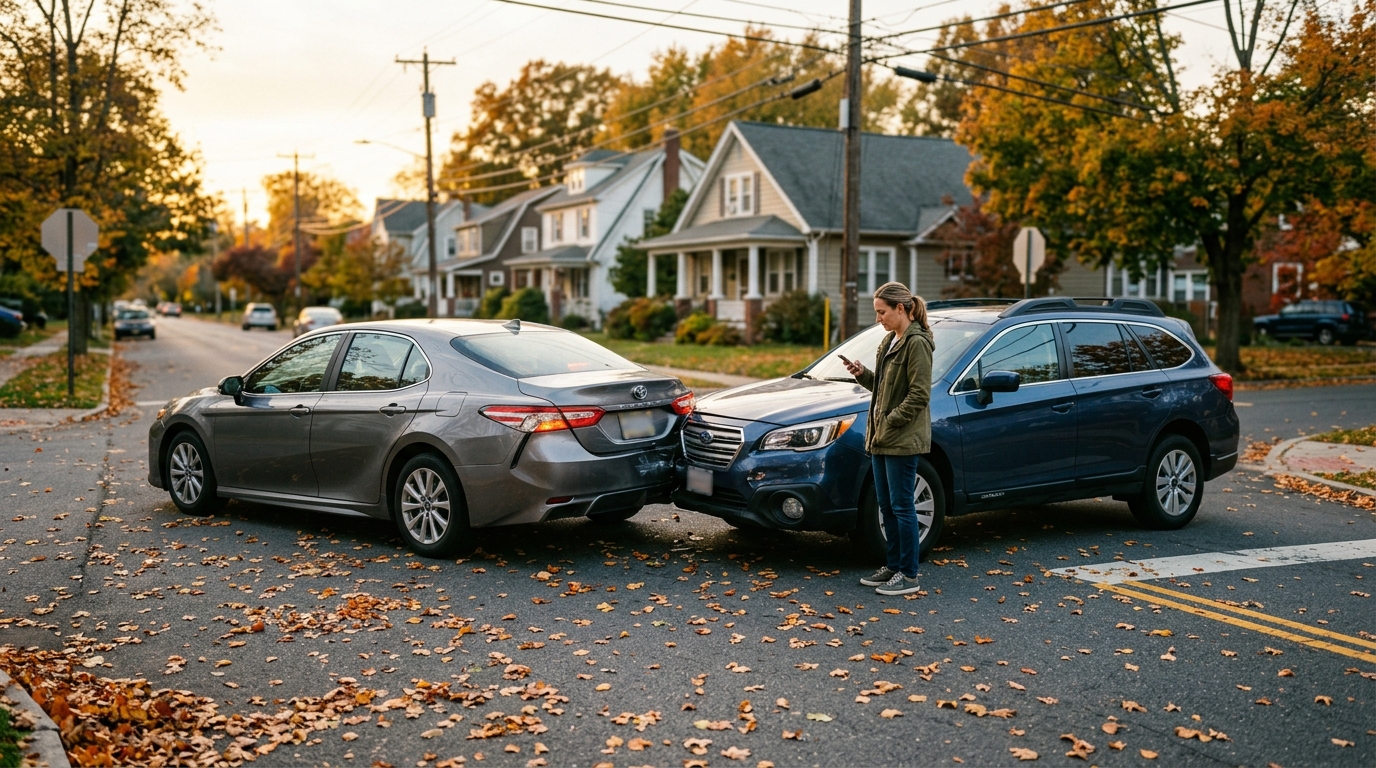
Uninsured motorist coverage is one of those line items on an auto policy that quietly does the heaviest lifting when a crash goes sideways — yet many drivers either skip it or carry the state minimum without a second look. This guide breaks down what UM and UIM coverage actually pay for, what they typically cost, and how to size the limits so a bad accident with a bad driver doesn't wipe out savings.
In this article
What Uninsured Motorist Coverage Actually Pays For
Uninsured motorist coverage (UM) steps in when the person who hit you carries no auto insurance at all. Underinsured motorist coverage (UIM) kicks in when the at-fault driver has a policy, but their liability limits are too low to cover the damage they caused. Both are usually sold together, and both come in two flavors: bodily injury (UMBI/UIMBI) and property damage (UMPD/UIMPD).
The bodily injury piece is the important one. It pays for medical bills, lost wages, and pain-and-suffering damages that would normally come from the at-fault driver's liability policy — the same categories, just paid by your own insurer instead. Property damage variants cover vehicle repairs, but they overlap heavily with collision coverage, so drivers who already carry collision often skip UMPD unless it's cheap to add.
About 20 states plus Washington, D.C. require UM coverage by law. In states where it's optional — including Texas, Arizona, and California — insurers still have to offer it, and drivers who reject it typically have to sign a written waiver.
Why So Many Drivers Underbuy
Industry estimates put roughly one in eight US drivers on the road with no insurance at all, though the ratio varies dramatically by state. Places like Mississippi, Michigan, Tennessee, and New Mexico tend to sit at the high end — closer to one in four by some estimates. Add drivers who technically have coverage but only carry the state minimum — often $25,000 or less in bodily injury per person — and the share of essentially uninsured drivers is far higher than most people assume.
The math is what stings. A single overnight hospital stay after a collision routinely runs $30,000 to $60,000. Surgery pushes that toward six figures. If the at-fault driver has a $25,000 policy and no meaningful assets, that is all a lawsuit will ever recover — and lawsuits against broke defendants can take years to produce nothing.
UM/UIM cuts through all of that. The claim runs through the injured driver's own insurer, on their own timeline, capped only by the limits they bought.
What Uninsured Motorist Coverage Costs
For most drivers, uninsured motorist coverage is one of the cheapest line items on the policy. Typical annual costs fall in these ranges:
- State-minimum UM/UIM limits: $30 to $75 per year
- $100,000 / $300,000 limits (moderate): $75 to $150 per year
- $250,000 / $500,000 limits (strong): $125 to $225 per year
- Stacked limits across multiple vehicles: roughly 10 to 20 percent more than unstacked at the same tier
Exact pricing depends on the state, the driver's record, and the underlying liability limits, because insurers typically require UM/UIM limits to be equal to or less than the bodily injury liability limits already on the policy. Doubling UM/UIM limits usually costs a small fraction of doubling BI liability — the risk pool is smaller because most drivers are insured.
Ready to compare car insurance rates?
Fresh side-by-side quotes from three or more insurers take about ten minutes.
See our quote guideHow Stacking Works
In states that permit it, stacking lets a driver combine UM limits across multiple insured vehicles on the same policy — or, in some states, across separate policies in the same household. Here is how a typical stacked claim plays out:
- Driver carries $100,000 UM per person on each of three cars in the garage.
- Driver is injured by an uninsured motorist while driving one of those cars.
- Instead of $100,000 in available UM coverage, the driver can access $300,000 — the limits stacked across all three vehicles.
- The claim is paid up to actual damages, capped at the stacked total.
States including Florida, Pennsylvania, Kentucky, and Georgia allow stacking; others including California and New York do not. Stacking adds cost, but for households with several vehicles and moderate per-vehicle limits, it can more than triple available coverage for a modest premium bump.
UM vs UIM: The Coverage Order Matters
Uninsured motorist and underinsured motorist coverage sound like siblings, but they trigger in different situations and interact with the at-fault driver's policy in different ways.
| Situation | What Triggers | Where the Money Comes From |
|---|---|---|
| At-fault driver has no policy | UM bodily injury | Your UM limits |
| At-fault driver flees the scene | UM (in most states) | Your UM limits |
| At-fault driver has $25K, damages are $80K | UIM bodily injury | $25K from their insurer plus up to $55K from your UIM |
| At-fault driver has adequate coverage | Neither | Their liability policy |
Two rules govern UIM in most states. First, the at-fault driver's policy pays first, and UIM fills the gap up to the injured driver's limit. Second, some states use a difference in limits model — UIM only pays if the driver's UIM limits exceed the at-fault BI limits — while others use an excess model that lets UIM pay whenever damages exceed the other driver's limits. Reading the declarations page is worth it.
When UM/UIM Actually Saves Real Money
The clearest scenario is a hit-and-run. A driver rear-ended at a stoplight, the other car speeds off, no plate — in nearly every state, that triggers UM as if the fleeing driver were uninsured. Medical bills, ER co-pays, and lost income all become a UM claim, subject to a deductible in a handful of states.
Passenger injuries are the other overlooked case. UM/UIM on a personal auto policy typically covers passengers in the insured vehicle, family members hit as pedestrians, and family members driving other cars — a fact worth confirming with the insurer because household definitions vary.
The scenario that ends careers financially is a serious injury caused by a driver carrying $25,000 in liability. A broken vertebra, a shoulder surgery, or a traumatic brain injury will blow through that limit before the ambulance ride is billed. Without UIM, the difference lands on the injured driver's health insurance — which will then subrogate against any settlement — and their personal balance sheet.
How to Right-Size UM/UIM Limits
A few rules of thumb hold up across almost every state:
- Match UM/UIM to bodily injury liability limits. If BI is 100/300, UM/UIM should also be 100/300. There is no reason to insure other drivers' victims more than your own household.
- Aim for $100,000 per person as a floor. State-minimum limits — often 25/50 or 30/60 — do not cover a serious injury.
- Consider $250,000 / $500,000 if income or assets are meaningful. The premium bump is usually modest, and higher limits are the price of admission for umbrella coverage.
- Add an umbrella policy if net worth is above $500,000. Most personal umbrellas require underlying UM/UIM limits of 250/500 to attach.
- Stack in states that allow it when the household has multiple vehicles and per-vehicle limits feel thin.
- Reject the waiver. In optional-UM states, insurers will happily quote a policy without it. Signing that waiver saves a few dollars a month and creates a six-figure exposure.
Most drivers who review the line item and see what it actually costs end up buying more of it, not less.
Frequently Asked Questions
Do I need uninsured motorist coverage if I have health insurance?
Health insurance pays medical bills, but it does not cover lost wages, pain and suffering, or the deductible and co-pays a serious injury generates. Health insurers also subrogate against auto claims, meaning they claw back what they paid from any settlement. UM/UIM covers the gaps and reaches damages health insurance never touches.
What is the difference between uninsured and underinsured motorist coverage?
Uninsured motorist (UM) coverage triggers when the at-fault driver has no insurance at all, including hit-and-run scenarios in most states. Underinsured motorist (UIM) coverage triggers when the at-fault driver has some insurance, but their liability limits are too low to cover the damages. Both are typically sold together as a single line item on the policy.
How much uninsured motorist coverage should I carry?
A common recommendation is to match UM/UIM limits to bodily injury liability limits, with $100,000 per person and $300,000 per accident as a reasonable floor. Drivers with meaningful income or assets often carry $250,000 / $500,000 to feed an umbrella policy. State minimums — often $25,000 or less per person — do not cover a serious injury.
Does filing a UM claim raise my rates?
A UM/UIM claim generally does not raise rates the way an at-fault accident does, because the crash was caused by someone else. Some insurers do flag a claim history when reviewing renewals, and rules vary by state. It rarely becomes a reason to skip filing a legitimate claim.
Can I collect UM coverage from more than one policy?
In states that allow stacking, yes — UM limits can combine across multiple vehicles on the same policy, or in some states across separate policies in the same household. States including Florida, Pennsylvania, and Georgia allow it; California, New York, and several others do not. Non-stacked policies are limited to the coverage on the one vehicle involved.