
Hit-and-Run: What to Do and What Insurance Covers

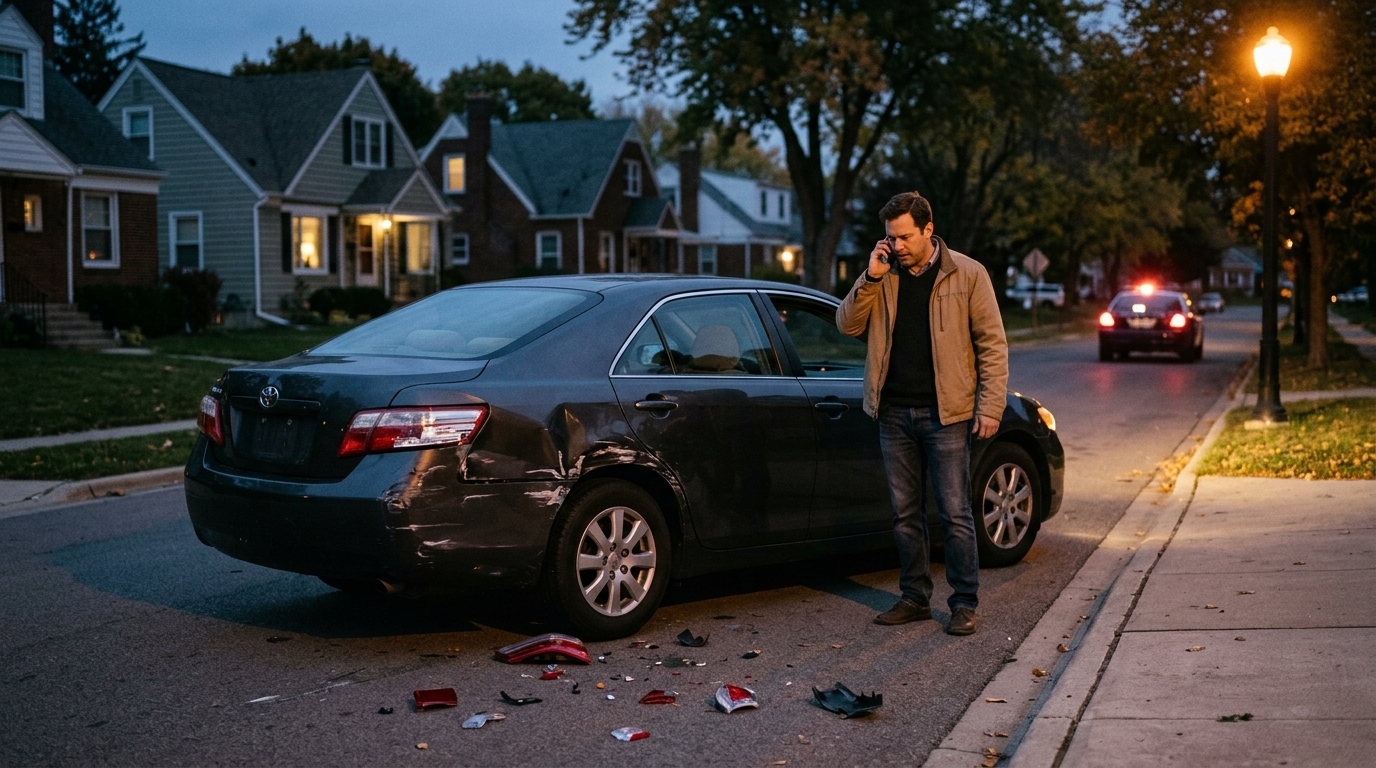
Hit and run insurance isn't a single policy — it's a specific mix of coverages that decides who pays after another driver crashes into a car and disappears. What a driver does in the first hour, whether they file a police report, and which coverages sit on the declarations page all shape whether the damage comes out of pocket or gets covered. This guide walks through the moves that matter and the coverages that actually pay.
In this article
What Counts as a Hit-and-Run
Every state defines hit-and-run slightly differently, but the core rule is the same: if a driver is involved in a crash — even a fender bender in a parking lot — and leaves without exchanging information or reporting it, that's a hit-and-run. It includes hitting a parked car and driving off, clipping a mailbox, or scraping a cyclist. It's not just about totaling a car on the highway.
Penalties scale with the damage. Minor property-only incidents are usually misdemeanors with fines in the few-hundred-dollar range and possible license points. If someone was injured or killed, most states escalate to a felony with jail time and multi-year license suspensions.
For insurance purposes, though, hit-and-run almost always describes the victim's side: another driver hit a car and fled before the victim could get plate numbers, a name, or contact info. That's the scenario where the victim's own policy — and how the next hour is handled — decides whether the damage comes out of pocket or gets paid out.
The First 10 Minutes at the Scene
What a driver does in the first few minutes shapes every claim decision that follows. Adrenaline makes it easy to skip steps that later matter a lot.
- Don't chase the car. Chasing turns a claim into a road-rage incident, and any crash during the pursuit may be denied by the driver's own coverage.
- Move to a safe spot and turn on hazards. Getting rear-ended on the shoulder is a bigger risk than the paperwork.
- Record everything about the other vehicle — partial plate, make, color, direction of travel, distinguishing damage, bumper stickers, dealer frames.
- Find witnesses. Ask anyone who stopped for their name and phone number. A single witness statement often bumps a claim from "unknown cause" to "caused by another party."
- Photograph the damage, the scene, skid marks, and any debris the other car left behind. Broken headlight fragments carry paint transfer that can help identify the vehicle.
- Check for cameras. Nearby businesses, doorbell cams, gas stations, and traffic signals often have footage — but only for 24 to 72 hours before it overwrites.
- Call the police from the scene, not from home an hour later.
The Police Report Step Most Drivers Skip
Filing a police report is the single most-skipped step in a hit-and-run — and the one insurers pay closest attention to. Drivers often assume that because the other car is gone, there's nothing to report. That's the mistake. Most policies with uninsured motorist coverage require an official report filed within 24 hours, and a handful of states require it in an even shorter window. No report, no claim.
Beyond the paperwork, a real case number does three things: it triggers the department's plate-reader and camera queries, it puts a paper trail behind the driver's version of events, and it gives the adjuster something objective to lean on when deciding fault.
Officers may take the report in person, over the phone, or at a station — call the non-emergency line and ask. If the car is drivable and no one is hurt, many cities route the report to an online portal instead. Filing it that same night, not a week later, is critical. Every hour that passes makes the report look like an afterthought and gives insurers room to argue the damage came from something else.
Ready to compare car insurance rates?
Fresh side-by-side quotes from three or more insurers take about ten minutes.
See our quote guideWhich Coverages Actually Pay for a Hit-and-Run
Which part of an auto policy handles a hit-and-run depends on what got damaged and how the state classifies the incident. Here's how the coverages usually stack up:
| Coverage | Pays for | Typical Deductible |
|---|---|---|
| Uninsured motorist bodily injury (UMBI) | Medical bills and lost wages | Usually $0 |
| Uninsured motorist property damage (UMPD) | Vehicle damage (available in some states) | $200-$500 |
| Collision | Vehicle damage when UMPD doesn't apply | $500-$1,500 |
| PIP or MedPay | Medical costs regardless of fault | $0 or small |
In most states, collision coverage is what fixes the car after a hit-and-run, with the standard collision deductible applying. In roughly 20 states, uninsured motorist property damage kicks in instead, often with a smaller deductible around $200 or $300. UMBI is nearly universal and covers hospital bills for the driver and passengers. Liability-only drivers are out of luck for their own vehicle — that's the harshest reality of hit-and-run claims: skipping collision to save $30 a month means paying the whole repair out of pocket.
What Filing a Claim Actually Costs You
The dollar impact of a hit and run insurance claim depends on the state, the insurer, and whether the incident was truly not-at-fault in the file. In states like California, Oklahoma, and a handful of others, insurers are legally barred from raising rates on claims where the policyholder wasn't at fault — including hit-and-runs where everything was handled correctly. In most other states, carriers can and often do bump premiums 10% to 30% at renewal, even though the driver did nothing wrong.
Expect to pay the deductible ($500 to $1,500 for collision) up front and get reimbursed only if the other driver is later identified and their insurance takes over. Realistically, most fleeing drivers are never identified, so the deductible ends up staying paid.
Some carriers waive the deductible on hit-and-runs when there's a witness statement or a police report identifying the other vehicle. It's worth asking specifically — adjusters don't always volunteer it, and the waiver often lives in fine print rather than on the main policy summary. A rental car reimbursement rider, usually $2 to $8 a month, also becomes valuable here since repair queues after a hit-and-run can stretch two to four weeks.
State Rules and Deductible Waivers That Change the Math
Not every state treats hit-and-run the same way. Roughly 20 states offer UMPD, which typically pays for vehicle damage with a lower deductible than collision. Some — including New York, New Jersey, and Georgia — bake a specific hit and run insurance deductible waiver into UMPD as long as the driver files a police report within a set window, often 24 hours. In Michigan, the state's no-fault system means personal injury protection covers medical bills regardless of fault, but broad-form collision coverage is what avoids a deductible on the vehicle itself.
A few practical rules survive across every state:
- Report to police within 24 hours or risk losing the claim entirely.
- Notify the insurer the same day, even before deciding whether to file.
- Get repair estimates from a shop the insurer approves — going rogue often means paying the difference between the shop's estimate and the insurer's.
- Ask specifically about deductible waivers for hit-and-runs; the wording and eligibility differ by carrier.
Drivers carrying only liability should price collision on their next renewal. On a five- to ten-year-old car, adding it typically runs $200 to $500 a year — often less than a single deductible, and the only realistic protection against a driver who bolts before anyone gets a plate number.
Frequently Asked Questions
Does my insurance go up if I file a hit-and-run claim I didn't cause?
It depends on the state. A handful of states — including California and Oklahoma — bar insurers from raising rates on not-at-fault claims, and hit-and-runs generally qualify. In most other states, carriers can bump premiums 10% to 30% at renewal even when the driver did nothing wrong, though the exact impact varies by insurer and prior claim history.
Can I file a hit-and-run claim without a police report?
In most states, no — uninsured motorist coverage requires a police report filed within 24 hours of the incident. Even where it's technically allowed without one, insurers will scrutinize the claim heavily and may deny it outright. Filing the report the same day the crash happened is the single strongest step for getting a claim approved.
If I hit a parked car and leave a note, is that still a hit-and-run?
Leaving a note with a name, phone number, and brief description of what happened generally satisfies state hit-and-run statutes, and courts rarely pursue charges when the driver made a good-faith effort. Some states also require notifying police within a short window regardless. Calling the non-emergency line and filing a courtesy report the same day removes any ambiguity.
How long do I have to report a hit-and-run to my insurance company?
Most auto policies require prompt notice — usually within 24 to 72 hours — though the exact wording varies by carrier. Waiting a week or more gives the insurer grounds to question the claim or reduce the payout. Notify the carrier the same day the police report gets filed, even if the driver hasn't decided whether to actually pursue the claim yet.