
Pay-Per-Mile Car Insurance: Who Should Use It

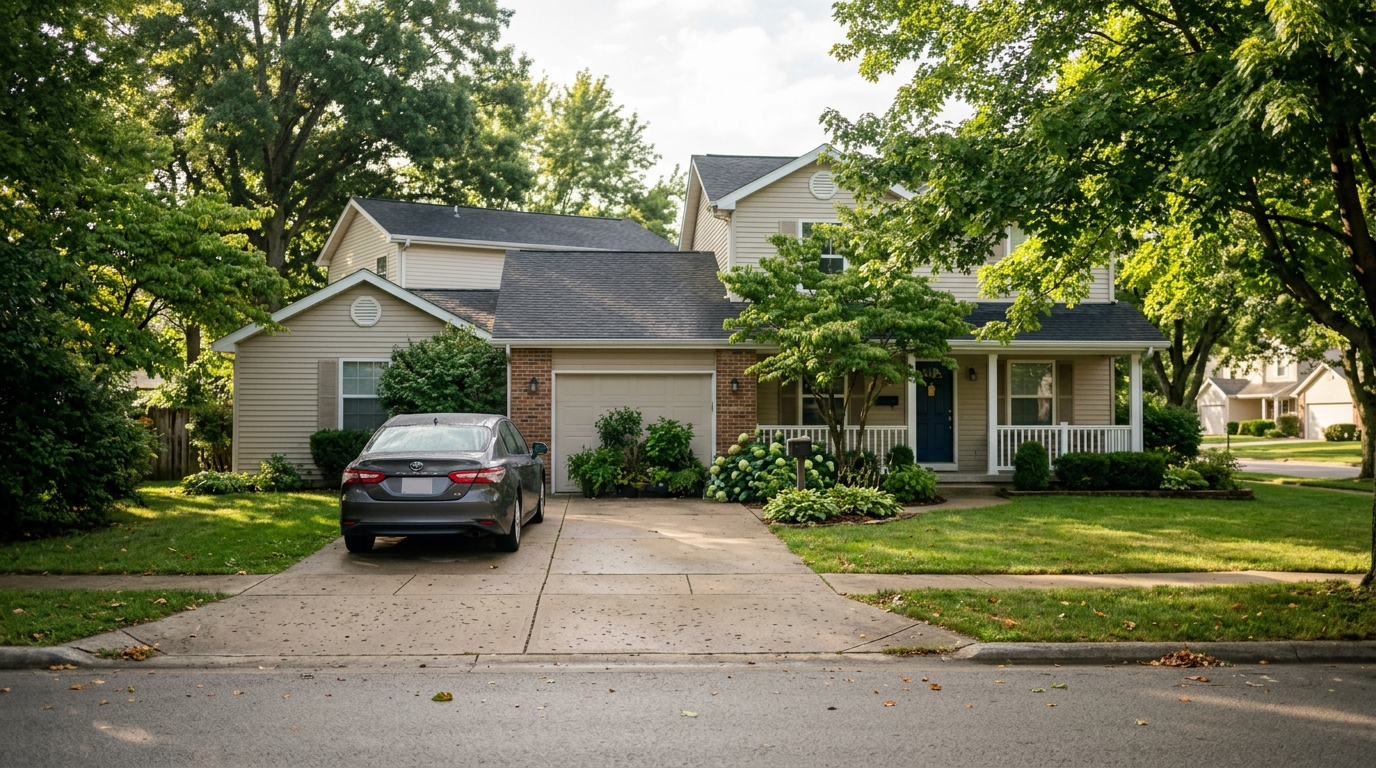
Pay per mile car insurance charges a small monthly base rate plus a few cents for every mile driven, which flips the traditional pricing model in favor of drivers who barely use their vehicles. This guide breaks down how the policies work, where the break-even point sits against a conventional six-month premium, which national and regional carriers write the coverage, and the trade-offs worth weighing before switching.
In this article
How pay-per-mile car insurance works
Pay-per-mile policies split the premium into two parts: a fixed monthly base rate that covers the risk of simply owning the vehicle (theft, hail, a tree branch through the windshield) and a per-mile charge that covers the risk that grows with time on the road. Carriers measure mileage with a small OBD-II plug-in device, a smartphone app that pairs with a Bluetooth beacon, or the connected-car telematics already built into newer vehicles from GM, Ford, Toyota, and others.
The coverage itself is standard auto insurance. Liability, collision, comprehensive, uninsured motorist, and medical payments or PIP (in the states that require it) all work the same way as a conventional policy and satisfy state financial-responsibility laws identically. What changes is the billing cadence and the variable input. Charges arrive monthly instead of every six months, and the mileage portion is trued up against the odometer or device reading from the prior period.
Underwriting factors have not gone away. ZIP code, age, driving record, credit-based insurance score in the states that permit it, and the make and model of the car still drive the base rate and the per-mile figure. The difference is that annual mileage — usually assumed at 12,000 to 13,500 by conventional carriers — is now measured instead of estimated.
The math: where the break-even point sits
Most pay-per-mile carriers price the base at $30 to $50 per month per vehicle and charge $0.04 to $0.10 per mile, though both numbers shift dramatically by state and driver profile. A driver whose conventional six-month policy would run $900 — so $1,800 a year — generally starts to save if they log fewer than 8,000 to 10,000 miles annually, well under the U.S. average of roughly 13,500. The break-even shifts higher in expensive states like Michigan, New York, Louisiana, and Florida where standard premiums are steep and any discount on the mileage side amplifies. It shifts lower in cheap-insurance states like Ohio, Idaho, Vermont, and Maine.
| Annual Miles | Standard Premium | Pay-Per-Mile Estimate | Difference |
|---|---|---|---|
| 5,000 | $1,800 | $780 | Save $1,020 |
| 7,500 | $1,800 | $930 | Save $870 |
| 10,000 | $1,800 | $1,080 | Save $720 |
| 12,000 | $1,800 | $1,200 | Save $600 |
| 15,000 | $1,800 | $1,380 | Save $420 |
Numbers above assume a $40 monthly base and $0.06 per mile. Actual quotes will vary, but the shape of the curve is consistent across carriers: the savings are largest for drivers under about 8,000 miles a year and taper as usage climbs.
Drivers who benefit most from a pay-per-mile policy
The clearest wins go to households whose driving simply does not match the assumptions baked into a conventional premium. Common profiles that come out ahead:
- Retirees who commute nowhere and mostly drive to the grocery store, medical appointments, and church.
- Fully remote workers who no longer log a 40-mile round trip five days a week.
- Urban dwellers in Boston, Chicago, D.C., San Francisco, or New York who take transit most days and use the car for weekend errands.
- Two-car households where a second vehicle sits mostly parked as a backup, weekend, or teen driver's car.
- College students at residential schools whose car stays in a garage nine months a year.
- Snowbirds with a garaged second vehicle at a Florida or Arizona home used only in season.
- Owners of collector or specialty vehicles that already limit annual miles under a standard classic policy.
Drivers who commute more than about 45 minutes each way, gig workers running rideshare or delivery, and long-haul weekend road-trippers typically pay more under a mileage model than a flat one.
Ready to compare car insurance rates?
Fresh side-by-side quotes from three or more insurers take about ten minutes.
See our quote guideWhich insurers offer pay-per-mile coverage by state
Four carriers write true pay-per-mile products in the U.S., along with several behavior-based cousins that are often confused with mileage pricing.
Nationwide SmartMiles has the broadest state footprint, sold in roughly 40 states across most regions. It uses a plug-in device or the SmartMiles mobile app and caps billable daily mileage at 250 to protect the occasional road-tripper.
Allstate Milewise is available in around two dozen states, including California, Arizona, Illinois, Ohio, Texas, New Jersey, and Virginia. It bills daily rather than monthly and uses a plug-in device.
Mile Auto is a regional player active in Georgia, Illinois, Ohio, Oregon, Pennsylvania, Texas, and a handful of others. It uses smartphone odometer photos instead of a plug-in device, which appeals to privacy-minded drivers.
Lemonade Car absorbed the original pay-per-mile pioneer, Metromile, and now sells the mileage-based product in states including California, Illinois, Ohio, Oregon, Tennessee, and Texas. Availability expands unevenly by state, so quotes should be compared side-by-side against a standard carrier renewal.
Root is not strictly pay-per-mile — it prices primarily on driving behavior captured during a two-to-three-week test drive — but often appears in the same shopping searches and is worth quoting alongside.
How to switch to pay-per-mile without a coverage gap
The mechanics of moving policies are the same as any other carrier switch, with one extra step to install the tracking device or app.
- Pull last year's mileage from an oil-change receipt, dealer service history, or the odometer on the dashboard, and estimate the coming year honestly.
- Quote at least two pay-per-mile carriers plus one standard carrier for a control price.
- Match the coverage limits exactly — liability, collision deductible, comprehensive deductible, UM/UIM, and any endorsements like rental reimbursement or roadside.
- Bind the new policy with a future start date that lines up with the current policy's expiration to avoid an unpaid gap that shows up on insurance-score reports.
- Install the device or app on day one so the odometer baseline is captured cleanly.
- Cancel the outgoing policy in writing and confirm any pro-rated refund of prepaid premium.
Trade-offs and gotchas worth weighing
Pay-per-mile is not a universal upgrade. A few realities can flatten or reverse the savings that look obvious in a quote comparison.
Daily mileage caps. Most carriers stop charging after 150 to 250 miles in a single day, which protects road-trippers on paper. But the cap resets at midnight, so a 500-mile Saturday still gets billed to the daily maximum, and back-to-back travel days add up quickly.
Location tracking. Plug-in devices from Nationwide and Allstate record GPS routes as well as miles. That data is used for accident reconstruction and, in some states, for behavior-based rating factors. Drivers who prefer not to share location data usually gravitate toward Mile Auto's photo-based model.
Behavior scoring in disguise. Some pay-per-mile products layer a driving-behavior surcharge or discount on top of the mileage bill for hard braking, late-night driving, or phone handling. That can turn a $0.06 quoted per-mile rate into $0.08 in practice.
Multi-car and bundle discounts. A pay-per-mile policy sometimes cannot bundle with home or renters insurance at the same carrier or in the same package, so the total household premium can move sideways even when the auto line drops.
State availability changes. Products enter and exit markets frequently. A carrier that quotes today in Michigan or Washington may not renew in 18 months, forcing another shop.
Frequently Asked Questions
How much does pay-per-mile car insurance cost per mile?
Most carriers charge between four and ten cents per mile on top of a fixed monthly base rate of $30 to $50 per vehicle. The exact per-mile figure depends on ZIP code, driving record, vehicle type, and credit-based insurance score in states that allow it. Drivers in low-cost insurance states like Ohio or Idaho tend to see per-mile rates near the bottom of that range, while Michigan, Louisiana, and Florida land at the top.
Do pay-per-mile insurers track where I drive, not just how far?
It depends on the carrier. Nationwide SmartMiles and Allstate Milewise use plug-in OBD-II devices that record GPS location along with mileage, primarily for accident investigation and in some states for behavior rating. Mile Auto uses monthly odometer photos submitted through its app and does not track location at all, which is why it appeals to privacy-conscious drivers. Reading the carrier's data-use disclosure before signing up is worth the ten minutes.
What happens if I take a long road trip on a pay-per-mile policy?
Most carriers cap billable mileage at 150 to 250 miles per day, so a single cross-country drive will not blow up the monthly bill the way it would in a pure per-mile world. The cap resets at midnight, though, meaning consecutive travel days will each hit the maximum. A one-week road trip covering 3,000 miles typically bills the daily cap on five or six of those days rather than the full 3,000.
Is pay-per-mile car insurance a good idea for a second or backup vehicle?
Yes. A backup car that logs 2,000 to 4,000 miles a year is close to the ideal use case, since the fixed monthly base is small and the per-mile charge stays minimal. Households often keep the primary daily driver on a conventional policy and switch the secondary vehicle to pay-per-mile at renewal to shave several hundred dollars off the total household premium.
Can I switch back to a standard policy if my driving increases?
Yes, and there is no penalty for doing so. Pay-per-mile policies run in six-month terms like standard auto insurance, and cancelling mid-term generates a pro-rated refund on unused premium the same way. A change in commute, a new job, or a move to the suburbs are all reasons drivers routinely cycle back to a flat-rate policy at the next renewal.