
Total Loss vs Repair: How Insurers Decide

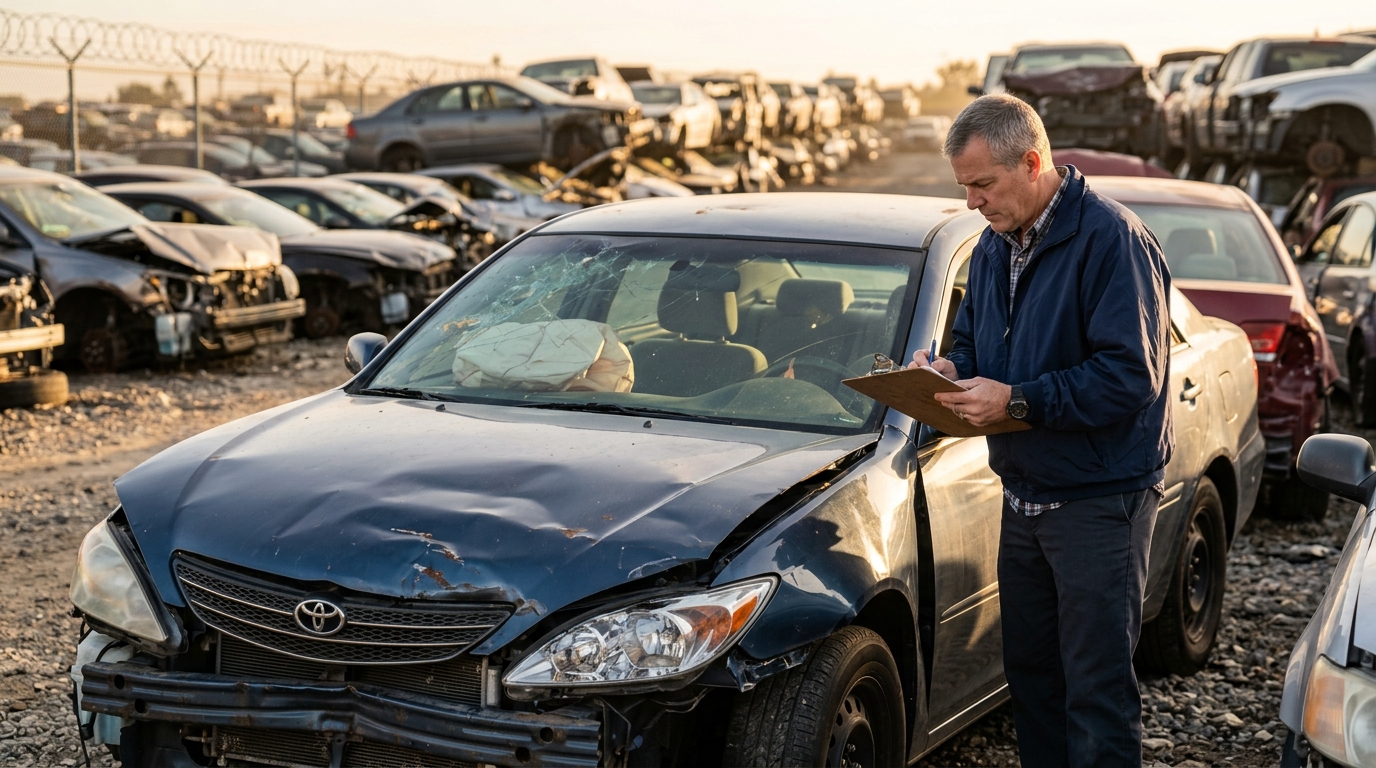
Understanding total loss vs repair decisions can mean the difference between walking away with a check for your car's full value and getting stuck with a lowball offer and no vehicle. When an adjuster inspects a damaged car, the outcome comes down to a specific formula, state law, and a valuation process most drivers don't understand until they need to. This guide breaks down the total-loss threshold, how insurers calculate actual cash value (ACV), how to push back on a soft offer, and when it makes sense to buy the salvage back.
In this article
How Insurers Decide Between Total Loss vs Repair
The choice comes down to a straightforward calculation, though the exact math depends on which state you live in. After a serious accident, the adjuster orders a repair estimate from a body shop (or through a photo-based estimation system) and pulls a salvage bid, which is what a dismantler or auction house would pay for the wrecked car in its current condition. Those two numbers get compared against the vehicle's pre-loss value.
The general rule: if fixing the car costs close to or more than the car was worth, it gets declared a total loss. Roughly two-thirds of states use a Total Loss Formula (TLF) — repair cost plus salvage value must equal or exceed the actual cash value. The remaining states use a straight percentage threshold, typically between 50% and 100% of ACV.
A car worth $12,000 with $9,000 in damage might be totaled in Iowa (50% threshold) but marked repairable in Texas (100% threshold). Age, mileage, and pre-existing damage all push a vehicle closer to the total loss line before any collision — a 12-year-old sedan with 180,000 miles totals on far less damage than a two-year-old crossover with the same repair estimate.
State-by-State Total Loss Thresholds
Every state sets its own rules, and they range from aggressive (a 50% threshold means cars total easily) to lenient (100% means insurers have to fix a lot of borderline cases). Here's a sample of thresholds across common states — figures are approximate and legislatures do amend them:
| State | Total Loss Rule |
|---|---|
| Iowa | 50% of ACV |
| Oklahoma | 60% of ACV |
| Nevada | 65% of ACV |
| Arkansas | 70% of ACV |
| Wisconsin | 70% of ACV |
| Alabama | 75% of ACV |
| Louisiana | 75% of ACV |
| New York | 75% of ACV |
| Florida | 80% of ACV |
| Colorado | 100% of ACV |
| Texas | 100% of ACV |
| California | Total Loss Formula |
For states using the Total Loss Formula, expect a car to total sooner — repair plus salvage almost always adds up quicker than a straight percentage of value. A $2,500 salvage bid on a $10,000 car means only $7,500 in damage triggers a total loss in TLF states, even though the damage is 75% of value.
How Actual Cash Value Gets Calculated
Actual cash value is the pre-loss market price for the specific car — not the retail price you'd see on a dealer lot and not what you paid for it three years ago. Insurers use commercial valuation platforms; CCC One, Mitchell WorkCenter, and Audatex are the three main ones. They pull comparable sales listings from within a 50 to 150 mile radius and adjust each comp for mileage differences, trim level, factory options, and condition rating.
Two things routinely make ACV feel low:
- The starting point tends to reflect private-party or wholesale values rather than dealer retail, which can run $1,500 to $4,000 lower for a mid-priced vehicle
- Condition ratings default to average unless the adjuster or owner documents otherwise; a well-maintained car with fresh tires and recent service should rate above average
New tires under six months old, a recent timing belt, or documented maintenance history can add $300 to $1,500 to the valuation if presented with receipts. Aftermarket parts rarely add anything unless they're stock replacements. Prior unrepaired damage or a salvage-branded title on the vehicle history report will subtract heavily — sometimes $2,000 or more.
Ready to compare car insurance rates?
Fresh side-by-side quotes from three or more insurers take about ten minutes.
See our quote guideSix Steps to Negotiate a Higher ACV
Insurers open with their computer-generated number, but that number is negotiable. The valuation report itself is the roadmap:
- Request the full valuation report with every comparable vehicle listed. This is standard in most states and shows exactly which listings the insurer pulled, what adjustments were made, and where the data came from.
- Check the comps for accuracy. Wrong trim level, wrong transmission, or listings from 300 miles away are common errors. A single bad comp can drag the average down by $800 or more.
- Find better comps yourself on Autotrader, Cars.com, and CarGurus within a reasonable radius. Screenshot listings with URLs. Dealer retail listings usually run higher than the private-party comps insurers prefer.
- Document your car's actual condition with maintenance records, recent repair receipts, and photos taken before the accident.
- Push back on the condition adjustment. If the insurer marked the car average or below average without inspecting it, that adjustment can and should be challenged in writing.
- Invoke the appraisal clause if negotiation stalls. Most policies include one: the owner hires an independent appraiser ($200 to $500), the insurer hires one, and a neutral umpire settles disputes. This process typically raises settlements 10% to 25%.
Buying Back Your Totaled Car From the Insurer
Buying back a totaled car — called salvage retention or owner retention — is an option most adjusters won't volunteer. The insurer pays the ACV settlement minus the salvage value they would have received from the auction bid, usually 20% to 40% of ACV depending on the vehicle. On a $15,000 total loss with a $4,500 salvage bid, an owner retention buyback puts about $10,500 in your pocket plus the wrecked car.
The vehicle gets a salvage title (or branded title — terminology varies by state). To drive it legally, most states require a rebuild inspection after repairs are complete, then a rebuilt or reconstructed title is issued. This process adds $75 to $300 in fees plus the state inspection.
Owner retention makes sense when:
- Damage is largely cosmetic but ACV was low enough to trigger a total loss
- The vehicle has strong sentimental value or is a project car
- Parts are cheap and available through pull-a-part yards
- The plan is to drive it long-term rather than resell
Rebuilt-title cars typically lose 20% to 40% of resale value permanently. Most insurers will only sell liability coverage on them, not comprehensive or collision — so a second total loss down the road pays nothing.
When Repair Wins the Total Loss vs Repair Math
Repair beats total loss in a narrow band of situations. If the damage sits well under the threshold and the car has strong sentimental or practical value — a paid-off commuter with 60,000 trouble-free miles — accepting repair keeps the driver in a known vehicle without a car search. The catch is diminished value: even a perfectly repaired car with a documented accident on Carfax loses resale value.
Roughly a dozen states allow first-party diminished value claims, where the driver can recover the lost resale value from their own insurer. Most states allow third-party diminished value claims when the other driver caused the accident. Documented DV losses on late-model vehicles frequently run $1,500 to $5,000, and insurers rarely pay this money without a specific written demand backed by an appraisal.
When damage sits within 10% of the total loss threshold, most drivers come out ahead pushing for a total loss declaration. A $9,000 repair on a $10,500 car leaves the owner with a fixed vehicle worth maybe $8,000 on the private market — a bad trade compared to a $10,500 ACV check and a new-to-you car search.
Frequently Asked Questions
What percentage of damage totals a car?
It depends on the state. Most states set a total loss threshold between 65% and 80% of the car's actual cash value, though Iowa is as low as 50% and Texas and Colorado sit at 100%. About two-thirds of states use the Total Loss Formula instead, which totals the car when repair cost plus salvage value equals or exceeds the pre-loss value — this triggers a total loss faster than a percentage threshold.
Can I keep my car if it's declared a total loss?
Yes, in most states, through a process called owner retention or salvage retention. The insurer pays the actual cash value minus the salvage value they would have received at auction, and the owner keeps the damaged vehicle. The car gets a salvage title and must pass a rebuild inspection before it can be legally driven or registered again.
How do I fight a low total loss offer?
Start by requesting the full valuation report and checking the comparable vehicles for errors — wrong trim level, wrong mileage bracket, or listings too far away are common mistakes. Then submit your own comps from Autotrader or Cars.com along with maintenance receipts supporting an above-average condition rating. If the insurer won't budge, invoke the appraisal clause in the policy to force a neutral resolution.
Does insurance pay off my car loan if it's totaled?
The insurer pays the actual cash value to the lienholder first, and any remainder goes to the owner. If the ACV is less than the loan balance — common in the first two to three years of financing — the borrower owes the difference unless they carry gap insurance. Gap coverage typically costs $20 to $40 per year and can save several thousand dollars on a newer financed vehicle.