
Roadside Assistance: Your Insurer vs AAA vs Your Credit Card

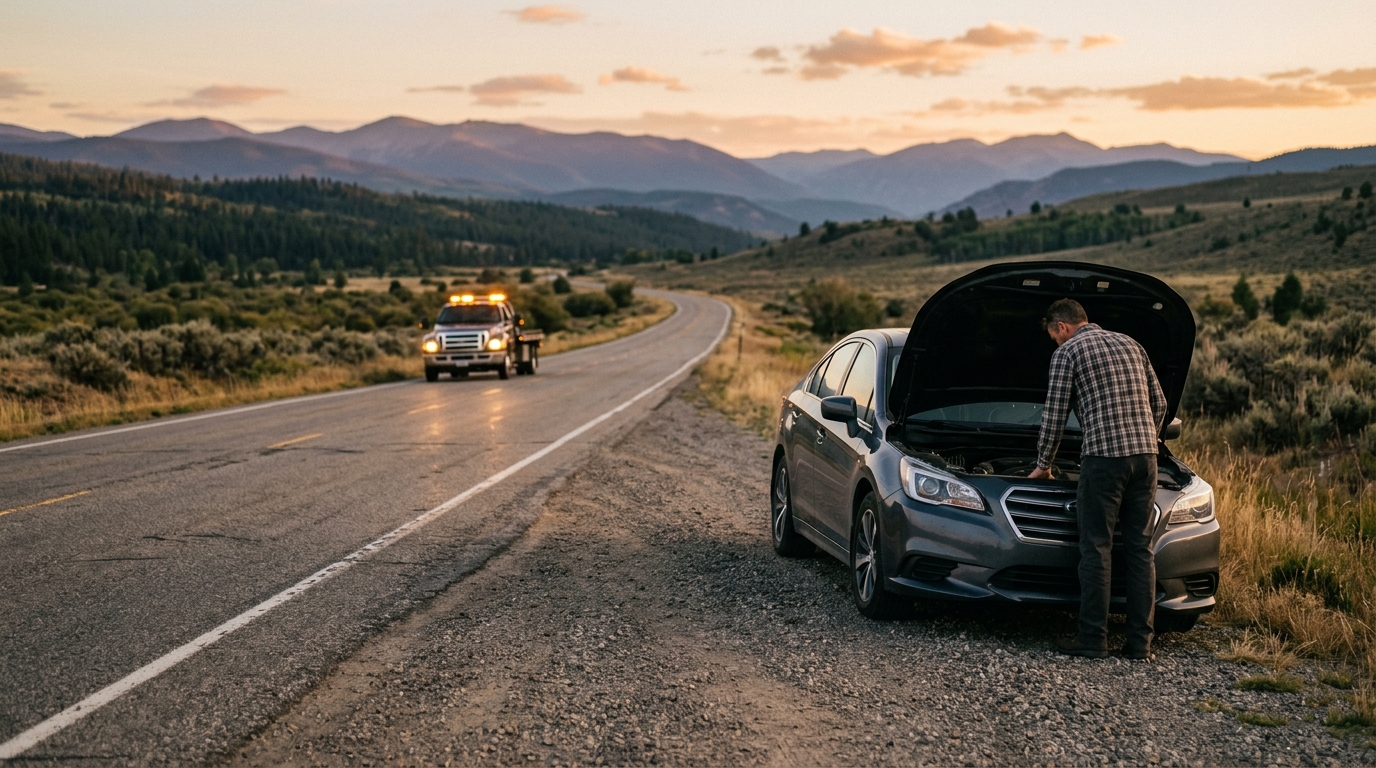
When it comes to roadside assistance vs AAA vs credit card benefits, drivers usually assume the century-old auto club is the default choice — but the $10 add-on tacked onto a car insurance policy and the free perk sitting on a Visa Signature card frequently send out the same tow truck. The right answer depends on how often a car actually breaks down, how far tows might need to travel, and how much a driver values a single phone number for every vehicle emergency. This breakdown covers what each option actually delivers, how fast trucks show up in real-world conditions, and what three years of coverage costs when the math is honest.
In this article
What Each Option Actually Includes
Standard roadside assistance covers roughly the same menu across every provider: jump-starts, flat tire swaps with a mounted spare, lockout service, up to a gallon of emergency fuel, and a tow to the nearest qualified shop. What differs is the mileage cap, the number of service calls allowed per year, and how the driver pays.
Insurer roadside — State Farm, Progressive, GEICO, and Allstate all sell some version — typically runs $5-30 per vehicle per year as an auto policy add-on. Tows usually cap at 10-15 miles, and calls come out of a pool of 4-5 events before availability can shift.
AAA sells three tiers. Classic ($65-90 depending on region) includes a 3-7 mile tow. Plus ($110-140) bumps that to 100 miles per call. Premier ($150-200) adds one 200-mile tow annually. Membership follows the person, not the vehicle — a AAA card works when riding in a friend's car.
Credit card roadside is the muddled option. Many Visa Signature and World Mastercard products dispatch help at flat cardholder rates ($70-150 for a tow, around $70 for a jump). Premium travel cards like the Chase Sapphire Reserve reimburse a capped amount per year, but almost none of these benefits are truly free — they are negotiated pricing, not paid coverage.
The Real Three-Year Cost
| Option | Annual cost | 3-year cost | Tow distance |
|---|---|---|---|
| Insurer add-on | $5-30 | $15-90 | 10-15 miles |
| AAA Classic | $65-90 | $195-270 | 3-7 miles |
| AAA Plus | $110-140 | $330-420 | 100 miles |
| AAA Premier | $150-200 | $450-600 | 200 miles (once/yr) |
| Visa Signature dispatch | $0 (pay per use) | $0-450 | Billed per mile |
On paper the insurer add-on wins on price by a landslide. Paying $12 per year for Progressive Roadside Assistance works out to $36 over three years — less than a single AAA Classic renewal. The catch is the 15-mile tow cap. A driver who breaks down farther pays retail for the extra distance, often $4-7 per additional mile.
AAA Plus is the workhorse tier for rural interstates and mountain passes. A single 60-mile tow costs $200-350 at retail — more than a full year of Plus. The math flips the moment a driver actually uses the benefit.
Credit card roadside rarely stays free. Three tows over three years at $110 apiece is $330 — right at the cost of AAA Plus, with none of the trip-interruption or travel perks.
How Fast Help Actually Arrives
The roadside assistance vs AAA question usually assumes the club runs a proprietary fleet of tow trucks. It does not. Every option — insurer, AAA, credit card — dispatches through the same regional network of independent tow operators. That said, response patterns tend to look like this:
- Suburban weekday, daylight: 30-45 minutes across all providers
- Rural or interstate: 60-90 minutes; AAA is often slightly faster because of contract volume with the closest yard
- Peak weather events (ice storms, major snowfall): 3-6 hours regardless of provider — membership status rarely jumps the queue
- Nights and weekends: 45-75 minutes; some insurer plans route through a third-party call center that adds 10-15 minutes to intake
- Major cities with heavy tow demand (Los Angeles, Houston, Chicago): fastest for whichever service has the most local contractors — usually AAA
The single biggest predictor of response time is not the brand on the card but how many active tow trucks the local contractor has on shift in that ZIP code. All three sources are competing for the same trucks.
Ready to compare car insurance rates?
Fresh side-by-side quotes from three or more insurers take about ten minutes.
See our quote guideTow Distance: Where Roadside Assistance vs AAA Really Diverges
Tow miles are where the choice actually matters. A stranded driver in downtown Denver with a repair shop 4 miles away is fine on any plan. A driver stranded on I-70 at Vail Pass, 60 miles from the nearest dealer certified to touch their turbocharger, is looking at very different bills.
Insurer roadside is written for the first scenario. State Farm's Emergency Road Service tows to the nearest qualified facility, period — if that facility is 40 miles closer than the driver's preferred shop, the extra 40 miles is out of pocket at retail rate. Some carriers sell expanded mileage tiers, but 100-mile insurer tows are rare.
AAA Plus is built for the second scenario. The 100-mile tow can go to any facility the member chooses. Premier's annual 200-mile tow is designed for one worst-case event per year — the family SUV that dies halfway through a road trip.
Credit card dispatch charges by the mile. A 60-mile tow through the Visa program can hit $400-550 at retail. Even the Chase Sapphire Reserve roadside benefit typically reimburses only up to $50 per event, capped at 4 events per year — nowhere near enough to cover long-haul situations.
When Credit Card Roadside Coverage Fails You
Credit card benefits sound like free coverage until the driver is stranded and reads the fine print. The five most common failure points:
- The benefit is dispatch, not payment. For most Visa Signature and World Mastercard products, the card simply calls a truck; the driver pays retail on a card the tow operator swipes at the scene.
- Annual caps are low. Premium travel cards that do reimburse typically cap it at $50-100 per incident and 4 events per year — enough for a jump-start, not a real tow.
- The card must be used to pay. Reimbursement usually requires the tow to be paid on the specific card and the receipt submitted within 60-90 days. Paying with anything else voids the claim.
- Response times can lag. Card-network call centers add an authentication step — verifying account status and benefit eligibility — that pushes dispatch back 10-20 minutes.
- Rentals and company cars are often excluded. Insurer and AAA plans generally cover any vehicle the driver is in; credit card benefits vary by issuer and often exclude vehicles not registered to the cardholder.
How to Choose Based on What You Drive
The decision comes down to three variables: how far the driver typically is from home, what they drive, and how much they value one phone number for every vehicle emergency.
City commuters with newer cars still under manufacturer warranty already have roadside from the automaker for the first 3-5 years. Adding insurer roadside for $5-15 duplicates that coverage cheaply, and skipping AAA saves $200-500 over three years.
Rural drivers, road trippers, and owners of older vehicles (100,000-plus miles) get real value from AAA Plus. One breakdown 40 miles from home pays for years of dues, and the RV and motorcycle coverage available on Premier is meaningful for anyone who tows.
Households with multiple older vehicles benefit from AAA's member-based structure — one $130 Plus membership covers the primary driver in any car, versus paying insurer add-ons on three separate policies.
Credit card roadside makes sense as a backup, not a primary plan. Keep the Visa dispatch number for the day the AAA app crashes or the insurer's call center is overloaded during a Texas ice storm. Treating it as real insurance is where drivers get burned.
Frequently Asked Questions
Is AAA worth it if I already have roadside assistance through my insurance?
For urban drivers who rarely leave a 15-mile radius from home, AAA usually is not worth $130 on top of an existing $10-30 insurer add-on. AAA earns its price when the household drives rural, tows a trailer, or covers multiple older vehicles under one membership. Break-even generally comes at roughly one 40-plus mile tow every two years — a common threshold for anyone driving 12,000-plus annual miles.
Does credit card roadside assistance actually pay for the tow?
Most credit card roadside programs are dispatch services, not paid coverage — the network calls a tow truck, but the driver pays the operator at retail rates. A small set of premium travel cards like the Chase Sapphire Reserve reimburses a capped amount per event, typically $50-100, but only if the tow is paid on the specific card and the receipt is submitted within the claim window. Treating credit card roadside as free is the most common way drivers end up with a $400 surprise bill.
Will using roadside assistance raise my car insurance rate?
Filing a roadside claim on the insurer's plan usually does not raise rates directly, but frequent use — typically 3 or more events in a policy period — can flag the account and disqualify certain discounts at renewal. Major insurers spell this out in their policy language, though enforcement varies by state and carrier. AAA and credit card roadside use are invisible to the auto insurer and never affect the premium.
Can I have both AAA and insurance roadside assistance at the same time?
Yes, and many drivers stack them intentionally — one as primary and the other as backup. The most common combination is a cheap insurer add-on ($10-15 per year) for lockouts and short in-town tows, plus AAA Plus for long-distance road-trip coverage. Only one plan can be used per event, but having both means the second service is available when the first is delayed or the incident falls outside the primary plan's coverage.