
Does Car Insurance Follow the Car or the Driver? The Rule and Its Exceptions

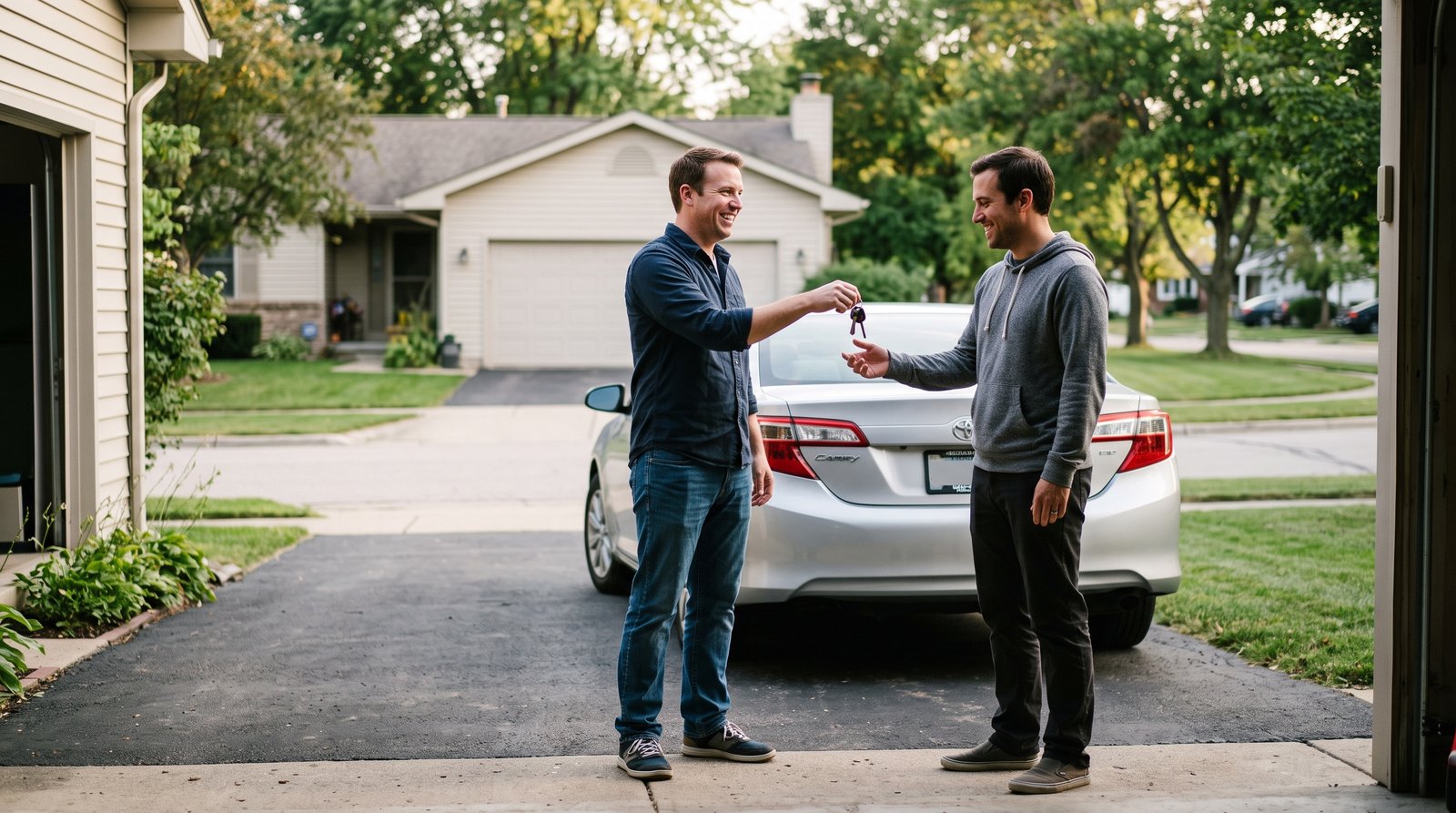
Does car insurance follow the car or the driver? In almost every ordinary situation it follows the car — the policy written on the vehicle is what responds when someone crashes it, even if that someone is not named anywhere on the policy. Insurers call this permissive use, and it is why handing your keys to a friend does not automatically leave them uninsured.
The complications are real, though, and nearly all of them land on the owner rather than the borrower.
In this article
- The short answer: coverage follows the car
- What follows the car, and what follows the driver
- Whose policy pays first when a friend crashes your car
- The claim lands on your record and your premium
- When permissive use does not apply
- Household members are the biggest trap
- Borrowed cars, rental cars and non-owner policies
- Does car insurance follow the car or the driver in your state?
The short answer: coverage follows the car
State regulators describe the rule plainly. The Texas Department of Insurance tells consumers that most policies cover you, your family, and people driving your car with your permission. Arizona's Department of Insurance and Financial Institutions puts it the same way: as long as you give permission, anyone who drives your vehicle is covered under your policy, provided that person is not specifically excluded from it.
In New York the requirement is written into regulation. A standard auto liability policy must insure the named insured, a spouse living in the same household, and any other person using the vehicle with the owner's permission — so long as the actual use stays within the scope of that permission. A New York Department of Financial Services opinion confirms that such a driver is a covered insured even when not listed on the policy as an operator.
That is permissive use, and it is informal by design. No paperwork, no phone call to your agent before you hand over the keys.
What follows the car, and what follows the driver
The rule is not absolute, and the coverages that behave differently are the ones people get wrong.
Liability, collision and comprehensive are attached to the vehicle. Damage to the borrowed car is repaired under the owner's collision coverage, at the owner's deductible.
Medical coverages travel with the person. Texas describes medical payments coverage as paying your and your passengers' medical bills, and also paying if you are hurt while riding in someone else's car or while walking or biking. A non-owner policy is the purest example of driver-based coverage: it belongs to a person who owns no vehicle at all.
Liability sits in both columns, which is where most of the confusion starts. Washington's Office of the Insurance Commissioner notes that bodily injury liability also covers you and the family members listed on your policy when you drive someone else's car with their permission. Your liability does follow you — it just lines up behind the car owner's.
| Coverage | Follows the car? | Follows the driver? |
|---|---|---|
| Liability | Yes — pays first | Yes — as backup |
| Collision | Yes | No |
| Comprehensive | Yes | No |
| Medical payments | Yes | Often, in any car |
| Personal injury protection | Usually | Varies by state |
| Non-owner liability | No | Yes |
Whose policy pays first when a friend crashes your car
The order of payment is the part worth remembering. Texas states it directly: if you cause an accident while driving a borrowed car, the car owner's insurance pays the claim. If the owner has no insurance, or not enough to pay for the damage and injuries caused, the driver's own insurance pays.
So the owner's policy is primary and the driver's policy sits behind it as excess. In practice:
- The owner's liability limits absorb the other party's injuries and property damage first.
- The owner's collision coverage repairs the owner's car, minus the owner's deductible.
- The driver's own policy only engages once the owner's limits are used up.
If the crash totals the borrowed car, the settlement is figured on the owner's policy and paid to the owner. Our total loss payout calculator shows how the deductible and any loan balance change what actually arrives.
Ready to compare car insurance rates?
Fresh side-by-side quotes from three or more insurers take about ten minutes.
See our quote guideThe claim lands on your record and your premium
This is the part owners do not expect. Because your policy paid, the loss becomes part of your claims history, not the borrower's. Insurers review that history when they price a renewal, and Arizona's regulator notes that companies use the Comprehensive Loss Underwriting Exchange, operated by LexisNexis, to check prior losses.
Some states go further and attribute the driver's negligence to the owner outright. New York's Vehicle and Traffic Law does exactly that for anyone using or operating the vehicle with the owner's permission, express or implied.
Whether the loss actually raises your rate depends on where you live. Arizona law says no insurer may increase a premium as a result of an accident not caused or significantly contributed to by the actions of the insured. Most states have no equivalent protection, so check with your own state's insurance department.
You also carry the deductible. Nothing obliges the borrower to reimburse you for it beyond whatever the two of you agree between yourselves.
When permissive use does not apply
Permission is the hinge, and it is narrower than most people assume. Coverage can fall away when:
- The driver is excluded by name. A signed endorsement removes that person from the policy entirely. Our guide to named driver exclusions covers how they work and which states restrict them.
- The use goes beyond the permission given. New York's regulation extends coverage only to use within the scope of the permission. Lending a car for a grocery run is not the same as lending it for a road trip.
- The driver has no valid license. Nothing in a permissive-use provision promises to cover someone who is not legally allowed to drive, and both Texas and California tell owners to read the policy and ask who is excluded before letting anyone else drive.
- The car is being used for money. Texas lists ride-hailing and paid delivery among the things most policies do not cover, along with business use and racing.
- The borrower is not really a borrower. Texas also notes that most policies do not cover accidents in a car you do not own but could use regularly, so a routine borrower's own policy may not back them up.
Household members are the biggest trap
The most common way permissive use fails is that the driver was never a casual borrower to begin with. Washington's Office of the Insurance Commissioner states it flatly: most insurance companies require all drivers in the household to be listed on the policy, including every family member of driving age, regardless of whether they will drive your vehicle. California's insurance department gives the same instruction: tell your insurer when there are new drivers in your household.
The consequence is not always an outright denial. New York's regulator notes that an insurer may charge additional premium, including retroactively, to cover a licensed driver in the household who should have been listed on the policy but was not. Other insurers treat the omission as a misrepresentation instead, and California permits an auto policy to be canceled for fraud or material misrepresentation.
"They only borrow it sometimes" is the sentence that creates the problem. A resident relative or a roommate who drives your car with any regularity belongs on the policy.
Borrowed cars, rental cars and non-owner policies
Turn the question around. If you are the one borrowing, the owner's policy is your first layer of protection, and Washington's regulator advises checking with the owner that their insurance covers you as a driver before you get behind the wheel. If it does not, review your own policy with your agent.
Rental cars usually work differently from borrowed cars. Texas notes that most policies cover accidents while you, or someone else covered by your policy, is driving a rental car, and that the counter's damage waiver is not insurance at all — it is an agreement that the agency will not charge you for damage. Renting for work is a separate question for your agent.
If you do not own a car but borrow one often, Texas points to a non-owner liability policy. It pays for damage and injuries you cause to other people, but not for your own injuries or for damage to the car you are driving. Our explainer on non-owner car insurance covers who it actually suits.
Does car insurance follow the car or the driver in your state?
Auto insurance is regulated state by state, and every source above is a regulator describing its own state. The permissive-use principle is close to universal, but the rules around it are local: whether named driver exclusions are permitted, whether an insurer may surcharge you for a loss you did not cause, and how much notice you get before a policy is canceled.
Before you hand over the keys, a short check:
- Confirm the borrower holds a valid driver's license.
- Read your declarations page for any named driver exclusion.
- Remember the deductible on your own car is yours to pay.
- Be specific about what the car is for, and for how long.
- Look hard at your liability limits. A serious at-fault crash can run past them, and the balance falls on you personally, which is the case for umbrella insurance.
Coverage terms vary by insurer and by state, and this article describes general rules rather than the contents of any particular contract. Your declarations page and your state's insurance department are the authorities on your own situation.
Frequently Asked Questions
Can I drive someone else's car if I don't have my own insurance?
Usually yes, and the owner's policy is what responds. Texas explains that if you cause an accident in a borrowed car, the car owner's insurance pays the claim, and your own insurance only steps in if theirs is missing or too small. The risk is that with no policy of your own there is nothing sitting behind the owner's limits, so a serious crash can reach your personal assets.
Will my insurance go up if a friend crashes my car?
It can. The claim is paid by your policy and stays in your claims history, which insurers review at renewal. A few states limit this — Arizona bars an insurer from raising a premium over an accident the insured did not cause or significantly contribute to — but most states have no such rule. Your state's insurance department can tell you which applies where you live.
Does my roommate need to be listed on my car insurance?
If they live with you and drive your car, almost certainly. Washington's insurance commissioner says most companies require every household driver of driving age to be listed, whether or not they use your vehicle. Call your insurer and ask. Adding someone costs less than arguing about it after a crash.
Am I covered when I drive a rental car?
Often, through your own policy. Texas notes that most policies cover accidents while you or someone covered by your policy is driving a rental car, and that the damage waiver sold at the counter is not insurance — it only means the agency will not charge you for damage to the car. Renting for work is a different question, so ask your agent first.
What happens if someone takes my car without asking?
Permissive use depends on permission, so a driver who takes the car without it generally falls outside the coverage a policy extends to permitted drivers. Damage to the vehicle itself may still be a comprehensive claim if the car was stolen, since comprehensive covers theft. Report it to the police and to your insurer promptly and let the adjuster determine which coverage applies.