
Home Insurance Deductibles: How to Choose
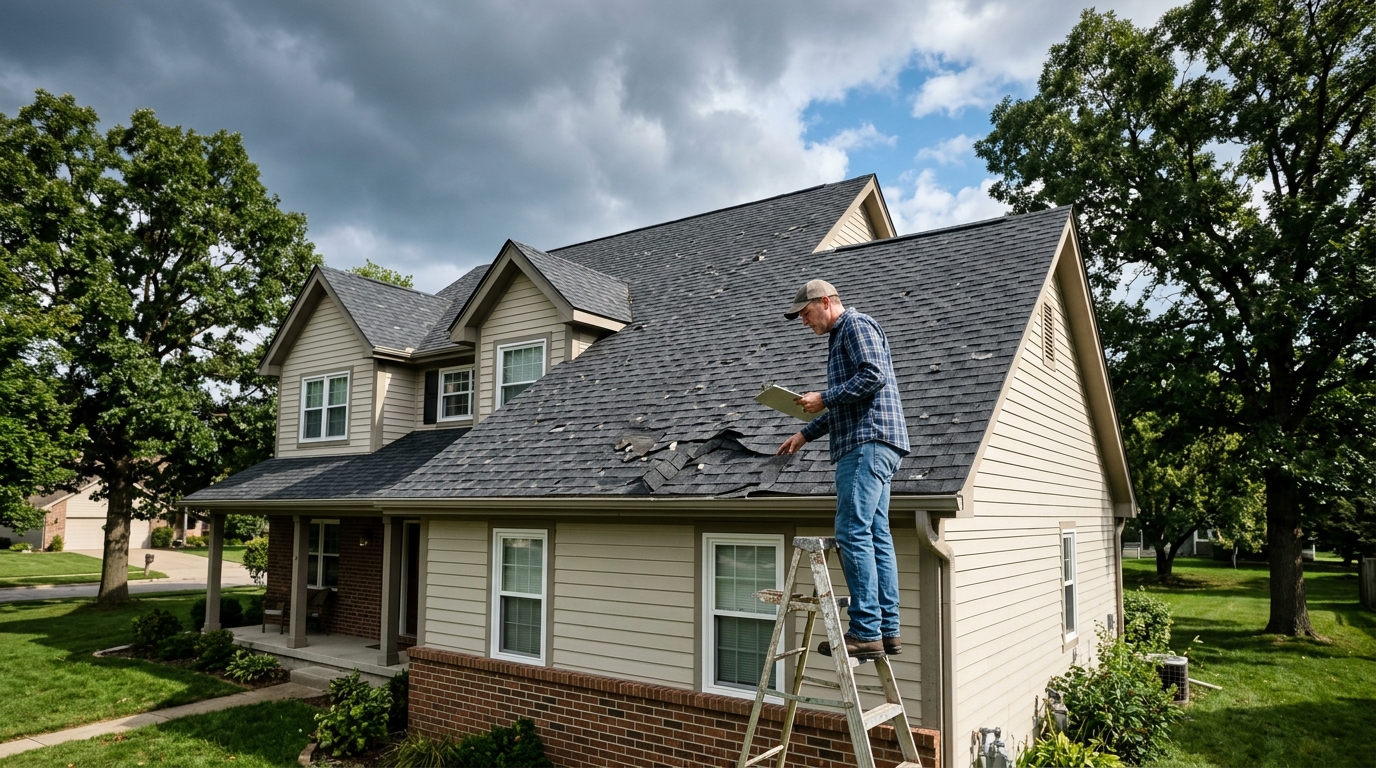
A home insurance deductible is the amount paid out of pocket before an insurer covers the rest of a covered claim, and it's one of the few variables a homeowner fully controls on the policy. Choosing between a $500 flat deductible and a 2% wind deductible can swing the annual premium by hundreds of dollars — but it also changes what a bad storm actually costs when the claim is filed. Here's how the three main deductible types work, why coastal and tornado-belt homeowners often carry two of them, and where raising a deductible actually moves the premium.
In this article
What a Home Insurance Deductible Actually Covers
Home insurance deductibles apply per claim, not per year the way most health plans work. If a windstorm damages the roof in March and a tree falls through the garage in August, both losses trigger the deductible separately. That structure matters when comparing quotes — a $2,500 deductible looks cheap on paper until two claims land in the same twelve months.
The deductible applies to Coverage A (dwelling), Coverage B (other structures), and Coverage C (personal property) losses. Liability claims under Coverage E don't carry a deductible; if the mail carrier trips on the front steps and sues, no out-of-pocket amount applies. Additional living expenses under Coverage D typically pay from dollar one once the covered event is confirmed.
Higher deductibles cut premiums because they shift small-claim risk to the homeowner and discourage nuisance claims. Carriers price policies knowing a household with a $500 deductible will file for a $2,000 roof leak, while a household with a $2,500 deductible generally won't bother. That behavioral difference is priced directly into the rate quote.
Flat Dollar vs Percentage Deductibles
Most inland US homeowners carry a flat dollar deductible — a fixed number that doesn't move with the value of the home. The common tiers offered by nearly every major carrier are:
- $500 — the lowest option, kept mostly by budget-tight homeowners
- $1,000 — the industry default and most common single choice
- $1,500 or $2,500 — the mid-range savings sweet spot
- $5,000 — common on newer homes with strong emergency reserves
- $10,000 — rare, usually paired with high-value dwelling limits above $1M
Percentage deductibles are calculated against Coverage A, the dwelling limit. On a home insured for $400,000 in dwelling coverage, a 1% deductible is $4,000 and a 5% deductible is $20,000. Some states allow all-perils percentage deductibles, but the far more common setup pairs a flat deductible for most claims with a separate percentage deductible triggered only by wind, hail, hurricane, or named storms. That means the same policy can carry two deductibles simultaneously — an $1,000 flat all-other-perils (AOP) deductible for fire, theft, and burst pipes, and a 2% wind deductible for anything the wind touches.
Hurricane, Wind, and Named Storm Sublimits
Coastal and hurricane-exposed states — including Florida, Texas, Louisiana, North Carolina, South Carolina, Virginia, Maryland, Delaware, New Jersey, New York, Massachusetts, Rhode Island, Connecticut, Mississippi, Alabama, Georgia, and Hawaii — either mandate or permit separate hurricane deductibles. The trigger language varies by carrier and state:
- Named storm deductibles activate the moment the National Hurricane Center names a system that eventually affects the coverage area, sometimes hours before landfall
- Hurricane deductibles trigger only when the storm is classified as a hurricane at landfall in that state — Category 1 or higher on the Saffir-Simpson scale
- Wind/hail deductibles apply to any windstorm, hurricane or not, and are standard across the Midwest, Great Plains, and Tornado Alley (Oklahoma, Kansas, Texas, Colorado, Nebraska, Missouri, Iowa)
Typical percentage tiers are 1%, 2%, 3%, 5%, and 10%. Florida insurers must offer a 2% option by statute, and many policies default to 5% or higher after the 2022-2024 market retrenchment there. On a $500,000 dwelling coverage figure, a 5% hurricane deductible is $25,000 before the insurer pays a dollar. That number often shocks homeowners who bought coverage remotely or renewed without reading the declarations page. Checking the Hurricane/Wind Deductible line every year is the single most valuable review a coastal policyholder can do.
Time to review your homeowners policy?
Comparing quotes every 12-24 months often surfaces discounts your current insurer will not volunteer.
How to shop home insuranceHow Much a Higher Deductible Actually Lowers Your Rates
Deductible savings follow a curve of diminishing returns. Approximate industry-typical premium reductions relative to a $500 baseline look roughly like this:
| Deductible | Approx. Premium vs $500 Baseline |
|---|---|
| $500 | Baseline |
| $1,000 | 8-12% lower |
| $2,500 | 15-25% lower |
| $5,000 | 25-35% lower |
| $10,000 | 30-40% lower |
For a homeowner paying $2,000 a year, jumping from $500 to $2,500 typically saves $300-$500 annually. The break-even math is simple: divide the deductible increase by the annual savings. A $2,000 deductible bump saving $400 a year pays for itself in five claim-free years. Since the average homeowner files a claim once every 8-10 years, the higher deductible usually wins.
Percentage deductibles work differently. Raising a hurricane deductible from 2% to 5% on a $400,000 home cuts wind exposure premium significantly — often 15-30% off the wind portion — but doesn't touch the fire, theft, or water portion. In hurricane states where wind drives most of the premium, that lever is where the real savings live.
Choosing the Deductible That Fits Your Cash Position
The right home insurance deductible is the largest one a household can write a check for tomorrow without borrowing. A few filters help narrow the choice:
- Emergency fund — if there's no three-month buffer in savings, keep the deductible at $1,000 or lower. Insurance exists to absorb out-of-pocket shocks, not create them.
- Age of roof and systems — a 20-year-old roof and 30-year-old plumbing raise claim probability materially. A lower deductible earns back its cost faster on older homes.
- Mortgage escrow rules — lenders will accept most deductible choices, but flood and wind coverage in coastal counties may cap what they'll allow in writing.
- Claim history — two claims in three years puts a homeowner on the CLUE report and closer to non-renewal. Filing anything under the deductible is almost always cheaper than the surcharge on the next two renewal cycles.
For coastal properties, the deductible that lowers rates most is nearly always the wind or hurricane percentage line — not the AOP flat deductible. That's the number worth stress-testing at renewal.
How to Change a Deductible Mid-Policy
Insurers generally allow deductible changes at any time, though the mechanics vary by carrier and state:
- Call the carrier or agent and request the new deductible. Some carriers require a signed endorsement form before the change takes effect.
- Review the new declarations page for both the AOP deductible and any percentage deductibles — they change independently and both need to be verified in writing.
- Confirm the effective date. Raising a deductible right before an active named storm won't be honored in Florida and most Gulf states, which impose binding restrictions once a storm is named.
- Request the prorated premium refund if the change happens mid-term. It's usually credited to the next installment or refunded to the payment method on file within 10-15 business days.
- Notify the mortgage servicer if the change affects escrow. The annual escrow analysis will catch it eventually, but proactive updating avoids a surprise shortage on the next statement.
Renewal is the cleanest time to make the change. Most declarations pages arrive 30-45 days before renewal with a deductible menu already priced out — comparing the $1,000, $2,500, and $5,000 columns side-by-side takes about two minutes and often reveals savings the current premium quietly buries.
Frequently Asked Questions
What is the average home insurance deductible?
Most US homeowners carry a $1,000 flat deductible, which remains the industry default when carriers issue a new policy. Coastal homeowners often carry a $1,000 or $2,500 all-other-perils deductible plus a separate 2%-5% hurricane or named-storm deductible layered on top. The two numbers are quoted separately on the declarations page.
Is a higher home insurance deductible worth it?
Usually yes, if there's an emergency fund covering the difference. Raising the deductible from $500 to $2,500 typically saves 15-25% on premium, and since the average home files a claim once every 8-10 years, the annual savings compound faster than the increased out-of-pocket risk. The math shifts on older homes with aging roofs, where claims are more frequent.
Does the deductible apply to every claim?
Yes — home insurance deductibles are per-claim, not annual. Each covered loss triggers its own deductible, so two windstorms in the same year mean paying the deductible twice unless the state or policy has a specific per-storm or annual aggregate cap provision. A handful of Florida carriers offer once-per-season hurricane deductibles as an option.
Can I change my deductible after filing a claim?
Not for the claim already filed. The deductible in force on the date of loss is the one the adjuster uses. Changes made after filing apply only to future claims, and most insurers block deductible reductions while any claim is still open. Waiting until the claim closes is standard practice.
What happens if the damage costs less than the deductible?
Nothing — the homeowner pays the full repair out of pocket and no claim is filed. That's usually the right move even for damage slightly above the deductible, since filing a $1,200 claim on a $1,000 deductible nets only $200 but stays on the CLUE report for 5-7 years and typically raises the next renewal by more than $200.