
Not-at-Fault Accident: Your Rights and Claim Process

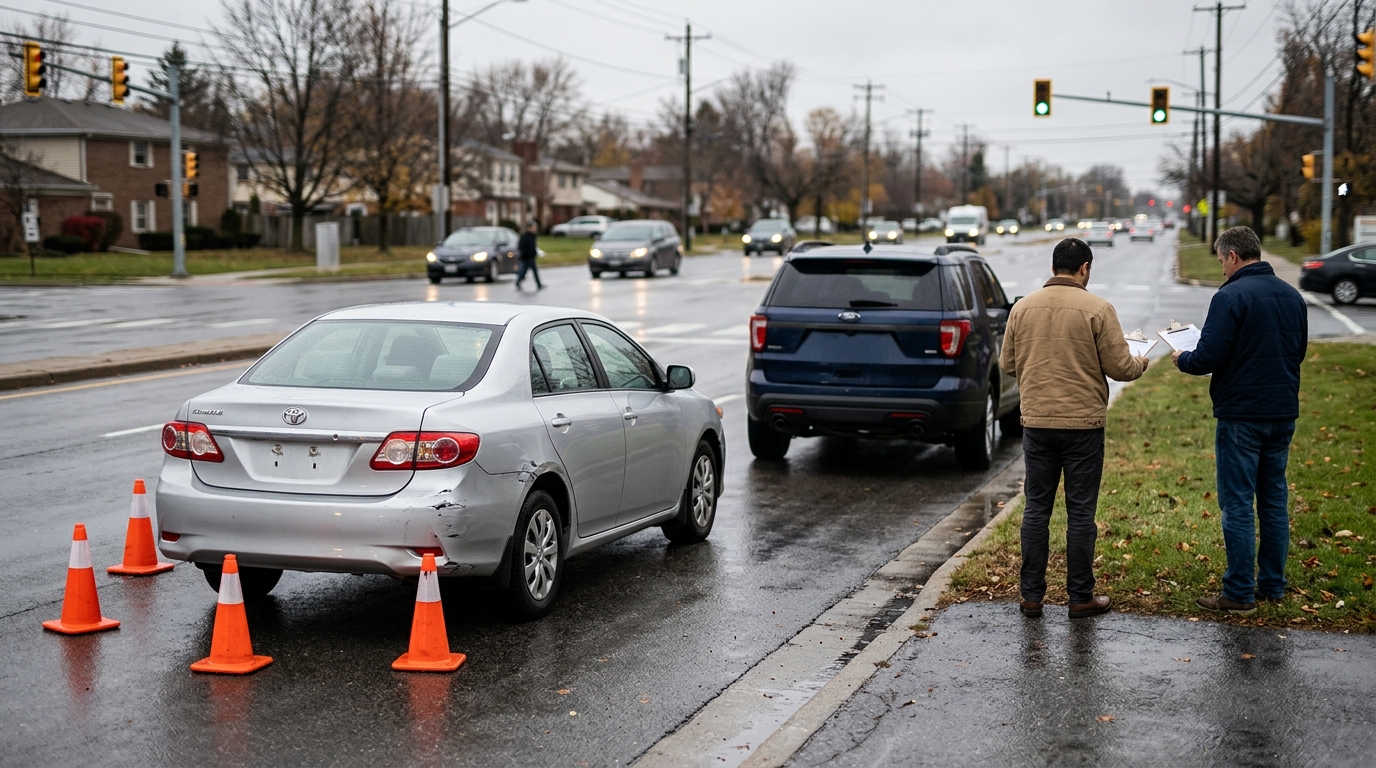
Being in a not at fault accident should be the easy scenario — someone else caused the damage, so their insurance pays. In practice, the process involves decisions that affect how quickly the car is back on the road, whether a rental is included, and how much money actually changes hands. This guide covers which insurer to file with, when a rental is a right rather than a favor, and how to recognize a lowball settlement offer worth pushing back on.
In this article
Which Insurance to File With After a Not-at-Fault Accident
The most common assumption after a not at fault accident is that the other driver's insurance handles everything. That's usually true — but it isn't always the fastest or best route.
Filing a third-party claim against the at-fault driver's liability insurance means their carrier pays for vehicle damage, medical bills, and related losses. There's no deductible, and it doesn't touch the claimant's own policy. The trade-off: the at-fault insurer has zero contractual duty to the other driver. They can drag out investigations, dispute liability, and delay payment for weeks or months.
Filing through personal collision coverage — when it's on the policy — puts the claimant's own insurer to work. The deductible comes out of pocket upfront (typically $500 or $1,000), but repairs start faster because the carrier owes a duty of good faith. The insurer then pursues the at-fault carrier through subrogation and refunds the deductible if it's recovered.
The right choice depends on:
- State law. In no-fault states like Florida, Michigan, New York, New Jersey, and Pennsylvania, personal injury protection (PIP) on the injured driver's policy pays medical bills first, regardless of fault.
- Liability disputes. If fault is contested, using personal collision coverage skips the fight over who caused what.
- Damage severity. For a $1,500 fender-bender with a $1,000 deductible, going through the at-fault carrier makes more sense.
- The at-fault driver's coverage. If they're uninsured or carry state-minimum limits, uninsured/underinsured motorist (UM/UIM) coverage becomes essential.
When You're Entitled to a Rental Car
Loss of use — the fact that a damaged vehicle can't be driven — is a recoverable damage in every state. When filing with the at-fault driver's insurer, that carrier is responsible for providing a rental of comparable class or reimbursing the equivalent daily rate while the car is repaired or a total-loss settlement is negotiated.
The catch: comparable doesn't mean identical. A mid-size sedan usually gets matched with an economy or compact rental at $30–$50 per day. Drivers of full-size pickups or work SUVs should insist in writing on a similar-class replacement, since a Corolla-substituted-for-a-Silverado dispute is common. Rental reimbursement continues until repairs are complete or, in a total-loss case, until a firm settlement offer is made — not until the check is deposited.
Filing through personal collision instead triggers rental reimbursement only if it's on the policy as an optional add-on. That coverage costs $2–$5 per month and typically caps at $30–$50 per day with a total claim limit of $900–$1,500. A common gap: if repairs run longer than the daily cap allows — say, 20 days at $30 when parts are backordered for 45 — the overage falls on the driver unless it can be pushed back on the at-fault carrier.
Rental coverage doesn't apply to convenience use. If the car is drivable but scheduled for cosmetic repairs, most insurers won't pay for a rental during the wait — only during the actual shop time.
How to Recognize a Low Settlement Offer
Initial settlement offers on property damage and injury claims in a not-at-fault accident often land 40–60% below what an adjuster is ultimately authorized to pay. That's not accidental — it's a starting position, and adjusters expect pushback.
Red flags that suggest an offer is too low:
- The offer arrives within days of the accident. Legitimate valuations require repair estimates, medical records, and time. A fast offer is a cheap offer.
- The check comes with a pre-signed release. Endorsing an initial settlement check usually waives the right to reopen the claim, including for injuries that surface later.
- The total-loss valuation ignores condition and options. Request the comparable-vehicle report. Insurers often benchmark against high-mileage or base-trim vehicles when the actual car had leather, low miles, or recent maintenance.
- No diminished value is included. Even after quality repairs, a vehicle with an accident on its history report is worth 10–25% less at resale. Many states allow recovery of this loss from the at-fault carrier.
- Medical bills are averaged, not itemized. Adjusters may propose a lump-sum medical allowance that ignores unpaid balances, future physical therapy, or specialist referrals.
- The offer supposedly expires. Property damage and bodily injury claims are governed by state statutes of limitations — typically 2–6 years — not by an adjuster's Friday deadline.
Ready to compare car insurance rates?
Fresh side-by-side quotes from three or more insurers take about ten minutes.
See our quote guideDiminished Value Claims Explained
Diminished value (DV) is the reduction in a vehicle's market price caused by an accident showing up on its history report — even after all damage has been properly repaired. It's a real, recognized loss in most states, but insurers rarely offer it unless the claimant asks.
Three types exist:
- Inherent diminished value — the stigma of a Carfax or AutoCheck hit. This is the most commonly claimed form.
- Repair-related diminished value — substandard repairs that leave visible flaws, uneven panel gaps, or mismatched paint.
- Immediate diminished value — the drop the moment the accident happens, before any repair takes place.
For newer vehicles (under 5 years old with under 60,000 miles), inherent DV typically ranges from 10–25% of pre-accident actual cash value on a moderate-to-severe repair. A $30,000 vehicle with $8,000 in damage might carry $3,000–$5,000 in DV. Older, higher-mileage cars usually see minimal or no recoverable DV.
To claim DV against the at-fault driver's insurer, document pre-accident condition with photos and maintenance records, order an independent DV appraisal ($150–$400 through certified appraisers), and submit a written demand. Georgia, Kansas, and several other states have well-established DV recovery paths; Michigan largely does not permit it against a third party.
The Claim Timeline From Impact to Settlement
The first 72 hours matter most. Reporting to police at the scene creates the single most-referenced document in the claim. Photograph vehicle damage, license plates, insurance cards, and the surrounding scene — skid marks, road signs, traffic signals, and any obstructed sight lines. Collect contact information from every witness willing to give it, since a name and phone number gathered on the shoulder is easier than tracking someone down two months later.
Notify the personal insurer within 24–72 hours, even when the plan is to file only against the at-fault driver. Most policies require prompt notification as a condition of coverage, especially for UM/UIM claims triggered later. When contacting the at-fault carrier, providing basic facts — date, time, location, vehicles involved — is fine. Declining a recorded statement until the questions are known is also fine, and often smart, because recorded answers become negotiating leverage against the claimant later.
Property damage investigations typically resolve in 15–30 days once liability is clear. Injury claims run longer — often 60–180 days from accident to settlement — because insurers wait for the injured person to reach maximum medical improvement before finalizing. Complex cases with disputed liability, serious injuries, or commercial-vehicle involvement can stretch 12–24 months. State statutes of limitations for filing a lawsuit range from 2 years (California, Texas) to 6 years (Maine, North Dakota) — a date worth tracking, because settlement negotiations don't pause it.
Frequently Asked Questions
Does a not-at-fault accident raise my insurance rates?
In most states, insurers cannot surcharge for an accident where the policyholder isn't at fault, but the accident may still appear on the driving record and CLUE report. California, Oklahoma, and a handful of other states explicitly prohibit rate increases for not-at-fault claims. Even in states without a law, most major carriers voluntarily follow the rule — though quotes from other insurers during shopping may reflect the accident.
How long can I keep the rental car after a not-at-fault claim?
A rental is covered while the car is being repaired or, in a total-loss case, until the at-fault insurer makes a firm settlement offer. That typically works out to 7–14 days for repairable damage and 5–10 days for a total loss, though parts backorders can extend it. If the at-fault insurer cuts off rental payments before repairs finish, a supplemental loss-of-use claim can be submitted once the vehicle is back in service.
What do I do if the other driver's insurance denies my claim?
Request the denial in writing with a specific reason cited. If the denial is based on disputed liability, submit the police report, witness statements, and any photos or dashcam footage supporting the account. Filing through personal collision coverage and letting that carrier pursue subrogation is a strong backup — the insurer has a financial incentive to fight because they're the one paying.
Do I have to give a recorded statement to the at-fault driver's insurance?
No. There's no contractual relationship with the at-fault driver's carrier, so a recorded statement isn't required. Providing basic facts in writing — date, time, location, vehicles — is enough to open the claim. Recorded statements are frequently used to trap claimants into minimizing injuries or admitting partial fault, so declining or delaying until the questions are known protects the claim.
How much can I recover for pain and suffering after a not-at-fault accident?
Pain and suffering awards depend on the severity and duration of injuries. A common industry rule of thumb multiplies medical bills by 1.5 to 5 times for soft-tissue injuries and higher for permanent damage. A claim with $8,000 in medical bills might settle for $12,000–$40,000 total, though no-fault thresholds in states like Florida and New York restrict when this type of recovery is available at all.